
Thu Feb 05 06:36:23 UTC 2026: Headline: Mumbai-Pune Expressway Traffic Restored After Gas Tanker Accident Causes 33-Hour Disruption
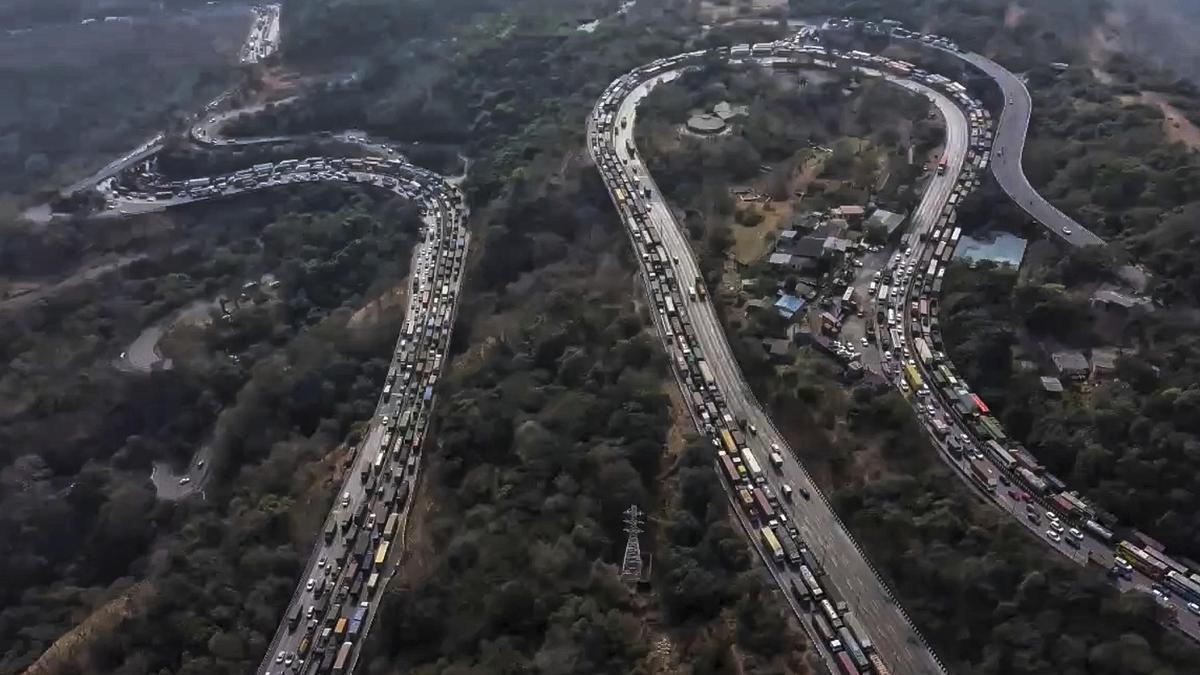
The Story: Traffic on the Mumbai-Pune Expressway resumed early on February 5, 2026, after a gas tanker overturned on February 3, 2026, in the Khandala Ghat section, causing a 33-hour disruption. The incident, triggered by a tanker carrying highly flammable propylene gas, resulted in massive traffic congestion, stranding thousands of vehicles for hours. Emergency services successfully transferred the gas and removed the tanker, allowing traffic to normalize, albeit with lingering congestion.
Key Points:
- A gas tanker overturned on the Mumbai-Pune Expressway on February 3, 2026, around 5 p.m.
- The overturned tanker carried highly flammable propylene gas.
- Traffic on the Mumbai-bound carriageway was restored at 1.46 a.m. on February 5, 2026, after a 33-hour disruption.
- Stationary vehicles stretched for up to 20 km during peak congestion.
- Teams from NDRF, SDRF, BPCL, highway police, and MSRDC were involved in the clearance operation.
- Toll collection on the expressway was suspended due to the disruption.
- The incident disrupted public transport and the supply of essential items.
Key Takeaways:
- The Mumbai-Pune Expressway is vulnerable to major disruptions due to accidents involving hazardous materials.
- Emergency response protocols appear to be effective in managing hazardous situations, but response times could be improved.
- The incident highlights the significant economic and social impact of expressway closures.
- The incident led to industrialist taking a helicopter to escape the traffic jam.
- Infrastructure improvements and alternative routing strategies may be needed to mitigate future disruptions on the expressway.
Impact Analysis:
- Economic Impact: Prolonged expressway closures can significantly impact supply chains, particularly the delivery of essential goods like milk and vegetables, and disrupt business travel between Mumbai and Pune.
- Policy Implications: The incident may prompt a review of safety regulations concerning the transportation of hazardous materials on major highways, potentially leading to stricter enforcement and improved emergency response plans.
- Infrastructure Development: The event could accelerate discussions on building alternative routes or expanding the capacity of the existing expressway to reduce congestion and provide alternate routes during emergencies. This would involve evaluating the feasibility of new tunnels, bypasses, or additional lanes.
- Emergency Response Preparedness: The incident highlights the need for better communication and coordination between various emergency response agencies (NDRF, SDRF, police, etc.) to ensure swift and effective management of similar incidents in the future. Regular drills and simulations would be beneficial.
- Technological Solutions: The event may spur the adoption of intelligent transportation systems (ITS) to monitor traffic flow, detect incidents quickly, and provide real-time information to commuters, enabling them to make informed decisions and avoid congested areas.
 First Piper