
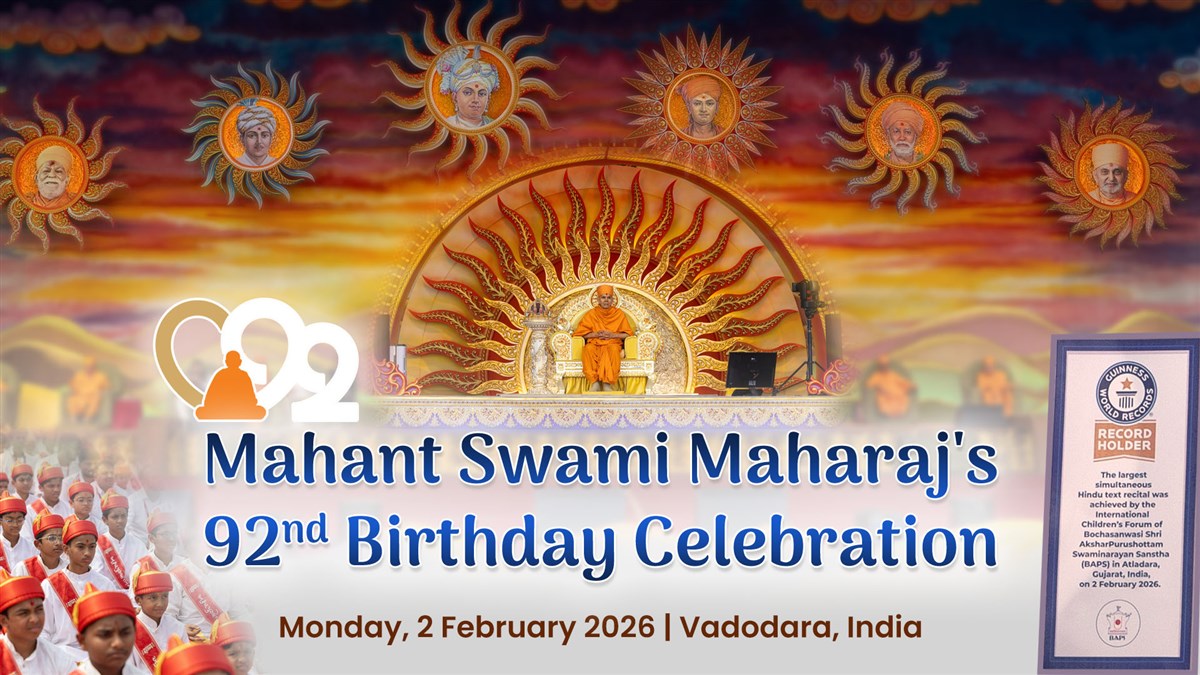
Thu Feb 05 15:00:00 UTC 2026: ### Headline: Gujarat and MP Chief Ministers Attend Mahant Swami Maharaj’s Birth Anniversary, Signaling Political Alignment with Religious Leadership
The Story:
Chief Ministers from Gujarat and Madhya Pradesh attended the birth anniversary celebrations of Mahant Swami Maharaj on February 5, 2026. This attendance signifies a public demonstration of support and connection between the political leadership of these states and a prominent religious figure. The event drew attention due to the high-profile political presence and potential implications for state-level governance and social narratives.
Key Points:
- The event occurred on February 5, 2026.
- The event was the birth anniversary celebration of Mahant Swami Maharaj.
- The Chief Ministers of Gujarat and Madhya Pradesh were in attendance.
Critical Analysis:
The event underscores a pattern of politicians engaging with religious leaders and events. While the prior events reference other religious figures like Sri Siddaramanand Puri Swami and Swami Avimukteshwaranand, the attendance of two Chief Ministers at Mahant Swami Maharaj’s anniversary implies a strategic cultivation of relationships with influential religious organizations and figures, potentially for political influence or support. This can be seen in the context of broader socio-political trends where religious identity plays a role in electoral outcomes.
Key Takeaways:
- The convergence of political power and religious influence is a continuing trend.
- CMs attending religious events signifies political strategy and outreach.
- This could lead to policies reflective of the values held by religious leaders.
- Demonstrating support to a particular religious figure publicly aligns a political figure with their followers.
Impact Analysis:
The involvement of Chief Ministers in such religious events can have profound impacts on the political landscape. The public association might solidify voter bases linked to the religious group, influencing future elections and policy-making. This can also create a precedent for other political leaders to seek similar endorsements, potentially leading to increased politicization of religious events.
 First Piper