
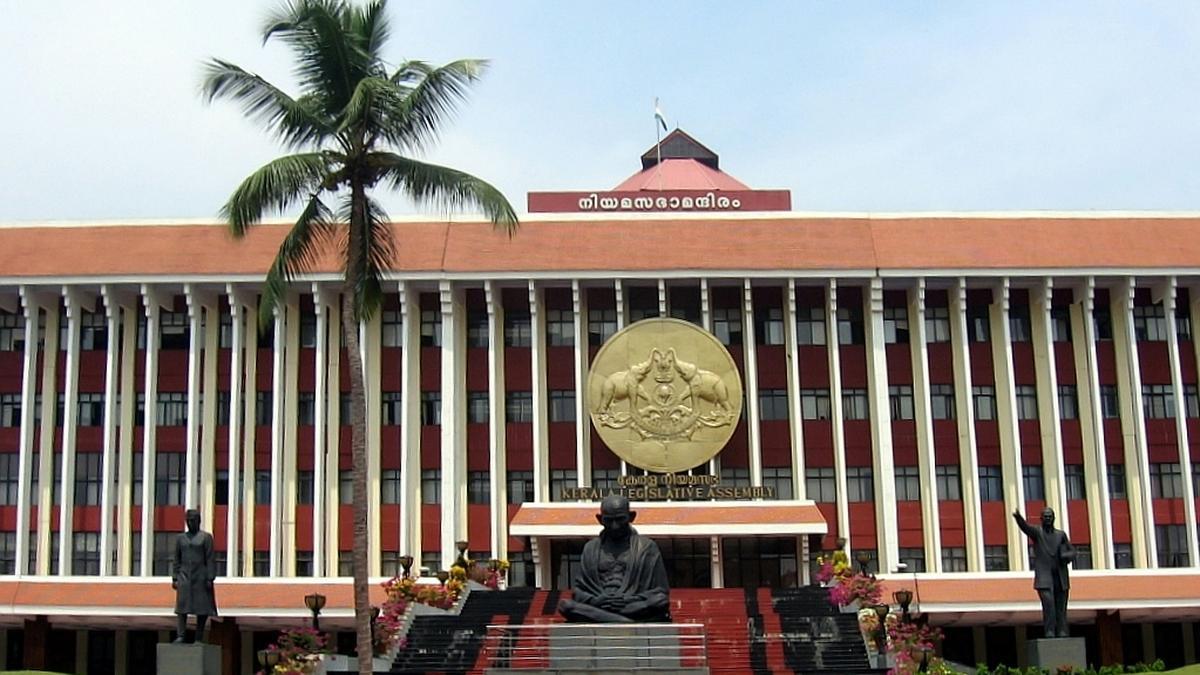
Thu Feb 05 08:50:40 UTC 2026: ### Kerala Assembly Demands Reversal of Central Government’s MGNREGS Restructuring
The Story: The Kerala Assembly has passed a resolution on February 5, 2026, demanding the Union government restore the original Mahatma Gandhi National Rural Employment Guarantee Scheme (MGNREGS) framework. This resolution opposes the newly introduced Viksit Bharat – Guarantee for Rozgar and Ajeevika Mission (Gramin) (VB–G RAM G), citing the severe financial burden it places on states and the erosion of the rights-based approach inherent in the original MGNREGS. The resolution, presented by Minister for Local Self-Government M.B. Rajesh, highlights that under the new scheme, states are responsible for unemployment wages and compensation for delayed payments, while the Centre retains the power to decide the share of states.
Key Points:
- The Kerala Assembly passed a resolution on February 5, 2026, against the Viksit Bharat – Guarantee for Rozgar and Ajeevika Mission (Gramin) (VB–G RAM G).
- The resolution argues that VB-G RAM G places a significant financial burden on states.
- Under VB-G RAM G, states bear the responsibility for unemployment wages and compensation for delayed payments.
- The Centre sets a ‘normative allocation,’ with states bearing 40% of the cost, plus the full cost of working days exceeding this allocation.
- Kerala estimates an additional burden of ₹3,500 crore due to the new conditions.
- Kerala provides 66.17 man-days of work compared to the national average of 50.23 man-days in 2024-25.
- Kerala has 40.45 lakh families enrolled in MGNREGS, with 22.66 lakh workers considered fully active.
- Kerala has implemented schemes like ‘Tribal Plus’ to provide an extra 100 days of guaranteed employment to the tribal population.
Critical Analysis:
The historical context provided includes a similar resolution from West Bengal regarding “SIR” hardships. This indicates a broader trend of states feeling financially strained or disagreeing with centrally imposed schemes or financial structures. This could signal growing tension between the Union government and certain states regarding resource allocation and policy implementation, especially concerning social welfare programs. The timing could be important: if other states follow suit, it could snowball into greater regional resistance.
Key Takeaways:
- The Kerala Assembly’s resolution reflects concerns over the financial implications of the new VB-G RAM G scheme.
- The move highlights potential tensions between the Union government and state governments regarding resource sharing and control over employment guarantee schemes.
- Kerala’s commitment to social welfare programs, as demonstrated by its MGNREGS performance and additional schemes, is a key driver of its opposition.
- The concurrent resolution passed in West Bengal Assembly over hardships due to “SIR” implies that Kerala isn’s alone in disagreeing with the centre on financial burden/state rights issues.
- The opposition protests over the Sabarimala gold theft issue show the assembly deals with multiple issues simultaneously.
Impact Analysis:
The Kerala Assembly’s resolution and the similar motion in West Bengal may trigger a larger debate on the restructuring of MGNREGS and the financial relationship between the Union government and states. The outcome of this debate could significantly alter the landscape of rural employment guarantee programs and the distribution of financial responsibilities. If more states voice similar concerns, it could force the Union government to reconsider the VB-G RAM G scheme or negotiate revised terms with the states. This situation could impact the livelihoods of millions of rural workers and the fiscal health of state governments.
 First Piper