
Thu Feb 05 08:55:39 UTC 2026: # India and U.S. Poised to Sign First Tranche of Bilateral Trade Agreement, Reducing Tariffs
The Story:
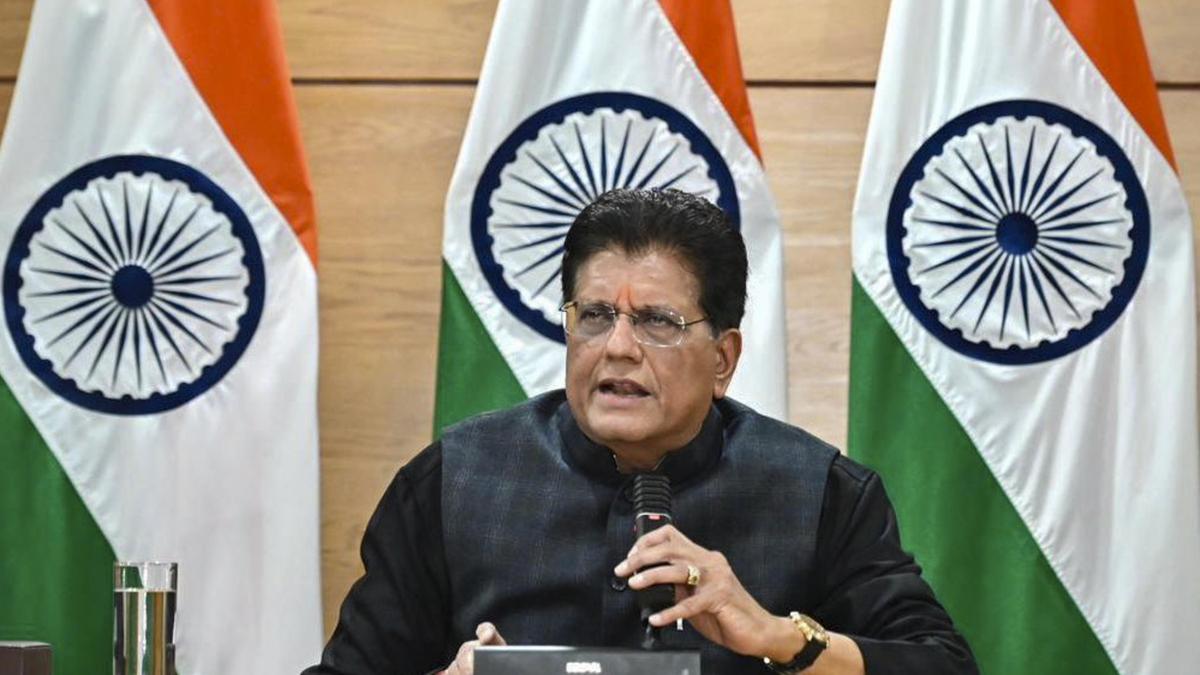
Indian Commerce Minister Piyush Goyal confirmed on Thursday, February 5, 2026, that the impending trade agreement with the U.S. is the “first tranche” of a broader bilateral trade agreement. A joint statement is expected within 4-5 days, followed by an executive order from the U.S. reducing tariffs on Indian goods to 18%. This development follows Prime Minister Narendra Modi’s announcement on Monday, February 2, 2026, after a conversation with President Donald Trump, regarding the reduced tariffs for “Made in India” products.
Key Points:
- The India-U.S. trade deal is a multi-stage agreement, with the current agreement being the “first tranche.”
- The joint statement is expected to be signed within 4-5 days of February 5, 2026.
- The U.S. will issue an executive order reducing tariffs on Indian goods to 18%.
- Currently, Indian goods face a 25% reciprocal tariff and a 25% additional tariff for buying Russian crude oil.
- A legal agreement for the first tranche is expected by mid-March.
- The agreement, in its initial phase, doesn’t include any investment commitments.
Critical Analysis:
The context provided highlights the rapid pace of negotiations. The timeline from Modi’s announcement on February 2nd to Goyal’s confirmation and projected signing within days suggests a high level of political will on both sides to push the agreement forward.
Key Takeaways:
- The India-U.S. trade relationship is evolving towards a more structured, multi-stage agreement.
- The reduction in tariffs signals a potential boost for Indian exports to the U.S.
- The focus on reducing tariffs, particularly against the backdrop of existing tariffs related to Russian crude oil, suggests a potential realignment of trade dynamics.
- The “first tranche” nature of the deal implies future negotiations and expansions of the trade relationship.
- The absence of investment commitments in this initial pact indicates a focus on trade liberalization as the starting point.
Impact Analysis:
The reduction in tariffs to 18% has the potential to significantly impact Indian manufacturing and exports. “Made in India” products will become more competitive in the U.S. market, potentially leading to increased production and job creation in India. The success of this first tranche will likely influence the scope and ambition of subsequent phases of the bilateral trade agreement, which could lead to further integration of the two economies. This agreement comes at a critical time as the global trade environment shifts, and could solidify India’s position as a key player in global trade. The existing 25% additional tariff for Russian crude oil suggests the US is using trade agreements to pressure India to reduce its dependence on Russian oil, which has broader geopolitical implications.
 First Piper