
Thu Feb 05 08:10:24 UTC 2026: ### India and Sri Lanka Strengthen Spiritual Ties Through Exposition of Holy Devnimori Relics
The Story:
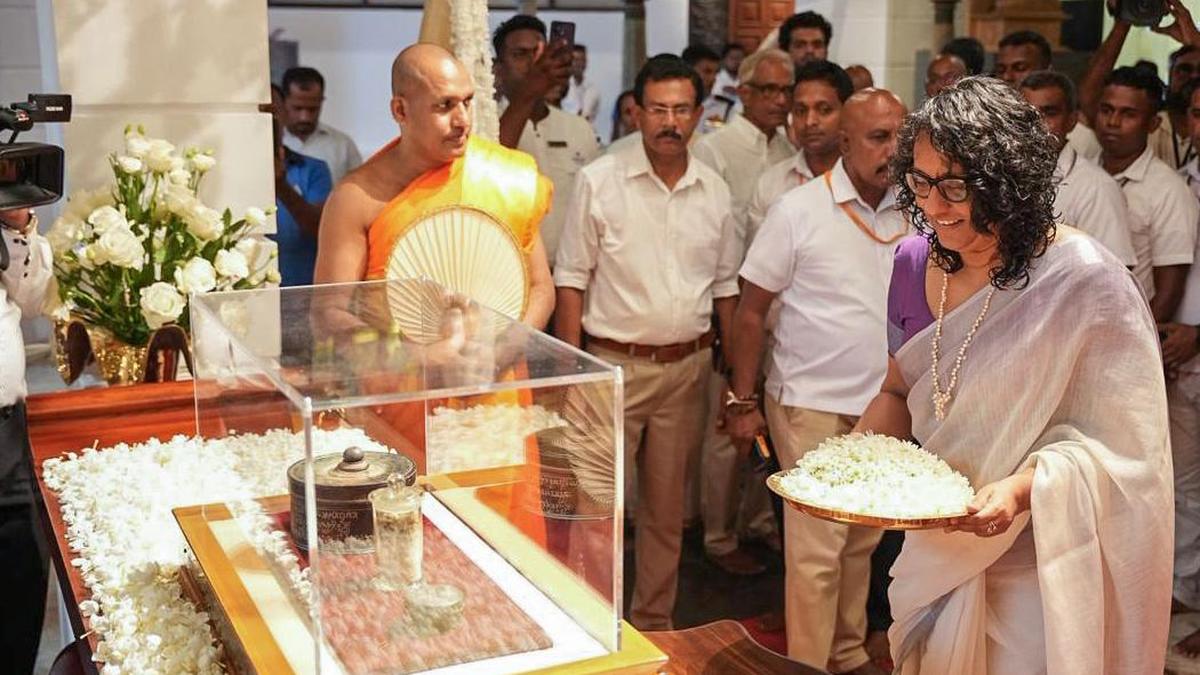
On February 5, 2026, Indian Prime Minister Narendra Modi expressed his gratitude to Sri Lankan President Anura Kumara Dissanayake for inaugurating the exposition of the holy Devnimori relics of Lord Buddha in Colombo. The first-ever international exposition of these sacred relics, originating from the Devnimori archaeological site in Gujarat, began at Gangaramaya Temple on February 4, 2026, and will continue until February 11, 2026. The event underscores the “deep civilisational and spiritual bonds” between India and Sri Lanka.
The exposition, announced during Prime Minister Modi‘s visit to Sri Lanka in April 2025, was inaugurated by President Dissanayaka, Gujarat Governor Acharya Devvrat, and Deputy Chief Minister Harsh Sanghavi. The relics were transported to Sri Lanka by the Indian Air Force with full state honors and will be available for public veneration.
Key Points:
- The exposition of the Devnimori relics in Colombo is the first international exposition of these relics.
- The relics originate from Devnimori, Gujarat, and contain ashes and inscriptions dating back to early Buddhism.
- Prime Minister Modi announced the exposition during his visit to Sri Lanka in April 2025.
- The relics arrived in Colombo on February 4, 2026, coinciding with Sri Lanka’s 78th Independence Day.
- India organized similar expositions of Kapilavastu Relics in 2012 and Sarnath Relics in 2018 in Sri Lanka.
- An Indian delegation led by the Gujarat governor and deputy chief minister accompanied the relics to Sri Lanka.
- Two exhibitions, “Unearthing the Sacred Piprahwa” and “Sacred Relic and Cultural Engagement of Contemporary India” have also been inaugurated at the Gangaramaya Temple.
- PM Modi previously announced a grant for the development of the Sacred City Complex project in Anuradhapura in April 2025, in addition to a $15 million grant for the promotion of Buddhist ties, announced in 2020.
Critical Analysis:
The context provided reveals several factors influencing India’s approach to diplomacy:
- US Action Against India-Based TCO: The closure of online pharmacies linked to India suggests potential strain in US-India relations, making strong regional ties more important.
- Boycott Threat by Pakistan: The call for a boycott by the Pakistani PM reflects ongoing geopolitical tensions with India, emphasizing the need for strong relationships with neighboring countries.
- India-US Trade Deal with Reciprocal Tariff: While a trade deal is positive, the 18% tariff indicates that some friction exists, necessitating diversified diplomatic strategies.
Given these factors, the intensification of cultural diplomacy with Sri Lanka through the exposition of Buddhist relics can be interpreted as a strategic move to solidify regional alliances, counter negative perceptions arising from other international issues, and emphasize shared cultural heritage amid broader geopolitical challenges.
Key Takeaways:
- The exposition serves as a significant act of cultural diplomacy, reinforcing the historical and spiritual links between India and Sri Lanka.
- India is actively using its cultural heritage to strengthen diplomatic relationships, especially with its neighbors.
- The timing of the exposition, coinciding with Sri Lanka’s Independence Day, is symbolic and intentional, demonstrating India’s commitment to the bilateral relationship.
- Amidst other potentially straining international relationships, solidifying relations with countries in the region is important to India’s geopolitical standing.
- This event continues India’s consistent support and cultural engagement with Sri Lanka’s Buddhist community.
Impact Analysis:
The strengthening of cultural and spiritual ties between India and Sri Lanka is likely to have the following long-term implications:
- Enhanced Bilateral Relations: The exposition will likely foster a deeper understanding and appreciation between the two nations, leading to enhanced cooperation in other areas such as trade, security, and tourism.
- Counterbalancing Regional Influence: A stronger relationship with Sri Lanka can help India counterbalance the influence of other regional powers, particularly China, in the Indian Ocean region.
- Promotion of Buddhist Heritage: The event will contribute to the preservation and promotion of Buddhist heritage, attracting religious tourists and fostering a sense of shared identity among Buddhist communities worldwide.
- Strengthened Soft Power: India’s cultural diplomacy efforts enhance its soft power, projecting a positive image and fostering goodwill on the international stage.
 First Piper