
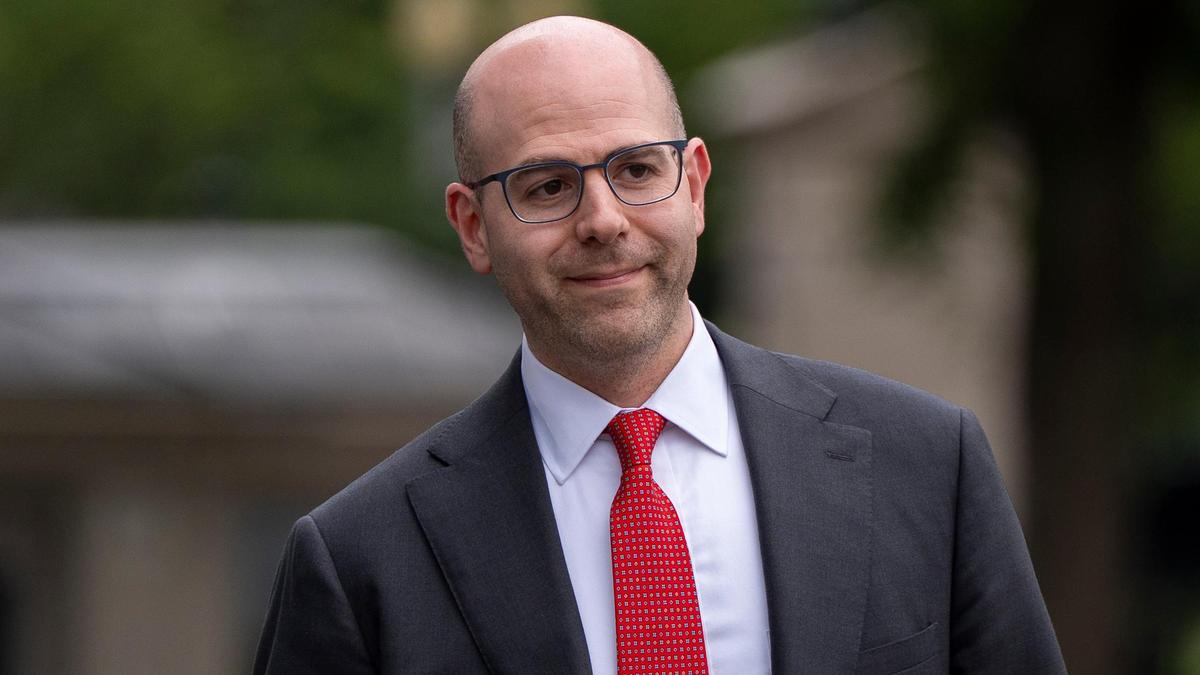
Wed Feb 04 06:53:13 UTC 2026: # Federal Reserve Governor Stephen Miran Resigns from White House Council Amidst Controversy
The Story:
Federal Reserve Governor Stephen Miran has resigned from his position as chair of the White House’s Council of Economic Advisers (CEA). The resignation, confirmed by White House spokesman Kush Desai on February 3, 2026, ends a controversial arrangement where Miran simultaneously held positions at both the Federal Reserve and the White House. The situation raised concerns due to the nonpartisan nature expected of Fed Governors. Miran had previously stated he would step down from the CEA if he remained on the Fed board after January 31, 2026.
Key Points:
- Stephen Miran, appointed to the Fed by President Donald Trump in September, has resigned from his role as chair of the White House’s Council of Economic Advisers.
- The resignation follows concerns about the propriety of holding positions in both a nonpartisan body (the Fed) and the executive branch.
- Miran fulfilled his pledge to resign from the CEA upon remaining on the Fed board after January 31, 2026.
- President Trump has nominated Kevin Warsh to potentially replace current Fed chair Jerome Powell, whose term ends on May 15.
- There is speculation that Warsh may fill Miran’s vacant Fed seat before potentially being elevated to Fed Chair.
Critical Analysis:
The situation is unfolding in a complex interplay of political appointments and institutional norms. Trump’s appointment of Miran to the Fed, coupled with the subsequent nomination of Warsh to potentially replace Powell, suggests a strategic effort to reshape the Federal Reserve’s leadership. Miran’s dual role was inherently problematic, creating the appearance of political influence within the supposedly independent central bank. The potential scenario where Warsh fills Miran’s seat and then replaces Powell points to a calculated power dynamic at play.
Key Takeaways:
- President Trump is strategically positioning allies within the Federal Reserve.
- The independence of the Federal Reserve is being tested by the appointment of individuals with ties to the executive branch.
- Personnel changes at the Fed are generating significant speculation about the future direction of monetary policy.
- The resignation highlights the inherent conflict of interest when individuals hold positions in both the executive branch and the Federal Reserve.
- The timing of these events suggests an attempt to influence the Fed’s leadership before the next election cycle.
Impact Analysis:
The events surrounding the Federal Reserve appointments and resignations have the potential for significant long-term impact. A politically influenced Fed could lead to decisions that prioritize short-term political gains over long-term economic stability. The credibility and independence of the central bank are crucial for maintaining investor confidence and managing inflation. The appointment of individuals perceived as partisan could erode public trust in the Fed’s ability to act in the best interests of the economy. The confirmation process for Warsh will be closely watched by financial markets and economists, as it will provide further insight into the future direction of monetary policy under a Trump administration.
 First Piper