
Thu Feb 05 04:46:32 UTC 2026: # Saudi Arabia’s Cheetah Comeback: Discovery Sparks Rewilding Aspirations
The Story:
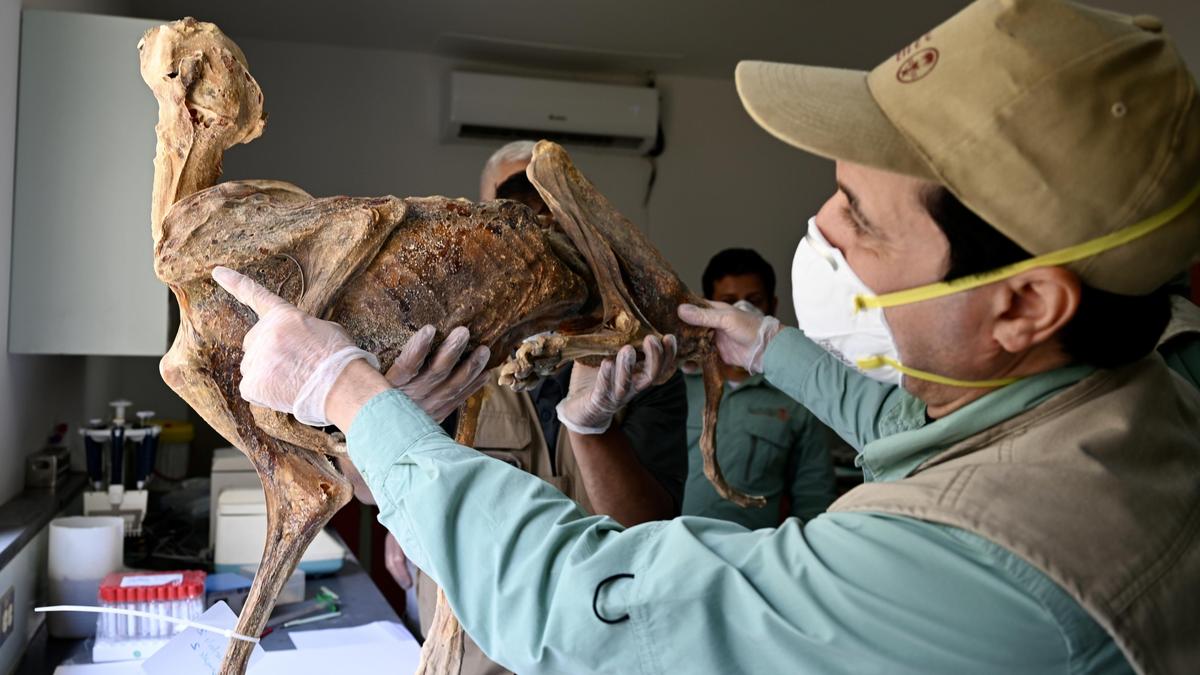
Scientists have unearthed the mummified remains of seven cheetahs and skeletal remains of 54 others in Saudi Arabian caves, revealing the historical presence of these big cats in the region. The discovery, detailed in Nature Communications Earth and Environment, spans over 4,223 years and includes specimens from just over a century ago. Genomic analysis identifies both Asiatic and North-Western African cheetah subspecies, prompting discussions about rewilding efforts in Saudi Arabia using the closest subspecies, A. j. hecki. This initiative aligns with Saudi Arabia’s broader biodiversity goals, which includes re-establishing animals to their former biogeographic ranges.
Key Points:
- Seven naturally mummified cheetahs and skeletal remains of 54 were found in Saudi Arabian caves.
- The remains date back as far as 4,223 years ago and as recently as a century ago.
- Genomic data revealed the presence of Asiatic cheetah (A. j. venaticus) and North-Western African cheetah (A. j. hecki) subspecies.
- Saudi Arabia aims to rewild cheetahs using the North-Western African subspecies, A. j. hecki.
- Viable cheetah population requires at least 100,000 sq. km. of habitat with adequate prey and minimal human interference.
- India’s Project Cheetah, involving African cheetahs introduced to Madhya Pradesh, is noted as potentially the most expensive conservation project in India’s history.
Critical Analysis:
The parallel between the Saudi Arabian and Indian cheetah reintroduction efforts is notable. Both initiatives aim to bring back cheetahs to regions where they were once extinct, however, each faces unique challenges. India’s project focuses on the African cheetah due to the critically endangered status of the Asiatic cheetah, mirroring the situation in Saudi Arabia. The historical context provided regarding Asiatic lions and wild dogs shows a pattern of conservation and reintroduction efforts in Asia.
Key Takeaways:
- The discovery provides valuable insights into the evolutionary history of cheetahs and their former range.
- Rewilding cheetahs in Saudi Arabia presents logistical and ecological challenges, including habitat requirements and sourcing appropriate subspecies.
- Conservation efforts are expensive and require careful planning and resource allocation.
- The successful reintroduction of other ungulates in Saudi Arabia provides a precedent for the cheetah rewilding project.
- Molecular ecologist emphasizes the potential for the relocation of cheetahs from tiny populations causing “new problems for the donor pools.”.
Impact Analysis:
The Saudi Arabian rewilding project has the potential to significantly impact cheetah conservation globally. Successful reintroduction could expand the cheetah’s range and contribute to the species’ long-term survival. However, the project’s success hinges on careful habitat management, prey base restoration, and minimizing human-wildlife conflict. The genetic analysis of the found cheetahs should be a guide in the success of the rewilding project.
 First Piper