
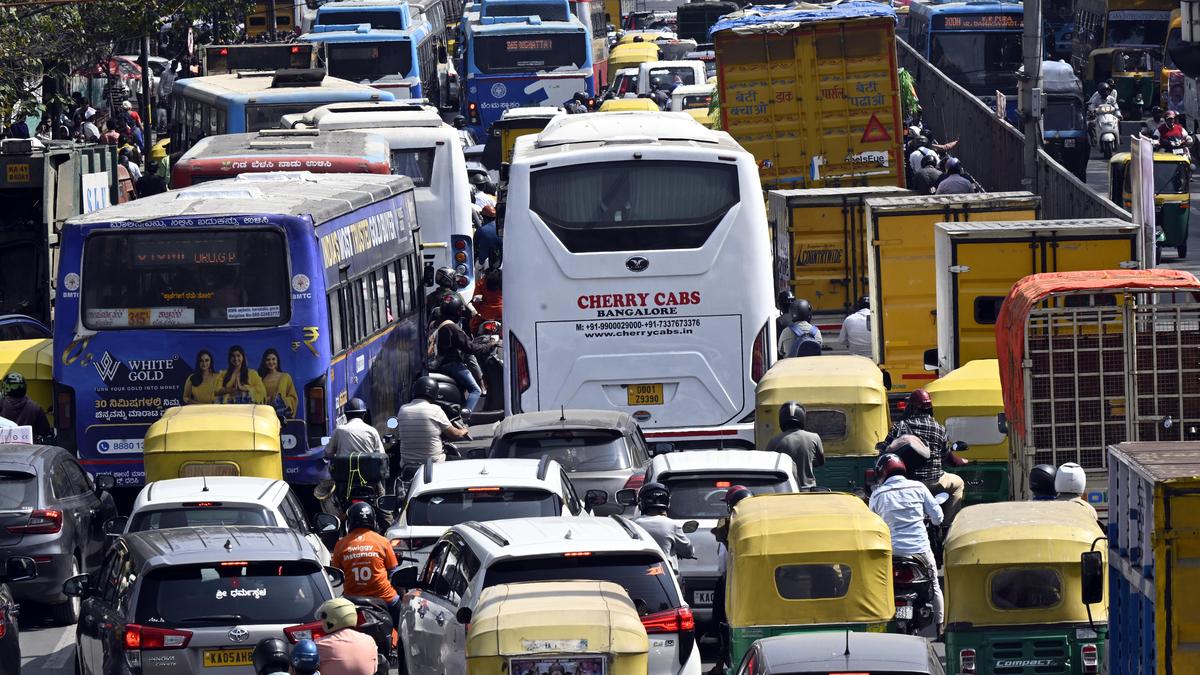
Wed Feb 04 19:56:57 UTC 2026: # Bengaluru’s Traffic Woes Continue: Ranked Second Most Congested City Globally
The Story: A recent TomTom report has ranked Bengaluru as the second-most congested city in the world, highlighting the city’s ongoing struggle with traffic. The article attributes this to years of poor mobility planning, which failed to align transport infrastructure with the city’s growth. Despite efforts to expand public transport, including the Bengaluru Metropolitan Transport Corporation (BMTC) and the Namma Metro, these systems have been insufficient to address the increasing number of vehicles and the concentration of employment in specific corridors.
Key Points:
- Bengaluru ranked second-most congested city globally, according to TomTom report.
- Registered vehicles in Bengaluru rose from approximately 1 crore in 2020-21 to nearly 1.23 crore in April 2025.
- Key employment clusters like Electronics City, Whitefield–ITPL corridor, and the Outer Ring Road (ORR) stretch are major congestion points.
- BMTC operates 7,067 buses, catering to nearly 48 lakh passengers daily, but struggles with fleet size and dedicated bus lanes.
- Namma Metro extensions to Whitefield in 2023 and Electronics City in August 2025 saw immediate ridership increases.
- The Bengaluru Suburban Railway Project, sanctioned in October 2020, is delayed until 2030.
Key Takeaways:
- Planning Deficiencies: Bengaluru’s traffic congestion is a direct result of inadequate long-term transportation planning that did not anticipate or address the city’s rapid growth and employment patterns.
- Public Transport Shortcomings: While public transport systems like BMTC and Namma Metro play a significant role, they are currently insufficient to meet the demands of the growing population and workforce.
- Infrastructure Delays: The delay of the Bengaluru Suburban Railway Project exacerbates the problem, hindering the development of a comprehensive transportation network.
- Integrated Approach Needed: A more integrated approach involving regulatory intervention, improved first/last mile connectivity, and better coordination between transportation agencies is necessary to alleviate congestion.
Impact Analysis:
- Economic Impact: Continued traffic congestion will likely have a negative impact on Bengaluru’s economy, affecting productivity and potentially deterring investment.
- Quality of Life: The extensive commute times will continue to affect the quality of life for Bengaluru’s residents, leading to increased stress and reduced leisure time.
- Future Development: The congestion problem must be addressed to support sustainable urban development and maintain Bengaluru’s status as a technology and innovation hub.
 First Piper