
Wed Feb 04 14:38:25 UTC 2026: ### Headline: Expelled CPI(M) Leader Releases Book Amidst Opposition and Security
The Story
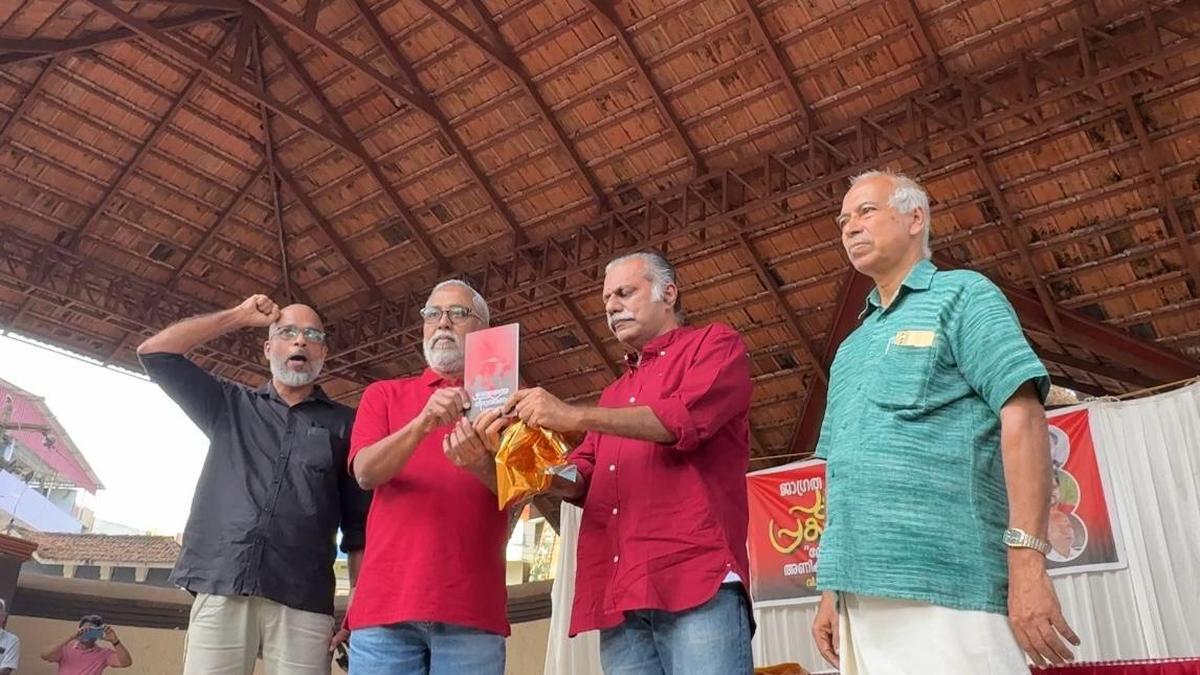
Former CPI(M) Kannur district committee member V. Kunhikrishnan, expelled for alleging embezzlement of martyr’s funds, released his book Nethruthwathe Anigal Nokki Tiruthanam (Leadership should be corrected by the Ranks) at Gandhi Park in Payyannur on February 4, 2026. The event occurred under heavy police security due to strong opposition from the CPI(M). Former IT advisor to ex-Chief Minister V.S. Achuthanandan, Joseph C. Mathew, released the book and handed the first copy to writer V.S. Anil Kumar.
Despite attempts by the CPI(M) to disrupt the event and alleged online campaigns to postpone it, a large crowd attended, expressing support for Mr. Kunhikrishnan. The event highlights internal dissent within the CPI(M) and raises questions about transparency and accountability within the party.
Key Points
- V. Kunhikrishnan, former CPI(M) leader, released a book critical of the party’s leadership.
- The book release took place in Payyannur on February 4, 2026, amidst strong opposition from the CPI(M).
- Joseph C. Mathew, former IT advisor, released the book, drawing parallels to past dissent within the party.
- Heavy police security was present due to concerns about potential disruptions.
- The CPI(M) State secretary M.V. Govindan had strongly criticized Mr. Kunhikrishnan, and party-affiliated groups launched a social media campaign against him.
Critical Analysis
The book release, framed against the backdrop of Mr. Kunhikrishnan’s expulsion and the CPI(M)’s strong opposition, suggests a deep-seated internal conflict within the party. Mr. Mathew’s comparison to V.S. Achuthanandan’s past dissent further emphasizes this point. The CPI(M)’s attempts to suppress the book release and the alleged online campaigns demonstrate a strategic effort to control the narrative and silence dissenting voices. The event is significant due to the implications it has on the party’s internal stability and its commitment to transparency and accountability.
Key Takeaways
- Internal dissent within the CPI(M) is surfacing publicly, challenging the party’s unity.
- Allegations of corruption and lack of transparency are becoming a focal point of internal conflict.
- The CPI(M) appears to be actively suppressing dissenting voices through various means, including online campaigns.
- The book release highlights a potential power struggle within the party and raises questions about its future direction.
- The event underscores the importance of freedom of expression and the right to dissent, even within political organizations.
Impact Analysis
This event could have long-term implications for the CPI(M). The surfacing of internal dissent and corruption allegations can erode public trust in the party and its leadership. The party’s attempts to suppress dissenting voices could further alienate members and supporters. If the allegations are proven, it could lead to a significant loss of credibility and potentially affect the party’s electoral prospects. Furthermore, this event could embolden other dissenting voices within the party, leading to further internal conflict and instability. The long-term impact will depend on how the CPI(M) addresses these issues and whether it takes steps to improve transparency and accountability within its ranks.
 First Piper