
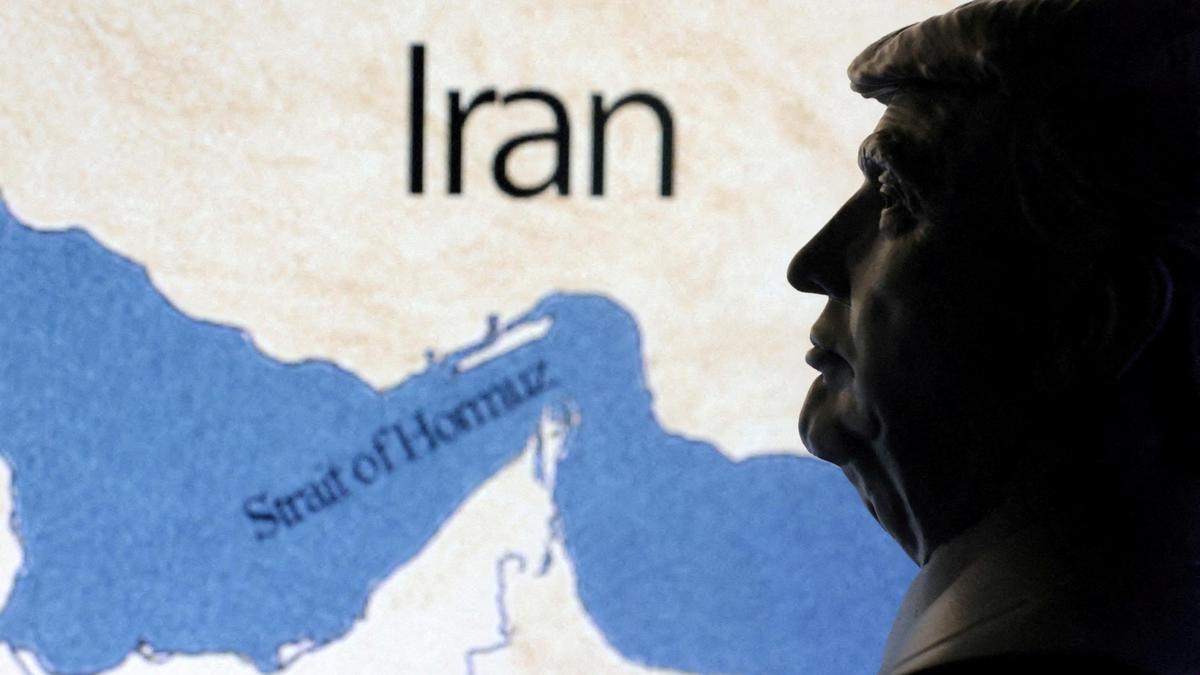
Wed Feb 04 13:55:54 UTC 2026: ### Headline: U.S. and Iran Prepare for Talks Amidst Rising Tensions in Arabian Sea
The Story:
Despite recent military escalations, including the downing of an Iranian drone by a U.S. fighter jet and attempts by Iranian boats to seize a U.S.-flagged tanker, Iran and the U.S. are preparing for direct talks. Scheduled for February 2026, these talks aim to address ongoing disputes, potentially including Iran’s nuclear program and regional security. While both sides have expressed a willingness to negotiate, tensions remain high, with Iran conducting military drills and the U.S. maintaining a strong military presence in the region. The location of the talks is yet to be finalized.
Key Points:
- Iran and the U.S. are set to hold talks in the coming days, with details on the venue to be announced.
- The U.S. military shot down an Iranian drone that approached the USS Abraham Lincoln in the Arabian Sea on February 3, 2026.
- President Trump claims that Iran wants to negotiate to avoid a repeat of “Operation Midnight Hammer,” the U.S. strikes on Iranian nuclear facilities in June 2025 during the 12-day Iran-Israel war.
- Steve Witkoff, President Trump’s special envoy, is expected to meet with Iranian officials later this week.
- Iran conducted live-fire military drills in the Strait of Hormuz.
- Two Iranian boats attempted to seize a U.S.-flagged tanker near the Strait of Hormuz, but were thwarted by a U.S. guided missile destroyer.
- Netanyahu urges US envoy to be skeptical of Iran in revived nuclear talks.
Critical Analysis:
The apparent paradox of simultaneous de-escalation through diplomacy, and escalation through military actions suggests both sides are attempting to negotiate from a position of strength. The US is demonstrating resolve to contain Iran’s actions, potentially to extract more concessions at the negotiating table, while Iran is showing its ability to disrupt regional stability if its concerns are not addressed. Netanyahu’s intervention suggests Israel remains wary of any deal that doesn’t sufficiently curb Iran’s nuclear ambitions.
Key Takeaways:
- The U.S. and Iran are engaged in a delicate dance of diplomacy and military posturing.
- Recent military incidents highlight the risks of miscalculation and escalation in the region.
- Despite tensions, both sides seem to recognize the need for dialogue.
- The success of the talks will likely depend on each side’s willingness to compromise and address the other’s concerns.
- The ongoing Ukraine-Russia peace talks in Abu Dhabi, mediated by the U.S., highlight a broader U.S. strategy of diplomatic engagement in conflict zones.
Impact Analysis:
The outcome of these talks will significantly impact regional stability and global security. A successful negotiation could lead to a de-escalation of tensions, a potential revival of the Iran nuclear deal, and increased regional cooperation. However, a failure to reach an agreement could result in further military escalations, potentially leading to a wider conflict. The involvement of figures like Steve Witkoff, a known figure in previous administrations, suggests a degree of continuity in U.S. policy despite recent upheavals. The geopolitical consequences extend to energy markets, trade routes through the Strait of Hormuz, and the overall balance of power in the Middle East.
 First Piper