
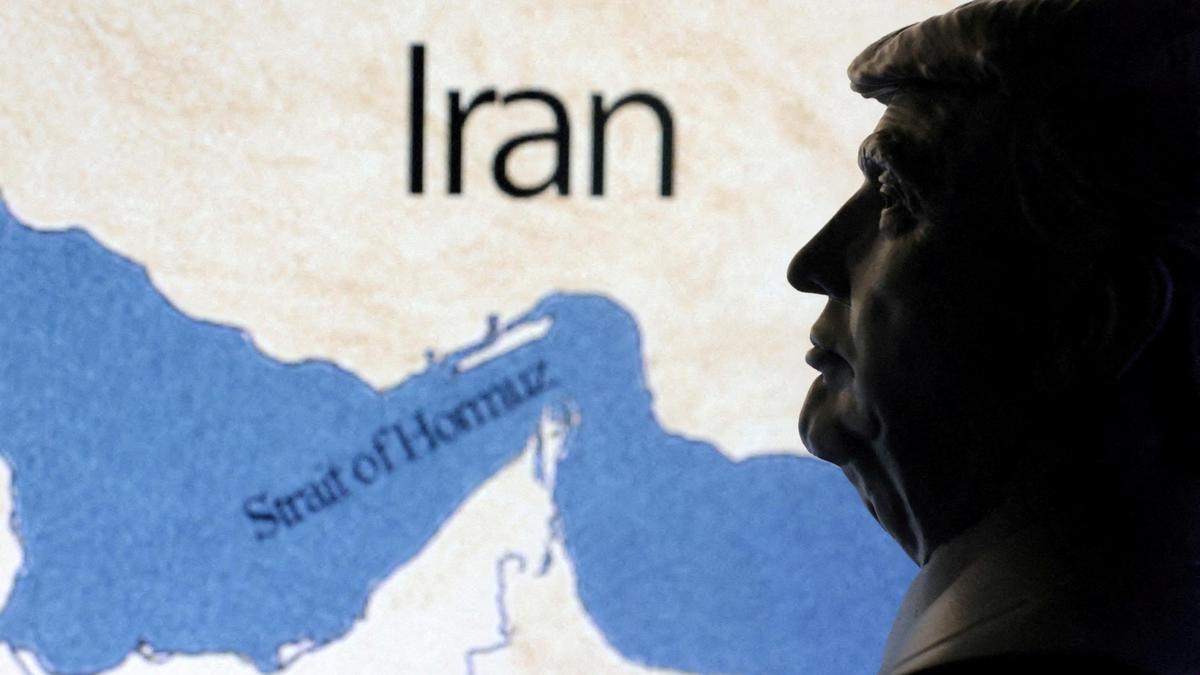
Wed Feb 04 08:57:25 UTC 2026: ### Tensions High as US and Iran Prepare for Nuclear Talks Amidst Military Confrontations
The Story:
Amidst escalating tensions and a military buildup in the Middle East, the United States and Iran are expected to hold nuclear talks in Oman on Friday, February 6, 2026. This development follows heightened rhetoric from President Donald Trump, who warned of potential “bad things” if a deal cannot be reached, and a series of concerning military incidents. These incidents include the U.S. military shooting down an Iranian drone near the Abraham Lincoln aircraft carrier and Iranian Revolutionary Guard Corps (IRGC) forces harassing a U.S.-flagged tanker in the Arabian Sea. Despite the confrontational backdrop, both sides seem compelled to engage in negotiations, though significant disagreements persist, particularly regarding Iran’s ballistic missile program.
Key Points:
- Nuclear talks between the United States and Iran are planned to take place in Oman on February 6, 2026.
- President Trump has increased pressure on Iran, warning of potential consequences if a deal is not reached.
- Iran considers its ballistic missile program a “red line” in negotiations.
- The U.S. military shot down an Iranian drone that approached the Abraham Lincoln aircraft carrier on February 3, 2026.
- Iranian IRGC forces harassed a U.S.-flagged tanker in the Strait of Hormuz on February 3, 2026.
- Jared Kushner, Steve Witkoff, and Abbas Araqchi are expected to participate in the talks.
- Initial plans for broader regional participation have been scaled back to bilateral talks between the U.S. and Iran.
- Trump demanded three conditions for talks: zero enrichment of uranium in Iran, limits on Tehran’s ballistic missile program and ending its support for regional proxies.
Key Takeaways:
- The planned nuclear talks represent a crucial attempt to de-escalate tensions between the U.S. and Iran, even amidst ongoing military incidents.
- Disagreements over Iran’s ballistic missile program remain a significant obstacle to any potential agreement.
- Internal pressures within Iran, including recent anti-government demonstrations and fears of a U.S. strike, are influencing the country’s approach to negotiations.
- President Trump’s hardline stance and military posturing are intended to increase leverage in the negotiations, but also carry the risk of escalating the conflict.
- The reduction of participants to only the U.S. and Iran signifies a desire for direct engagement and potentially reflects concerns about the influence of other regional actors.
Impact Analysis:
- The outcome of these talks will significantly impact regional stability and the future of the Iran nuclear deal.
- Failure to reach an agreement could lead to further military escalation, potentially resulting in a wider regional conflict.
- Success in the negotiations could pave the way for improved relations between the U.S. and Iran and a renewed focus on regional security.
- The internal political dynamics within Iran suggest that the regime’s survival could depend on successfully navigating these negotiations and avoiding a confrontation with the U.S.
- These events could reshape the geopolitical alignment in the Middle East and influence the role of other regional powers.
 First Piper