
Sun Feb 01 11:31:10 UTC 2026: ### Rafah Crossing Reopens Amidst Fragile Ceasefire, Limited Access
The Story:
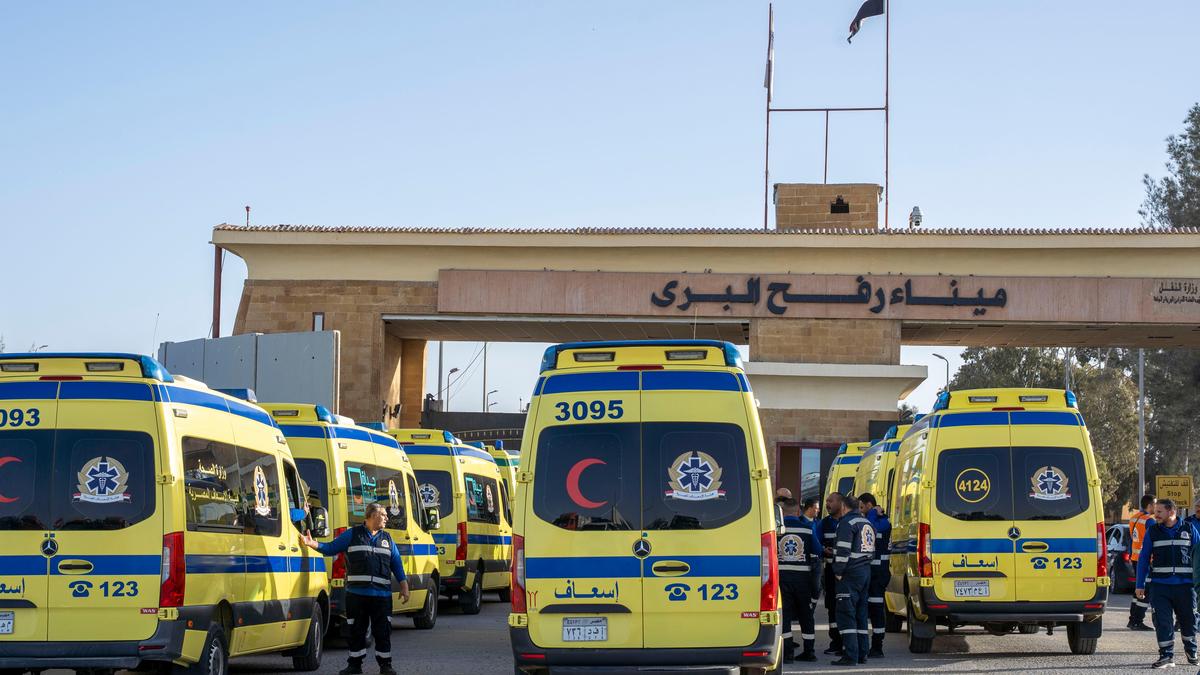
The Rafah border crossing between Gaza and Egypt is set to reopen on February 2, 2026, after being largely shut since May 2024. This reopening, coordinated by Israel, Egypt, and the European Union, is intended to allow Palestinians to exit and enter Gaza on foot, particularly for medical treatment. The crossing will operate under stringent Israeli security checks, prioritizing the departure of sick and wounded Gazans. This move comes after a ceasefire brokered by U.S. President Donald Trump, though the truce has been repeatedly shaken by violence, including recent Israeli airstrikes following a Hamas violation.
Key Points:
- Rafah border crossing to reopen on February 2, 2026, after being largely shut since May 2024.
- COGAT, the Israeli military unit, will oversee the crossing’s operation, coordinating with Egypt and the EU.
- Movement is limited to Gaza residents on foot only, in both directions.
- Israel will conduct stringent security checks, prioritizing medical patients leaving Gaza.
- The Palestinian Health Ministry reports 20,000 patients waiting to leave Gaza for medical care.
- The crossing is expected to handle 150-200 people in both directions daily, with more leaving than returning.
- At least 50 Palestinian patients will be processed on February 1, 2026, to cross into Egypt for treatment.
- The reopening is a key requirement of U.S. President Donald Trump’s plan to end the Israel-Hamas war.
- Israeli attacks have killed over 500 Palestinians since the ceasefire, while Palestinian militants have killed four Israeli troops.
- Recent Israeli airstrikes on January 31, 2026, killed at least 30 people in response to a Hamas tunnel violation on January 30, 2026.
Critical Analysis:
The reopening of the Rafah crossing is happening amidst a backdrop of continuous violence and distrust. The news of restrictions of movement, further Israeli strikes and systematic destruction of the health system in Gaza, hindering of NGOs and Palestinians facing issues when entering and leaving the Rafah crossing, suggests that the reopening is more symbolic than substantive. The limited number of people allowed to cross, combined with strict security measures, indicates an attempt to manage the humanitarian crisis without fundamentally altering the status quo. The situation hints at a strategy of controlled access rather than a genuine effort to alleviate the suffering of the Gazan people.
Key Takeaways:
- The Rafah crossing reopening is a step towards fulfilling the requirements of the U.S.-brokered ceasefire plan, but its effectiveness is questionable.
- Stringent security measures and limited capacity will likely impede the delivery of adequate aid and medical assistance.
- The continued violence and distrust between Israel and Hamas underscore the fragility of the ceasefire.
- The international community’s involvement, through the EU’s coordination, highlights the global concern for the humanitarian situation in Gaza.
- The long-term success of the reopening hinges on both parties’ commitment to de-escalation and adherence to the ceasefire agreement.
Impact Analysis:
The short-term impact of the Rafah crossing reopening will be primarily focused on providing medical assistance to the most urgent cases among the Gazan population. However, the long-term implications are significant and depend on several factors:
* Sustainability of the Ceasefire: If the ceasefire continues to be violated, the crossing will likely be closed again, exacerbating the humanitarian crisis.
* Implementation of the Trump Plan: The success of the broader peace plan, including governance reform and disarmament, will determine whether the crossing can serve as a gateway to stability.
* International Aid and Reconstruction: Substantial international investment in Gaza’s reconstruction is crucial for creating a sustainable environment that reduces the need for residents to seek medical care abroad.
* Political Resolution: Ultimately, a lasting political resolution to the Israeli-Palestinian conflict is necessary to ensure that the Rafah crossing becomes a symbol of peace and cooperation rather than a point of contention and control. The ongoing situation is a short-term relief measure, it is not a fix.
 First Piper