
Wed Feb 04 07:39:21 UTC 2026: ### Headline: Political Storm Erupts in Indian Parliament Over Unpublished Memoir on Ladakh Standoff
The Story
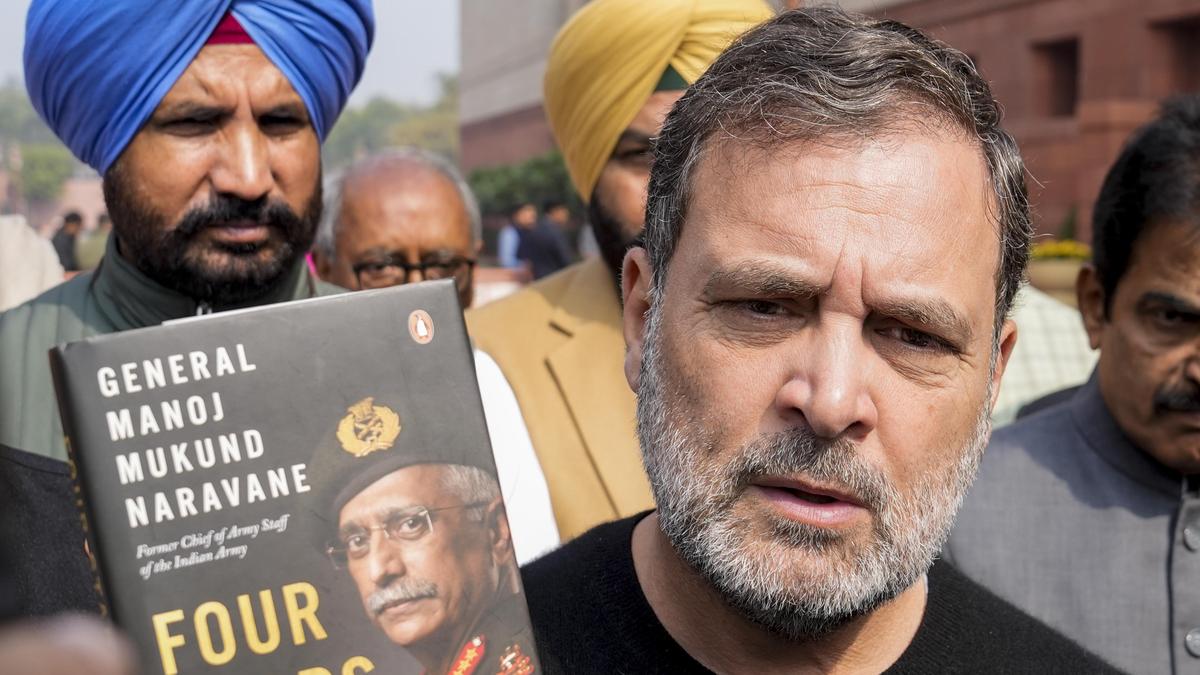
On February 4, 2026, the Indian Parliament witnessed tumultuous scenes as Leader of Opposition Rahul Gandhi brandished what he claimed was an unpublished memoir by former Army chief M.M. Naravane, titled ‘Four Stars of Destiny’. Gandhi alleged that the book contains critical information about the government’s handling of the October 2020 face-off with China in eastern Ladakh. Citing excerpts, which he was ultimately barred from quoting directly in Parliament, Gandhi accused Prime Minister Narendra Modi of failing to fulfill his responsibilities and claimed the former Army chief felt “abandoned by the entire establishment”. The day was marked by repeated adjournments, protests, and a heated exchange between Gandhi and Union Minister Ravneet Singh Bittu.
Key Points
- Rahul Gandhi displayed a purported unpublished memoir of former Army chief M.M. Naravane in Parliament.
- Gandhi claimed the book reveals the “truth” about the government’s response during the 2020 Ladakh face-off with China.
- The Speaker invoked Rule 349(i) to prevent Gandhi from quoting the unpublished book.
- Congress MPs staged protests with a poster titled “PM is compromised.”
- Gandhi called Union Minister Ravneet Singh Bittu a “traitor,” referencing his switch from Congress to the BJP in 2024.
Critical Analysis
The events unfolding in Parliament reflect a larger pattern of political contention surrounding the 2020 Ladakh standoff. The opposition’s persistent attempts to scrutinize the government’s handling of the crisis, coupled with the government’s efforts to control the narrative (as evidenced by preventing the quoting of the book), suggest a deep divide in perspectives and a strategic battle over public perception. The timing during the Budget Session underscores the political importance of the issue in shaping public discourse and potentially influencing electoral prospects. The related historical context item, “Rahul Gandhi’s ‘Traitor’ Jab At BJP’s Ravneet Bittu, Then A Handshake Snub,” helps to underscore the political animosity.
Key Takeaways
- The controversy surrounding the unpublished memoir highlights ongoing scrutiny of the government’s handling of the 2020 Ladakh standoff.
- The incident underscores the tense political climate and the government’s sensitivity to criticism regarding national security matters.
- The Speaker’s invocation of Rule 349(i) raises questions about the balance between parliamentary privilege and national security concerns.
- The “traitor” remark directed at Ravneet Singh Bittu emphasizes the personal and often acrimonious nature of Indian politics.
- The continuous disruptions and protests reveal a deeply divided Parliament.
Impact Analysis
The political fallout from this incident could have significant ramifications. The opposition’s narrative aims to erode public trust in the government’s leadership and competence in handling national security challenges. The government’s response will likely involve further attempts to discredit the memoir and portray the opposition as irresponsible. Longer-term, the episode could influence public perception leading up to future elections, particularly in regions bordering China or those sensitive to national security issues. The controversy also potentially affects the relationship between the military and the political establishment if the claims about the former Army chief feeling “abandoned” gain traction.
 First Piper