
Wed Feb 04 03:09:56 UTC 2026: ### U.S. and India Strengthen Ties with Trade Deal and Critical Minerals Focus
The Story:
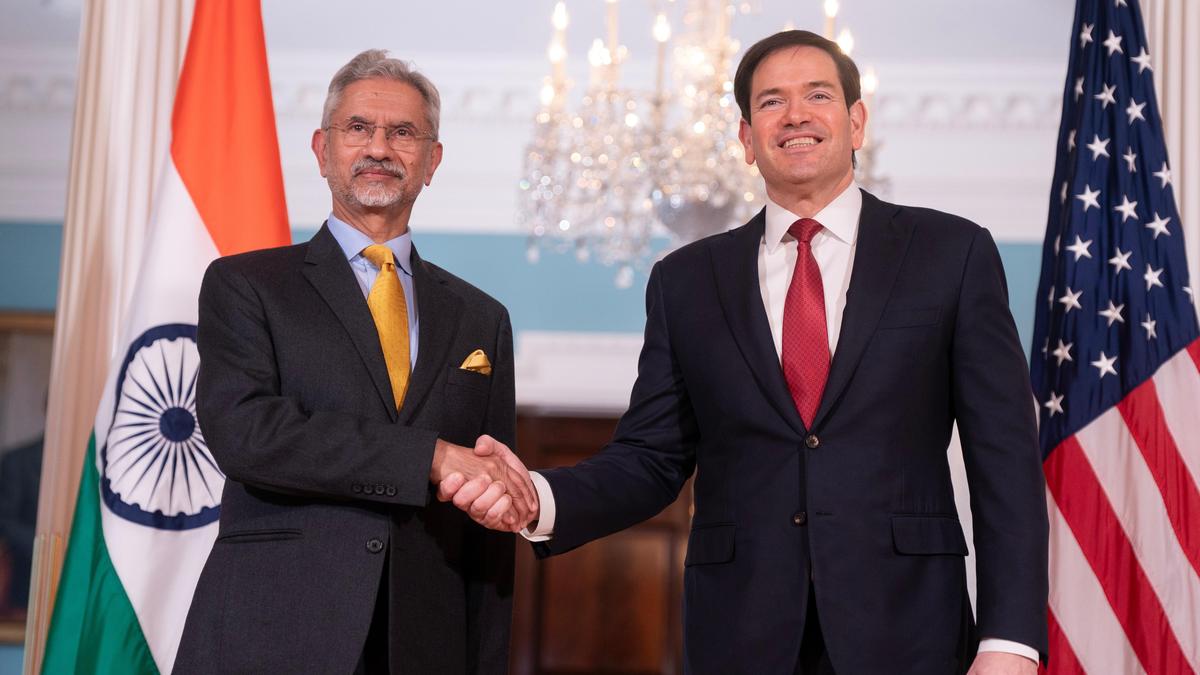
On February 3, 2026, Indian External Affairs Minister S. Jaishankar met with U.S. Secretary of State Marco Rubio in Washington D.C. to discuss bilateral cooperation and regional issues. The meeting highlighted a recently reached trade deal between U.S. President Donald Trump and Indian Prime Minister Narendra Modi, as well as plans to formalize cooperation on critical minerals exploration, mining, and processing. Both sides emphasized the importance of their strategic partnership and the Indo-Pacific region.
Key Points:
- Jaishankar and Rubio “welcomed” the trade deal between President Trump and Prime Minister Modi.
- They discussed formalizing bilateral cooperation on critical minerals exploration, mining, and processing.
- The discussions included trade, energy, nuclear, defence, critical minerals, and technology.
- Jaishankar also met with U.S. Treasury Secretary Scott Bessent, focusing on advancing the India-U.S. economic partnership and strategic cooperation.
- Bessent had previously criticized the EU for prioritizing trade with India over sanctioning India for its Russian oil purchases.
- The U.S. is hosting a Critical Minerals Ministerial to strengthen and diversify critical minerals supply chains.
- Trump announced that the U.S. would reduce tariffs on India from 25% to 18% as part of the new trade deal.
Critical Analysis:
The historical context reveals a series of interconnected events leading to the February 3, 2026 meeting. Treasury Secretary Bessent‘s prior criticism of India’s Russian oil purchases, juxtaposed with the new trade deal and the focus on critical minerals, suggests a strategic shift. India’s reported upcoming cessation of Russian oil purchases (as indicated by “India To Stop Russian Oil Purchase, Will Buy From US Under Trade Deal”) likely paved the way for improved trade relations and the pursuit of alternative supply chains for critical minerals, with the U.S. as a key partner. Furthermore, the growing trade between India and China in 2025 might be a contributing factor driving India to diversify its economic relationships with the US.
Key Takeaways:
- The U.S. and India are actively strengthening their economic and strategic partnership.
- Critical minerals are a central focus of bilateral cooperation, reflecting concerns about supply chain security.
- The trade deal and cooperation on critical minerals represent a strategic realignment, potentially influenced by geopolitical factors such as India’s relationship with Russia and China.
- The U.S. is actively working to build multilateral cooperation on critical minerals through the upcoming Ministerial.
Impact Analysis:
The strengthened U.S.-India relationship, particularly in critical minerals, has several long-term implications:
- Supply Chain Diversification: Reduces dependence on single-source suppliers of critical minerals, enhancing economic and national security for both countries.
- Geopolitical Realignment: Reinforces the strategic importance of the Indo-Pacific region and strengthens the Quad alliance against China’s influence.
- Economic Growth: Creates new opportunities for trade and investment in both countries, particularly in the technology and energy sectors.
- Energy Security: India’s decision to stop buying Russian oil and turn to the US to facilitate the new trade deal will likely impact global energy markets.
 First Piper