
Tue Feb 03 17:04:20 UTC 2026: ### Headline: Iran Signals Willingness to Negotiate with U.S. Amid Heightened Tensions and Regional Diplomacy Efforts
The Story:
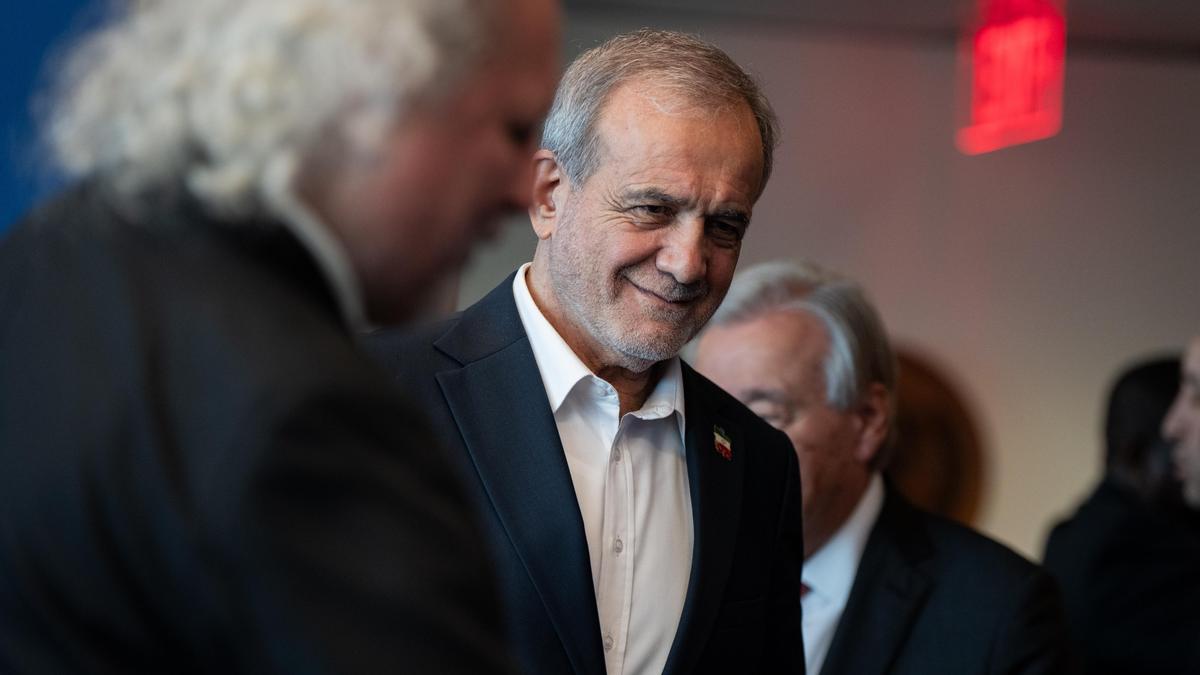
Iranian President Masoud Pezeshkian announced on Tuesday, February 3, 2026, that he has instructed Foreign Minister Abbas Araghchi to engage in “fair and equitable” negotiations with the U.S., contingent upon a suitable environment free from threats. This development comes amidst a significant U.S. troop mobilization in waters near Iran and concerted efforts by regional actors like Turkey, Qatar, Egypt, and Oman to facilitate direct talks between Washington and Tehran. U.S. President Donald Trump has recently warned of a looming deadline for a deal concerning Iran’s nuclear program, adding to the urgency.
Key Points:
- President Pezeshkian has directed Foreign Minister Araghchi to pursue negotiations with the U.S. under specific conditions.
- A meeting between Abbas Araghchi and White House Special envoy Steve Witkoff is reportedly scheduled for Friday, February 6, 2026, in Istanbul.
- President Trump has issued warnings about the urgency of reaching a deal and the deployment of a “massive armada” to the region.
- Several regional countries, including Turkey, Qatar, Egypt, and Oman, are actively promoting direct U.S.-Iran talks.
- The U.S. State Department has stated President Trump is open to a deal if it aligns with U.S. national interests.
- One major sticking point in negotiations is Iran’s stockpile of enriched uranium.
- Russia has offered to assist with processing or storing Iran’s enriched uranium, but Iranian officials have denied intentions to transfer enriched nuclear materials.
Critical Analysis:
The willingness of Iran to negotiate with the US signals a potential shift in strategy amidst mounting pressure. The build-up of US troops in the region and Trump’s warnings likely contribute to Iran’s willingness to explore diplomatic solutions. The involvement of regional powers as mediators also suggests a broader desire to de-escalate tensions and prevent a potential conflict.
Key Takeaways:
- Iran’s willingness to negotiate is conditional, hinging on the absence of threats and the presence of a “fair and equitable” environment.
- The U.S. maintains a “maximum pressure” policy, demanding Iran curtail its nuclear program and cease supporting regional unrest.
- The enriched uranium stockpile remains a critical point of contention between the two nations.
- Regional mediation efforts play a crucial role in bringing both parties to the table.
- The involvement of Russia as a potential facilitator indicates the broader geopolitical implications of the U.S.-Iran conflict.
Impact Analysis:
The outcome of these potential negotiations will have significant repercussions for regional stability and global security. Successful talks could lead to a de-escalation of tensions, a renewed nuclear deal, and a reduction in military presence in the region. Conversely, a failure to reach an agreement could lead to further escalation, potentially culminating in military conflict. The long-term impact of these events will depend on the willingness of both sides to compromise and find common ground, and also the influence of regional power brokers who stand to be impacted.
 First Piper