
Wed Feb 04 15:56:38 UTC 2026: # IIT Madras Releases Indian Cancer Genome Atlas to Combat Rising Cancer Rates
The Story:
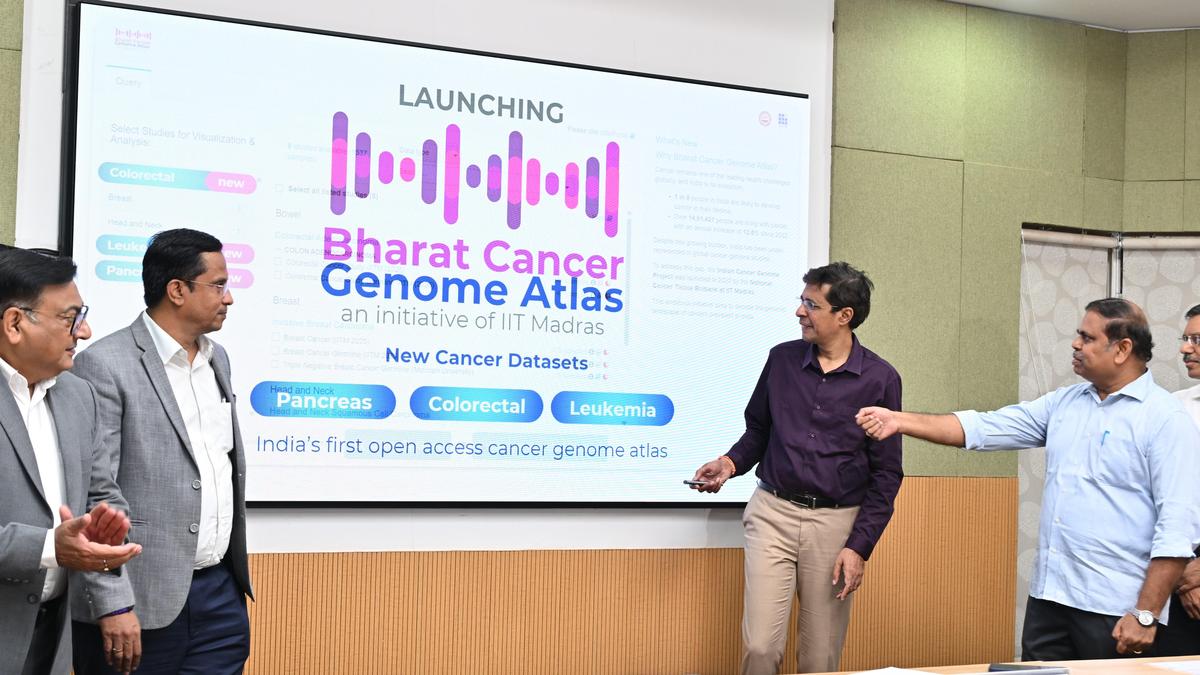
The Indian Institute of Technology Madras (IIT Madras) has launched the Bharat Cancer Genome Atlas (BCGA), a comprehensive database of cancer genomes covering paediatric leukaemia, colorectal, and pancreatic cancers. This resource is publicly available to researchers and clinicians both in India and abroad. The launch comes as India faces a rising cancer incidence, with a recent report indicating that one in nine Indians is likely to develop the disease, with cases increasing by 12.8% annually since 2022.
Key Points:
- IIT Madras launched the Bharat Cancer Genome Atlas (BCGA), focusing on paediatric leukaemia, colorectal, and pancreatic cancers.
- The BCGA is publicly accessible at bcga.iitm.ac.in.
- Cancer incidence in India is rising by 12.8% annually since 2022, with one in nine Indians likely to develop cancer.
- The project was initiated in 2020 as the Indian Cancer Genome Programme, with significant funding of ₹56 crore from Hyundai Motor India’s Hyundai Hope for Cancer initiative, plus an additional ₹3 crore for treatment support.
- The initiative includes the Bharat Cancer Genome Grid (BCG2), a clinician-centric platform.
- Collaborations include Karkinos Healthcare, Mumbai, and multiple Chennai hospitals.
Critical Analysis:
The launch of the BCGA is a direct response to the growing cancer burden in India and the under-representation of Indian patients in global cancer genome studies. The funding from Hyundai, the collaboration with Karkinos Healthcare, and the involvement of multiple hospitals suggest a concerted effort to tackle cancer using a multi-pronged approach, combining research, clinical application, and financial assistance for treatment. The timing of the launch coincides with World Cancer Day, marked by various awareness programs and initiatives throughout India, indicating a broader national focus on combating the disease. The related articles about robotic surgeries, awareness programs, and emotional support initiatives further reinforce the significance of addressing the rising cancer rates.
Key Takeaways:
- India is proactively addressing its rising cancer rates through genomic research and data sharing.
- The launch of the BCGA is intended to bridge the gap in cancer genome research, specifically targeting cancers prevalent in the Indian population.
- Public-private partnerships are crucial for supporting large-scale research initiatives like the Indian Cancer Genome Programme.
- Along with research, efforts are being made to improve cancer awareness, screening, and patient support throughout India.
- The integration of genomic data into clinical practice, as facilitated by BCG2, has the potential to personalize cancer treatment in India.
Impact Analysis:
The establishment of the BCGA could significantly impact cancer research and treatment in India. By providing a comprehensive genomic database specific to the Indian population, researchers can better understand the genetic factors contributing to cancer development in this demographic. This, in turn, can lead to the development of more targeted therapies and personalized treatment approaches. The BCG2 platform has the potential to streamline the integration of genomic data into routine clinical practice, empowering oncologists to make more informed treatment decisions. The initiative’s focus on screening camps and mobile healthcare outreach could improve early detection rates, leading to better patient outcomes. In the long term, the BCGA could contribute to a reduction in cancer incidence and mortality rates in India.
 First Piper