
Wed Feb 04 09:28:45 UTC 2026: ### India-U.S. Trade Deal: Agriculture Protected, Tariffs Reduced to 18%
The Story:
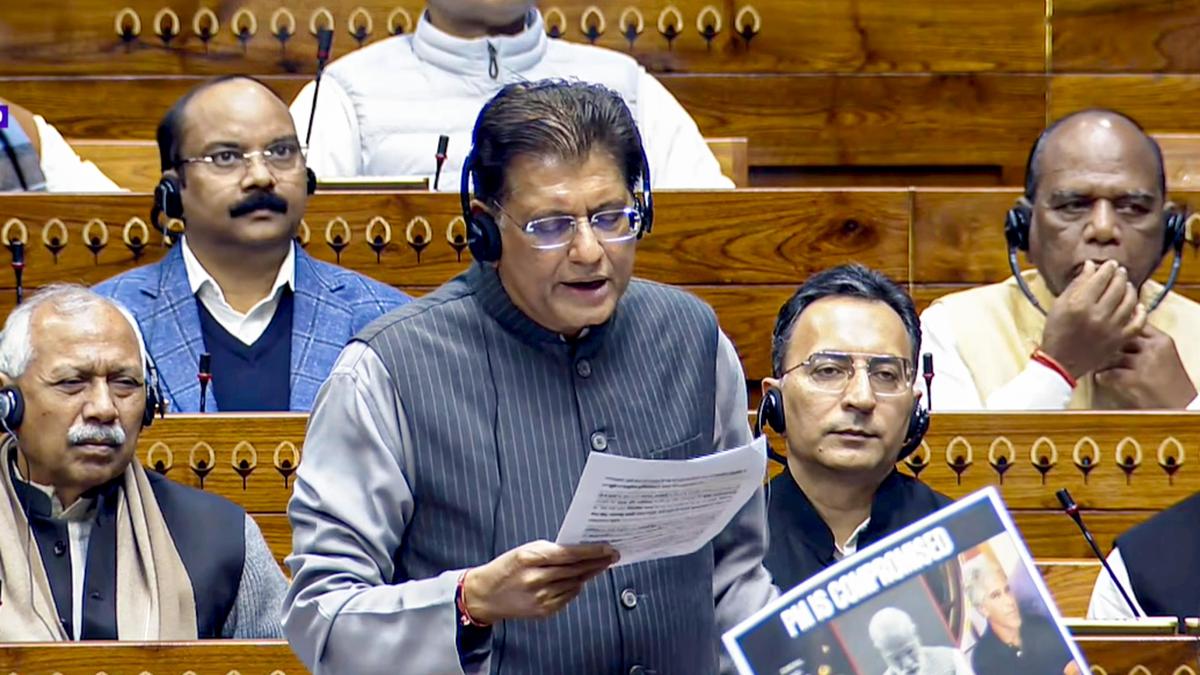
On February 4, 2026, Commerce and Industry Minister Piyush Goyal addressed the Lok Sabha, asserting that the sensitive sectors of Indian agriculture and dairy are fully protected under the new India-U.S. trade deal. He announced a significant reduction in U.S. tariffs on Indian goods, from 50% to 18%. Goyal emphasized that this reduction would boost labor-intensive exports, promote initiatives like ‘Make in India’ and ‘Design in India’, foster self-reliance, and create opportunities for skilled Indians and MSMEs.
Key Points:
- U.S. tariffs on Indian goods reduced from 50% to 18%.
- Indian agriculture and dairy sectors are reportedly protected under the deal.
- The deal is expected to boost labor-intensive exports.
- The deal aims to promote ‘Make in India’ and ‘Design in India’ initiatives.
- Both sides are finalizing technical processes for the deal’s announcement.
- Energy security is a top priority, with India seeking goods from the aviation and nuclear sectors, where the U.S. is a major player.
Critical Analysis:
The announcement of the India-U.S. trade deal, with its focus on protecting agriculture, comes amid existing concerns for Indian farmers, as highlighted by Sharad Pawar on the same day. This suggests a deliberate attempt to address domestic anxieties while simultaneously pursuing enhanced trade relations with the U.S. The emphasis on “Make in India” and “Design in India” likely seeks to counter the potential impact of AI on the IT sector. Securing energy resources from the US, specifically in aviation and nuclear, could also imply a move to decrease reliance on other geopolitical players and boost India’s manufacturing base.
Key Takeaways:
- The trade deal signifies a strengthening of economic ties between India and the U.S.
- The deal aims to balance economic growth with the protection of key domestic sectors.
- The reduction in tariffs represents a significant gain for Indian exporters.
- Energy security remains a crucial factor driving India’s trade negotiations.
- The deal may be aimed at mitigating the impact of AI and shifting global dynamics.
Impact Analysis:
The India-U.S. trade deal has the potential for significant long-term implications:
- Economic Growth: Reduced tariffs should stimulate exports, leading to job creation and economic growth, particularly within labor-intensive industries and MSMEs.
- Strategic Alignment: The emphasis on energy security suggests a strategic alignment with the U.S. in critical sectors like aviation and nuclear, potentially impacting geopolitical relationships.
- Domestic Policy: The protection of agriculture indicates a continued focus on addressing domestic political considerations, particularly concerning the welfare of farmers.
- Technological Shift: Focusing on “Make in India” is designed to maintain the IT industry’s importance while adapting to increasing competition from AI.
 First Piper