
Mon Feb 02 16:37:23 UTC 2026: ### Headline: India Enhances Joint Military Preparedness with Advanced Warfare Course
The Story:
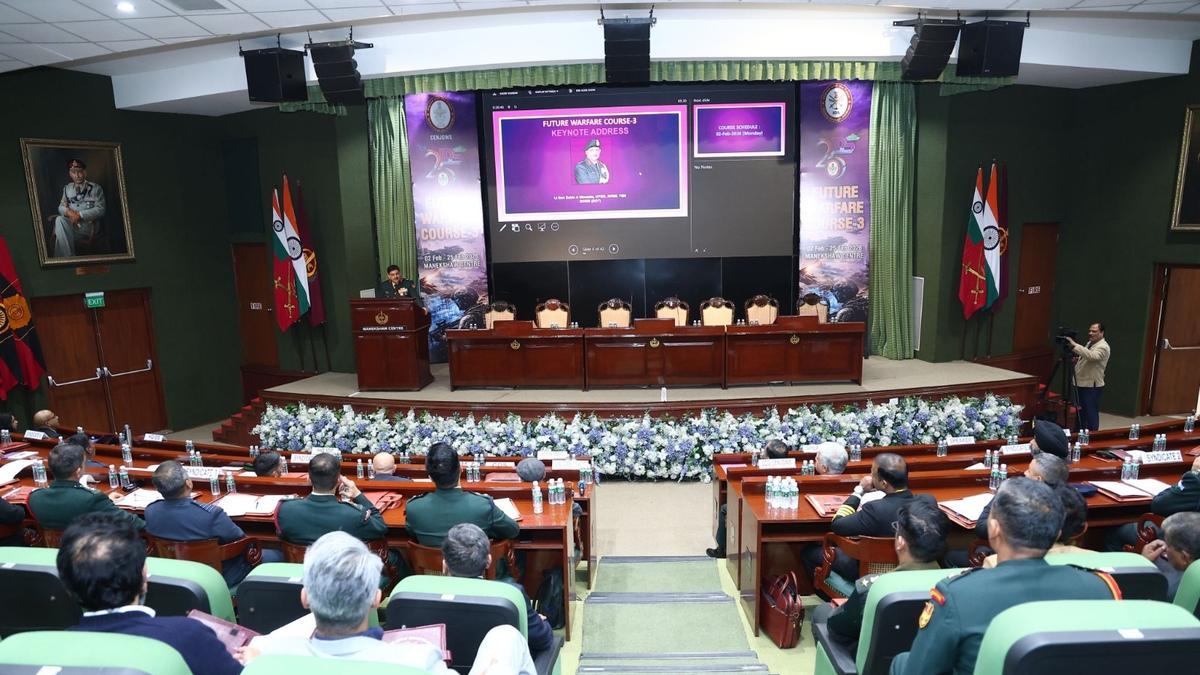
The Indian Armed Forces commenced the third edition of the tri-services Future Warfare Course at the Manekshaw Centre in New Delhi on February 2, 2026. This program, scheduled to run until February 25, 2026, is conducted under the Headquarters Integrated Defence Staff (HQ IDS) in partnership with the Centre for Joint Warfare Studies (CENJOWS). The course aims to deepen understanding of rapidly evolving technologies impacting warfare and adapt existing doctrines and strategies.
The program features an expanded curriculum that includes specialized subjects, domain-specific developments, practical demonstrations, and visits to strategic institutions. Participants range from Majors to Major Generals across all three services, as well as representatives from the defence industry, encompassing startups, MSMEs, DPSUs, and private sector entities. The course seeks to align operational priorities with indigenous defence capabilities and incorporates expertise from veterans, serving officers, former ambassadors, industry specialists, and academics.
Key Points:
- The third edition of the tri-services Future Warfare Course began on February 2, 2026, in New Delhi.
- The course is a collaborative effort between the Headquarters Integrated Defence Staff (HQ IDS) and the Centre for Joint Warfare Studies (CENJOWS).
- The curriculum focuses on technological advancements transforming warfare, necessitating doctrinal adjustments.
- Participants include officers from all three services, ranging from Majors to Major Generals, and representatives from the defence industry.
- The course aligns operational priorities with indigenous defence capabilities and involves diverse experts.
- Curriculum includes specialised inputs on critical and rare earth elements, supply chain vulnerabilities, and regional and global geopolitics.
- The course is designed to realize the vision of Chief of the Defence Staff General Anil Chauhan.
Key Takeaways:
- India is proactively adapting its military strategies to address the challenges of modern warfare through advanced training programs.
- The inclusion of the defence industry, including startups and MSMEs, signifies a growing emphasis on indigenization and collaboration.
- The focus on supply chain vulnerabilities and geopolitics highlights an understanding of the broader factors influencing national security.
- This course underscores India’s commitment to preparing its military leadership for complex, multi-dimensional challenges.
- The program highlights the increasing importance of technological advancements in shaping the future of military operations.
Impact Analysis:
The tri-services Future Warfare Course has potentially significant long-term implications for India’s defense posture.
- Enhanced Military Capabilities: By integrating emerging technologies and evolving doctrines, the course can contribute to a more agile and effective armed forces.
- Boost to Indigenous Defence Industry: The collaboration with the defense industry, particularly startups and MSMEs, can drive innovation and self-reliance in defense production.
- Improved Strategic Planning: The focus on critical resources, supply chains, and geopolitics will help defense planners make more informed decisions.
- Future-Proofing the Armed Forces: Equipping officers with the knowledge and skills to navigate the complex challenges of modern warfare will ensure India’s readiness in an uncertain global landscape.
- Strengthened National Security: The convergence of expertise and perspectives within the course is expected to contribute to more robust and adaptable national security strategies.
 First Piper