
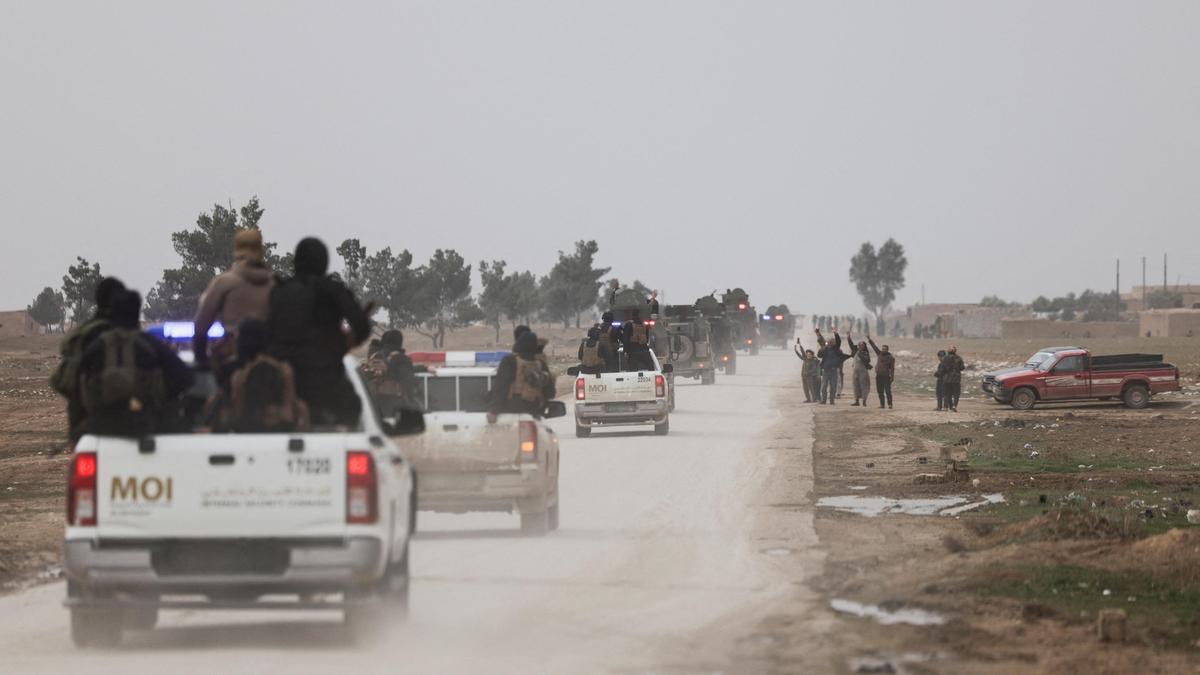
Mon Feb 02 13:41:22 UTC 2026: ### Syrian Government Forces Deploy into Kurdish-Controlled Hasakah Following US-Backed Deal
The Story:
Syrian government security forces entered the Kurdish-controlled city of Hasakah on Monday, February 2, 2026, as part of a U.S.-backed ceasefire agreement. This agreement, reached on January 30, 2026, between President Ahmed al-Sharaa’s government and the Kurdish-led Syrian Democratic Forces (SDF), aims to merge the Kurdish-run regions with Damascus, thus averting further conflict after the SDF lost territory to government forces in January. The deployment marks a significant step towards reconciliation in Syria after 14 years of civil war.
A convoy of over 30 Interior Ministry vehicles was observed entering Hasakah. The government forces are expected to be stationed in Syrian state buildings within the city’s “security zone,” with a phased integration of Kurdish fighters into government forces envisioned.
Key Points:
- Syrian government forces deployed into Hasakah on February 2, 2026, following a ceasefire agreement reached on January 30, 2026.
- The agreement is between President Ahmed al-Sharaa’s government and the Kurdish-led Syrian Democratic Forces (SDF).
- The deal aims to merge Kurdish-run regions with Damascus.
- The United States has hailed the agreement as a historic milestone towards unity in Syria.
- The SDF was once Washington’s main Syrian ally in the fight against Islamic State militants.
- President Donald Trump built close ties with President Ahmed al-Sharaa.
Critical Analysis:
The news reveals the unfolding consequences of shifting alliances and strategic reorientations in Syria. Specifically, President Trump’s close relationship with President Ahmed al-Sharaa, a former Al Qaeda commander, appears to have significantly altered the US stance in the region and created new strategic partnerships. This development has redefined the role of the SDF, once a key US ally, and facilitated the reassertion of government control over Kurdish territories, potentially re-drawing regional power dynamics in the aftermath of the civil war.
Key Takeaways:
- The deployment signals a potential shift in power dynamics in northeastern Syria.
- The United States is actively involved in brokering peace deals in the region.
- The agreement may indicate a changing relationship between the United States and Kurdish forces.
- The reconciliation initiative may be perceived as a win for President Ahmed al-Sharaa, who has consolidated control over almost all of Syria.
- The future integration of Kurdish fighters into government forces remains to be seen.
Impact Analysis:
This agreement has significant long-term implications for the region:
- Kurdish Autonomy: The merger of Kurdish regions with Damascus could threaten Kurdish autonomy and their political aspirations for self-governance.
- Regional Stability: Whether this agreement leads to sustained peace and stability in Syria remains to be seen. The integration of diverse factions into a unified force presents challenges.
- US Foreign Policy: The shifting alliances highlight the complexities of US foreign policy in the Middle East, especially regarding the fight against Islamic State and the management of regional conflicts.
- Future Conflicts: The agreement aims to avert further conflict, but underlying tensions and power dynamics could still lead to future instability.
- Human Rights: The agreement raises concerns about human rights and the treatment of Kurdish populations under the rule of the Syrian government, particularly considering the past civil war and human rights violations.
 First Piper