
Mon Feb 02 18:16:35 UTC 2026: # Railway Union Protests Delay in Pay Commission Implementation and Outsourcing Concerns
The Story:
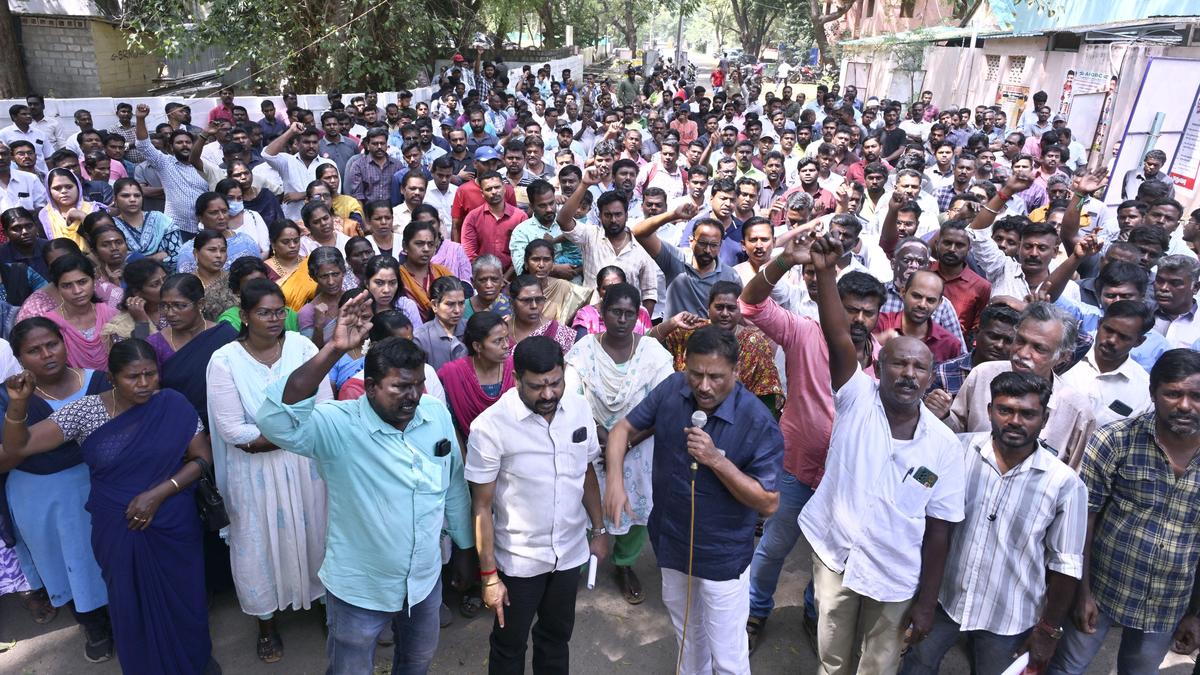
Railway employees affiliated with the Southern Railway Mazdoor Union staged a demonstration in Madurai on Monday, February 2, 2026. The protest centered on a charter of demands, prominently featuring the implementation of interim-relief under the 8th Central Pay Commission, effective from January 1, 2026. Protesters also voiced strong opposition to the railway administration’s practice of surrendering vacant posts instead of filling them, a move they perceive as detrimental to employee welfare and operational efficiency.
Key Points:
- The Southern Railway Mazdoor Union led the demonstration in Madurai.
- A key demand is interim-relief under the 8th Central Pay Commission with effect from January 1, 2026.
- The union condemns the surrender of vacant posts.
- Other demands include risk and hardship allowance for safety department employees, 70% exemption of Income Tax on Kilometre allowance, and ensuring running staff return to headquarters within 36 hours of leaving it.
- The union opposes outsourcing of employees.
- The union advocates for alternate employment opportunities for women employees among running staff, train managers, and track maintainers.
Critical Analysis:
Given the other protests occurring on the same day (February 2, 2026), involving ASHAs protesting against the Union Budget and student activists protesting the shifting of IIIT from Ongole, there appears to be a growing wave of discontent across various sectors in India. This could be due to perceived budgetary shortfalls or policy decisions affecting employment and education.
Key Takeaways:
- The railway union protest highlights concerns about wage stagnation and job security within the railway sector.
- The demand for the 8th Central Pay Commission implementation suggests a potential delay or dissatisfaction with current compensation structures.
- Opposition to outsourcing indicates a fear of job displacement and a desire to maintain direct employment within the railways.
- The simultaneous protests occurring across different sectors suggest a broader climate of dissatisfaction with government policies.
- The railway employees’ demands reflect a need for improved working conditions and benefits, particularly for safety-critical roles.
Impact Analysis:
The railway union’s protest, combined with other demonstrations, could pressure the government to address concerns regarding pay commissions, budgetary allocations, and employment policies. Failure to address these grievances could lead to further unrest and potential disruptions in essential services. Furthermore, the demands for women’s employment opportunities could influence future hiring practices within the railway sector, pushing for greater gender diversity and inclusion. The impact will depend on how the government responds to the collective voice of these protesting groups.
 First Piper