
Mon Feb 02 16:03:52 UTC 2026: Headline: Parliament Debates President’s Address Amidst Opposition Criticism and Economic Claims
The Story:
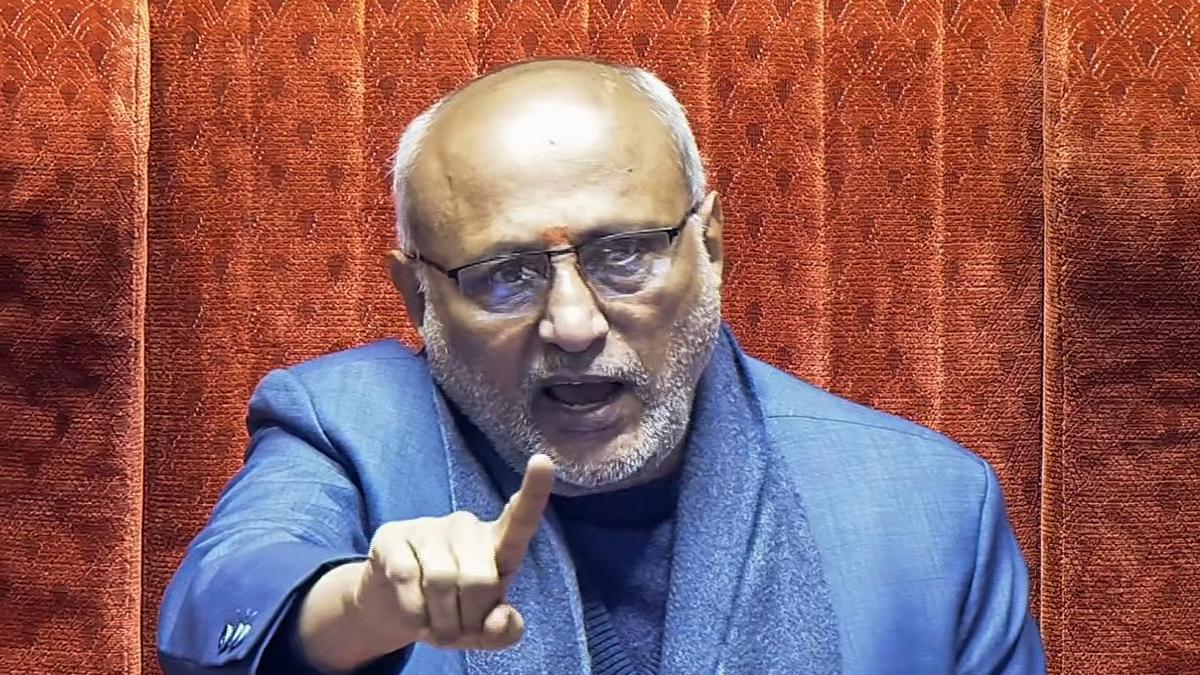
On February 2, 2026, the Rajya Sabha commenced a debate on a motion to thank President Droupadi Murmu for her address to the joint session of Parliament. The session was marked by contrasting viewpoints. The BJP-led treasury benches lauded the President’s speech, while the Opposition criticized it for allegedly failing to reflect the country’s current realities. The debate saw heated exchanges, including a BJP MP displaying his artificial limbs to highlight past attacks, and opposition leaders questioning the government’s policies on various fronts.
The Opposition raised concerns about economic inequality, the treatment of farmers and workers, the Pradhan Mantri Kaushal Vikas Yojana (PMKVY) scheme, and the India-China conflict. Several MPs also voiced concerns regarding the integrity of the electoral process and demanded investigations into specific incidents.
Key Points:
* BJP MP C. Sadanandan Master moved a motion to thank President Murmu, citing improved economic status under the Modi government.
* Sadanandan accused CPI(M) workers of attacking him 30 years prior and displayed his artificial limbs during the session.
* Congress leader Digvijaya Singh criticized the government as “anti-poor and anti-farmer” and demanded clarification on remarks by former Army chief M.M. Naravane regarding the 2020 India-China conflict.
* Other opposition MPs, including Sagarika Ghose (Trinamool Congress), Tiruchi Siva (DMK), and Sanjay Singh (AAP), criticized the government’s policies, parliamentary procedures, and alleged electoral roll manipulation.
* Shiv Sena (UBT) MP Sanjay Raut demanded an inquiry into the death of Maharashtra Deputy Chief Minister Ajit Pawar.
Critical Analysis:
The historical context reveals that the parliamentary debate occurs amidst significant international activity, including potential US-Iran nuclear talks ordered by the Iranian President, India-US trade deal announcements by former US President Donald Trump and communication between him and PM Modi. This global context suggests that the Indian government is facing pressures and opportunities on both foreign and domestic fronts, which would explain the firm stance the treasury benches are taking to show resolve to the citizens and the world. The opposition’s criticism possibly points towards an exploitation of the global environment to target the Modi government for the past relationship with former President Trump.
Key Takeaways:
* The Rajya Sabha debate highlights a deep partisan divide on the assessment of the country’s current state and future direction.
* The opposition’s focus on economic inequality, farmer welfare, and electoral integrity indicates key vulnerabilities the government faces.
* Foreign relation with the US and Iran are a large component of the domestic political discussion.
* The invocation of past events, such as the 2020 India-China conflict and the attack on C. Sadanandan Master, suggests a strategy of using historical grievances to score political points.
* The demand for investigations into specific incidents, like the death of Ajit Pawar and alleged electoral roll manipulation, indicates a lack of trust in government institutions.
Impact Analysis:
The debate’s long-term implications include:
* Potential for Policy Shifts: Opposition pressure may force the government to address specific concerns regarding economic inequality and farmer welfare, potentially leading to policy adjustments.
* Electoral Ramifications: The allegations of electoral roll manipulation and the focus on minority rights could impact future election outcomes by eroding public trust in the electoral process.
* Strained Centre-State Relations: Attacks on the Kerala government may further strain the relationship between the central government and states ruled by opposition parties.
* Geopolitical Implications Continued reliance on old allies, and potential new developments regarding Iran may impact the global presence of India’s future.
 First Piper