
Tue Feb 03 04:07:48 UTC 2026: ### U.S. and India Announce Tariff Reduction Amid Trade Deal Confusion
The Story:
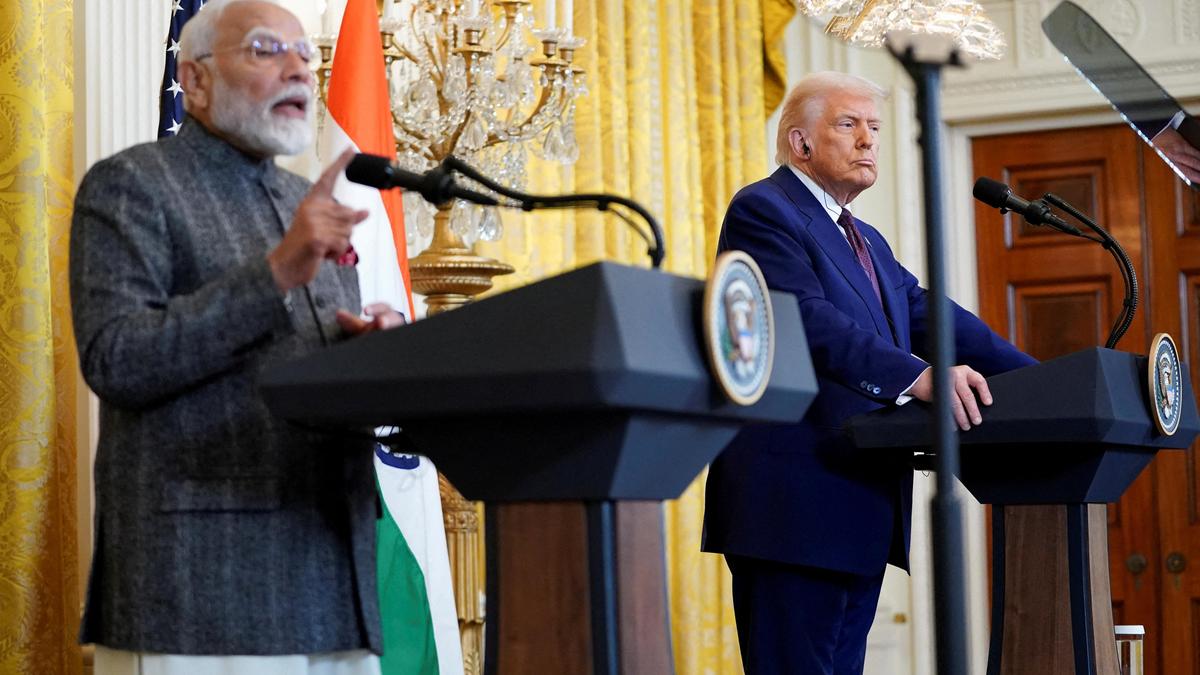
On February 3, 2026, U.S. President Donald Trump and Indian Prime Minister Narendra Modi announced a reduction in U.S. tariffs on Indian goods from 25% to 18%. The announcement comes after a period of strained relations and was made following External Affairs Minister S. Jaishankar’s visit to Washington. While both leaders celebrated the move, significant discrepancies remain between their versions of the agreement, particularly regarding India’s commitments to reduce tariffs to zero, cease Russian oil imports, and purchase $500 billion worth of U.S. goods. This has raised questions about the actual scope and details of the purported trade deal.
Key Points:
- The U.S. reduces “reciprocal” tariffs on India from 25% to 18%.
- Trump claims India agreed to stop buying Russian oil, reduce tariffs to zero, and purchase $500 billion in U.S. goods and energy.
- Modi acknowledges the tariff reduction but does not confirm any of Trump’s other claims.
- The announcement follows a visit by S. Jaishankar to Washington and a phone call between Trump and Modi.
- Discrepancies exist between the U.S. and Indian versions of the trade deal, leading to uncertainty about its specific terms.
- Indian refiners had already begun to reduce Russian oil imports in late 2025.
- India had previously reduced Iranian and Venezuelan oil imports under U.S. pressure.
- The Union Budget shows no allocation for the Chabahar port project, hinting at a potential pullback due to U.S. sanctions threats.
Critical Analysis:
The contrasting narratives presented by Trump and Modi suggest a potentially asymmetric agreement, where the U.S. is projecting a more comprehensive deal than India is willing to acknowledge. This is reminiscent of past instances where India has adjusted its policies (e.g., oil imports) under U.S. pressure, without explicitly admitting compliance with U.S. demands. The timing of the announcement, following diplomatic visits and market reactions, indicates a calculated effort to project improved relations, despite underlying disagreements.
Key Takeaways:
- The U.S.-India trade relationship is undergoing a complex negotiation, with potential for both cooperation and conflict.
- U.S. pressure tactics, including tariffs and sanctions threats, continue to influence India’s strategic decisions, particularly concerning energy procurement and trade with sanctioned nations.
- Transparency and clarity are lacking in the details of the trade deal, raising concerns about the actual benefits for both countries.
- The differing public statements from Trump and Modi point to potential communication gaps or strategic messaging differences.
- The reduction in tariffs provides some relief to Indian exporters but may not fully address existing disadvantages compared to regional competitors.
Impact Analysis:
- The tariff reduction is likely to boost Indian exports in the short term, particularly in sectors like apparel and gems and jewellery.
- The uncertainty surrounding the broader trade deal could create volatility in the long term, affecting investment decisions and trade flows.
- India’s potential shift away from Russian oil and reduced engagement in the Chabahar port project could have significant geopolitical implications, impacting its relations with Russia and Iran.
- The U.S. is likely to continue exerting pressure on India to align with its foreign policy objectives, particularly regarding trade with sanctioned countries and defense procurement.
- The credibility of both Trump and Modi are at stake regarding the trade deal which will shape the US-India relations in coming years.
 First Piper