
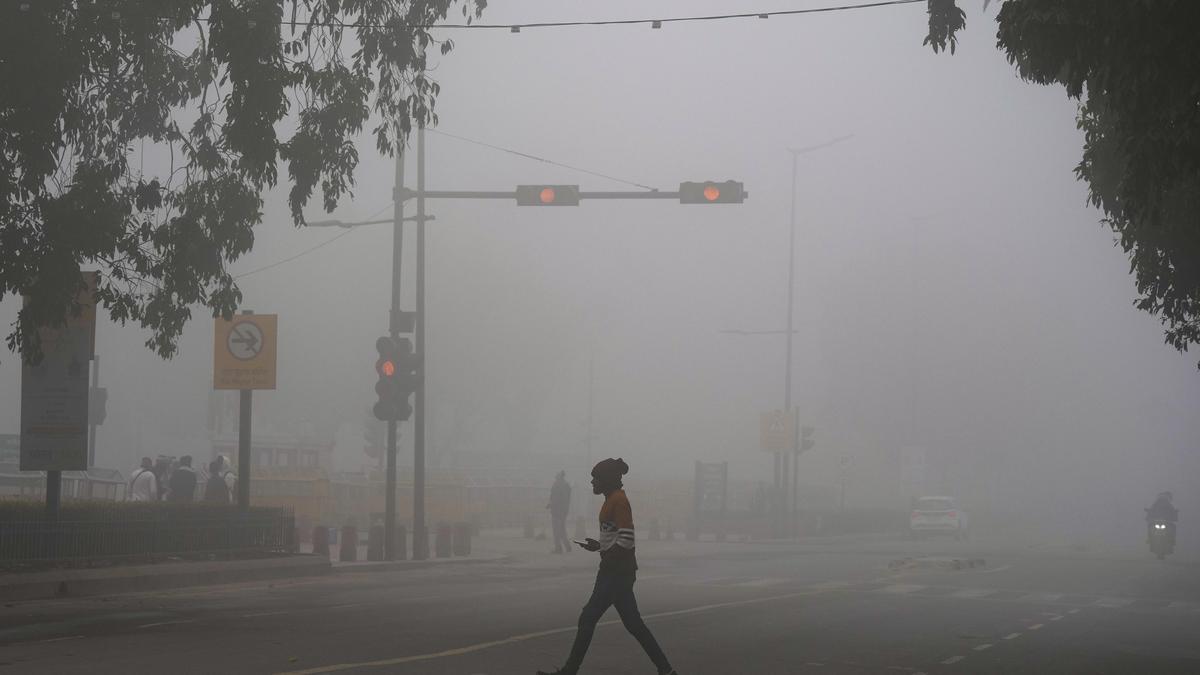
Tue Feb 03 05:13:53 UTC 2026: # Delhi Engulfed in Dense Fog, Air Quality Remains Poor on February 3, 2026
The Story:
On February 3, 2026, Delhi experienced a thick blanket of fog that significantly reduced visibility, disrupted traffic, and blurred skylines across the city. Despite the fog, the minimum temperature was recorded at 9.4°C, slightly above the seasonal average. The city’s Air Quality Index (AQI) remained in the ‘poor’ category at 256 as of 9 a.m., indicating persistent air pollution issues.
Key Points:
- Fog significantly reduced visibility to 100 metres at both Palam and Safdarjung.
- Minimum temperature recorded at 9.4°C at Safdarjung, a notch above the seasonal average.
- The Ridge station recorded 11°C, three notches above normal.
- Delhi’s AQI was clocked at 256, placing it in the ‘poor’ category.
- Air quality at 19 stations was in the poor category, 10 in very poor, and 10 in moderate.
Critical Analysis:
The provided context suggests a recurring pattern of poor air quality in Delhi, coupled with seasonal fog. The news items highlight both the immediate impacts (traffic disruptions, health concerns) and ongoing efforts to address infrastructure (new bridge over Yamuna). The persistence of poor air quality despite these efforts indicates a complex interplay of factors, including industrial emissions, vehicular pollution, and meteorological conditions.
Key Takeaways:
- Delhi continues to struggle with air pollution issues, as indicated by the ‘poor’ AQI.
- The combination of fog and poor air quality presents significant challenges for transportation and public health.
- Temperature fluctuations above the seasonal average could point to changing weather patterns.
- Infrastructure developments, while important, might not be sufficient to fully address the underlying environmental issues.
Impact Analysis:
The continued occurrence of these events could lead to increased respiratory problems among Delhi residents, especially vulnerable populations like children and the elderly. Economically, disruptions to transportation can impact commerce and daily commutes. Long-term, these recurring environmental issues could negatively affect Delhi’s reputation as a livable city, potentially impacting investment and tourism. Moreover, the Delhi government may face increasing pressure to implement more aggressive and sustainable solutions to combat air pollution and manage the effects of changing weather patterns.
 First Piper