
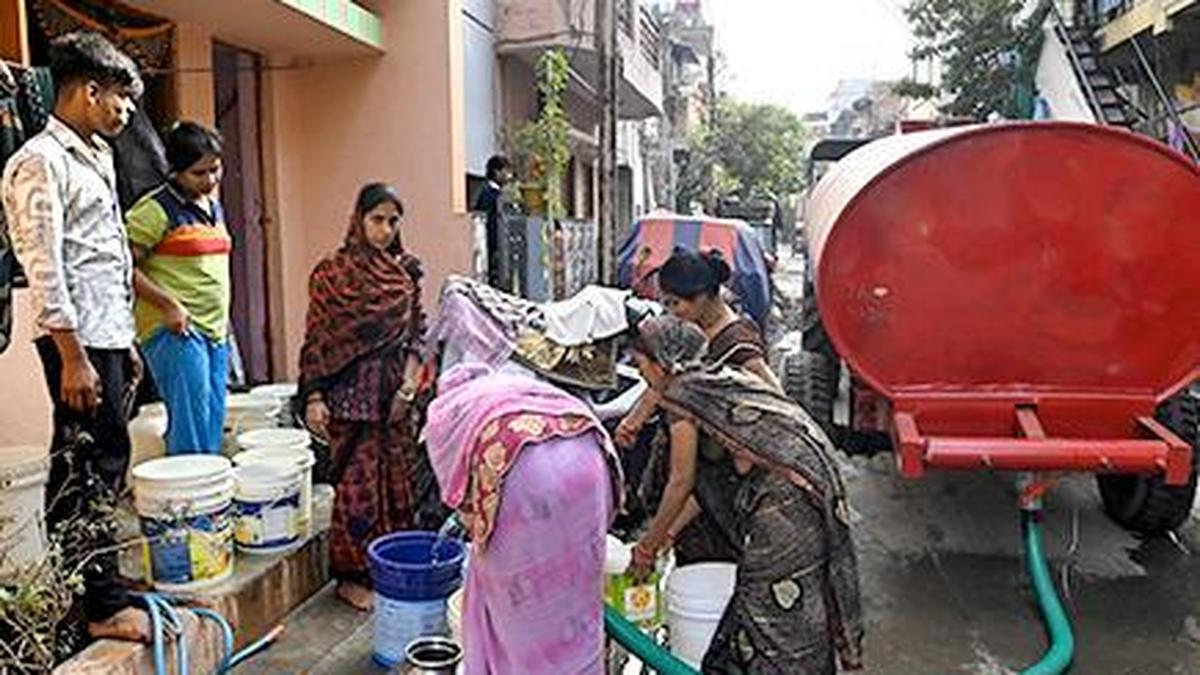
Tue Feb 03 01:38:23 UTC 2026: Headline: Central Government Addresses Deadly Water Contamination Crisis in Indore
The Story: In response to a severe water contamination incident in Indore’s Bhagirath Pura, Madhya Pradesh, the central government has acknowledged the crisis and outlined support measures in the Rajya Sabha on February 2, 2026. The contamination, which began in December 2025 and continued into January 2026, resulted in multiple deaths due to diarrhea and vomiting caused by tainted water supplied by the Indore Municipal Corporation (IMC). Union Minister of State for Housing and Urban Affairs Tokhan Sahu stated that old and damaged pipelines, dating back to 1997, are a significant contributing factor.
Key Points:
- Several people in Indore’s Bhagirath Pura died from diarrhea and vomiting after drinking contaminated water.
- The Central Government is supporting states through financial and technical schemes such as AMRUT and AMRUT 2.0.
- Old pipelines, some dating back to 1997, are identified as a primary cause of the contamination.
- The Indore Municipal Corporation (IMC) has initiated water supply projects under AMRUT 2.0, with one package commenced and three others awaiting approval.
- State government issued SOPs to urban local bodies to prevent water contamination and detected 14,181 leakages, of which 12,634 have been repaired.
- Under AMRUT, drinking water supply schemes worth ₹541 crore and sewerage schemes worth ₹278 crore were implemented for Indore city.
Key Takeaways:
- Aging infrastructure is a significant risk factor for water contamination and public health crises in India.
- Government initiatives like AMRUT and AMRUT 2.0 are crucial for modernizing water supply systems, but their effective implementation is paramount.
- Prompt detection and repair of leakages, along with regular water quality testing, are essential to prevent waterborne diseases.
- Inter-governmental coordination is necessary, as water is a State subject and the Union government can only supplement efforts.
- Systemic failures resulting in contamination need urgent attention.
Impact Analysis:
The Indore water contamination incident highlights a critical need for accelerated infrastructure upgrades and stringent monitoring of water quality across India. The ongoing AMRUT 2.0 projects and the central government’s attention to this issue signal a potential shift towards proactive measures. However, long-term impact hinges on the speed and effectiveness of project execution, adherence to SOPs, and sustained investment in water infrastructure maintenance. Failure to address these systemic issues could lead to similar crises in other urban areas with aging infrastructure, further straining public health resources and undermining public trust in municipal services.
 First Piper