
Tue Feb 03 17:56:31 UTC 2026: # Andhra Pradesh Aims for National Leadership in Solar Energy with Ambitious Rooftop Program
The Story:
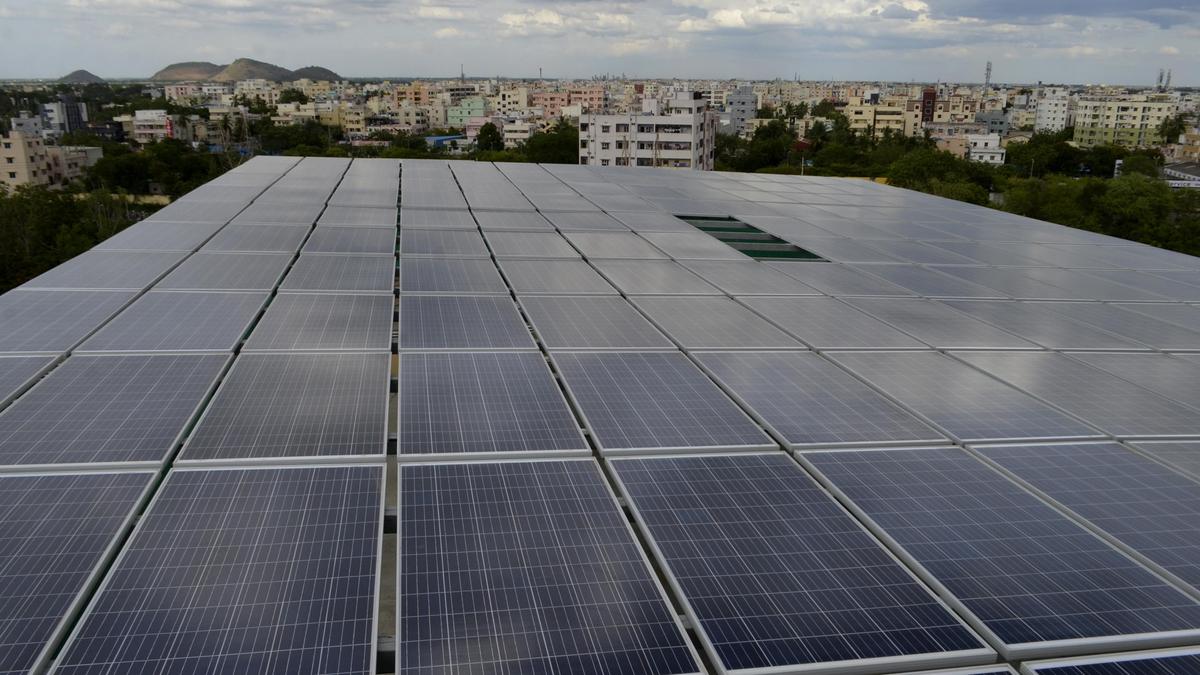
Andhra Pradesh is embarking on a major initiative to solarize low-income households, aiming to become a national leader in rooftop solar energy. The state government is implementing a Utility Led Aggregation (ULA) model under the PM–Surya Ghar scheme, funding the remaining capital expenditure through its subsidy budget. The project targets domestic consumers receiving 200 units of free electricity monthly, aiming for 6 lakh installations with a planned solar capacity of 1,200 MW.
Key Points:
- Andhra Pradesh has adopted the ULA model to accelerate the PM–Surya Ghar scheme.
- The State government funds the capital expenditure via subsidies.
- Targeting 6 lakh households with a total planned capacity of 1,200 MW.
- The current phase aims for 2 lakh rooftop solar installations with a 400 MW capacity within the year.
- 41 EPC vendors have been awarded tenders following a division-wise cluster approach.
- Existing installations total around 94,000 with a capacity of 328 MW.
- APEPDCL accounts for 44,452 installations with 142 MW capacity.
- Bureaucratic hurdles have been dismantled; installations are approved within 3-4 days.
- Most packages are expected to be commissioned by April 2026, the remaining by May 2026.
Critical Analysis:
The focus on solar energy in Andhra Pradesh, coupled with the previously reported land subsidence issue in the Godavari delta, might suggest a strategic move to mitigate climate change impacts and promote sustainable energy sources in vulnerable regions. This initiative could be a response to concerns raised by environmental factors and a proactive step towards a greener future.
Key Takeaways:
- Andhra Pradesh is making a significant investment in solar energy infrastructure.
- The ULA model aims to streamline and accelerate solar adoption, especially for low-income households.
- The project demonstrates a strong commitment from the state government towards renewable energy targets.
- Dismantling bureaucratic hurdles enhances project efficiency and encourages broader participation.
- The initiative positions Andhra Pradesh as a potential leader in rooftop solar implementation in India.
Impact Analysis:
This large-scale rooftop solar project has the potential to significantly reduce the carbon footprint of Andhra Pradesh and improve energy access for low-income households. If successful, it can serve as a model for other states in India and globally. The project can also stimulate the local economy through job creation in the solar installation and maintenance sectors, offering long-term environmental and economic benefits. Furthermore, reduced reliance on traditional energy sources can improve energy security and resilience to price fluctuations in the global energy market.
 First Piper