
Mon Feb 02 15:24:04 UTC 2026: # MGNREGA Workers Protest Proposed Changes, Citing Dilution of Rights
The Story:
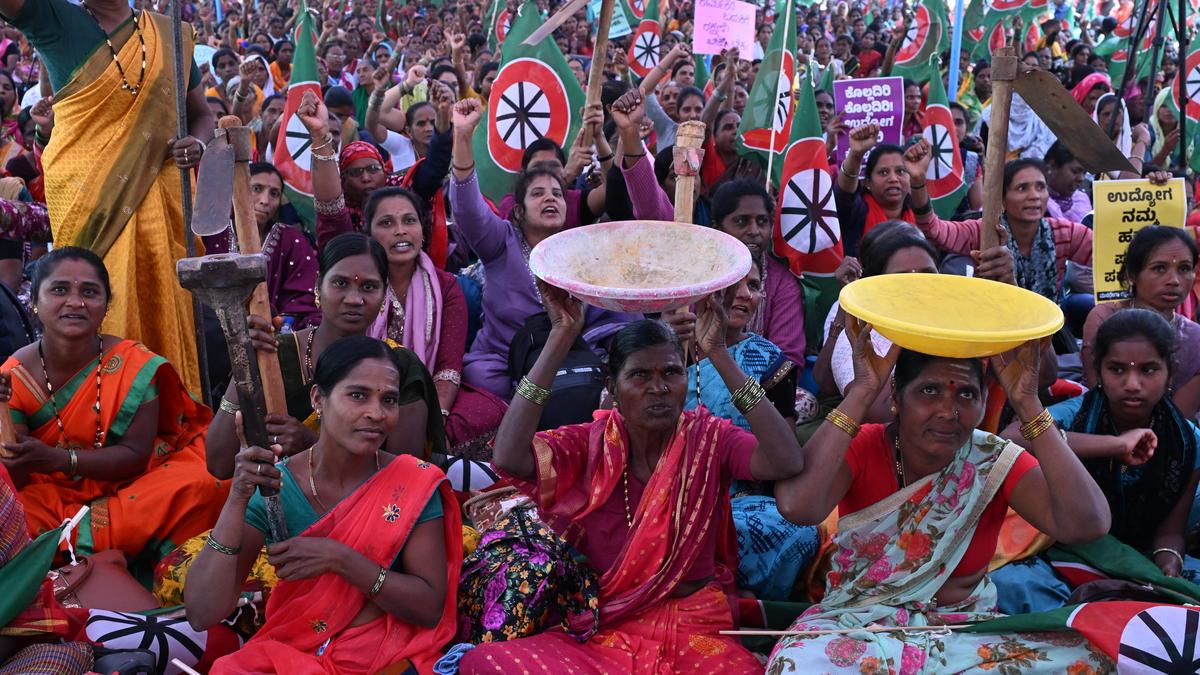
Thousands of rural workers in Karnataka protested on February 2, 2026, against the proposed Viksit Bharat-Guarantee for Rozgar and Ajeevika Mission (Gramin) (VB-G-RAM G) framework, arguing it effectively replaces and weakens the Mahatma Gandhi National Rural Employment Guarantee Act (MGNREGA). Workers fear the new framework will erode the demand-driven, rights-based nature of MGNREGA, which has provided crucial support to rural households for two decades. The protest, a state-level mobilization held in Bengaluru, highlighted concerns about restricted work availability, excessive digitization, and the shift to a centrally controlled, supply-driven employment model.
Key Points:
- Over 10,000 rural workers from across Karnataka participated in the protest at Freedom Park in Bengaluru.
- The protesters are against the proposed Viksit Bharat-Guarantee for Rozgar and Ajeevika Mission (Gramin) (VB-G-RAM G) framework.
- Workers argue the new framework restricts employment during two months of peak agricultural activity, effectively limiting access to work for at least 60 days annually.
- They claim excessive digitization is leading to wage denials and job card deletions.
- The new framework shifts power to the Central government, changing the funding ratio to 60:40 between Centre and States, and releasing funds based on “objective parameters,” potentially leading to political favoritism.
- The protest coincided with the 20th anniversary of the MGNREGA.
Critical Analysis:
The timing of the protests, coinciding with the 20th anniversary of MGNREGA, is significant. It suggests an attempt to leverage the symbolic weight of the Act’s legacy to garner support against the proposed changes. The Congress party’s condemnation of the Centre’s actions and night-long satyagraha further amplifies the political dimensions, positioning the issue as a point of contention between the ruling party and the opposition. Raut’s statement and the linked “scam” controversy might be an attempt by the opposition to capitalize on any perceived vulnerabilities related to the new Act to gain political ground.
Key Takeaways:
- The proposed VB-G-RAM G framework is facing strong opposition from rural workers who fear it will undermine their rights and livelihoods.
- Concerns exist over the shift from a demand-driven to a centrally controlled employment model.
- The protests highlight the importance of MGNREGA in providing economic and social security to vulnerable rural populations.
- The political opposition is actively using the issue to challenge the central government.
- The potential impact on poorer states due to the revised Centre-State funding ratio is a major concern.
Impact Analysis:
The outcome of this conflict between the government and the workers will have significant long-term implications:
- Rural Economy: The effectiveness of the replacement framework will determine the economic stability of millions of rural households. Reduced work availability could lead to increased migration and further economic hardship.
- Social Equity: The protests underscore the role of MGNREGA in empowering marginalized communities, particularly Dalit and women workers. Dilution of the Act could reverse these gains and exacerbate existing inequalities.
- Political Landscape: The controversy has the potential to significantly impact the political landscape, influencing voting patterns in rural areas and shaping the narrative leading up to future elections. The effectiveness of the government’s response and the perception of fairness will be crucial.
- Federal Relations: The change in funding ratio and increased central control could strain relations between the central government and state governments, particularly those governed by opposition parties. This could lead to further political fragmentation and hinder cooperative governance.
- Policy Precedent: The success or failure of the VB-G-RAM G framework will set a precedent for future social welfare programs, influencing the balance between centrally planned initiatives and demand-driven, rights-based approaches.
 First Piper