
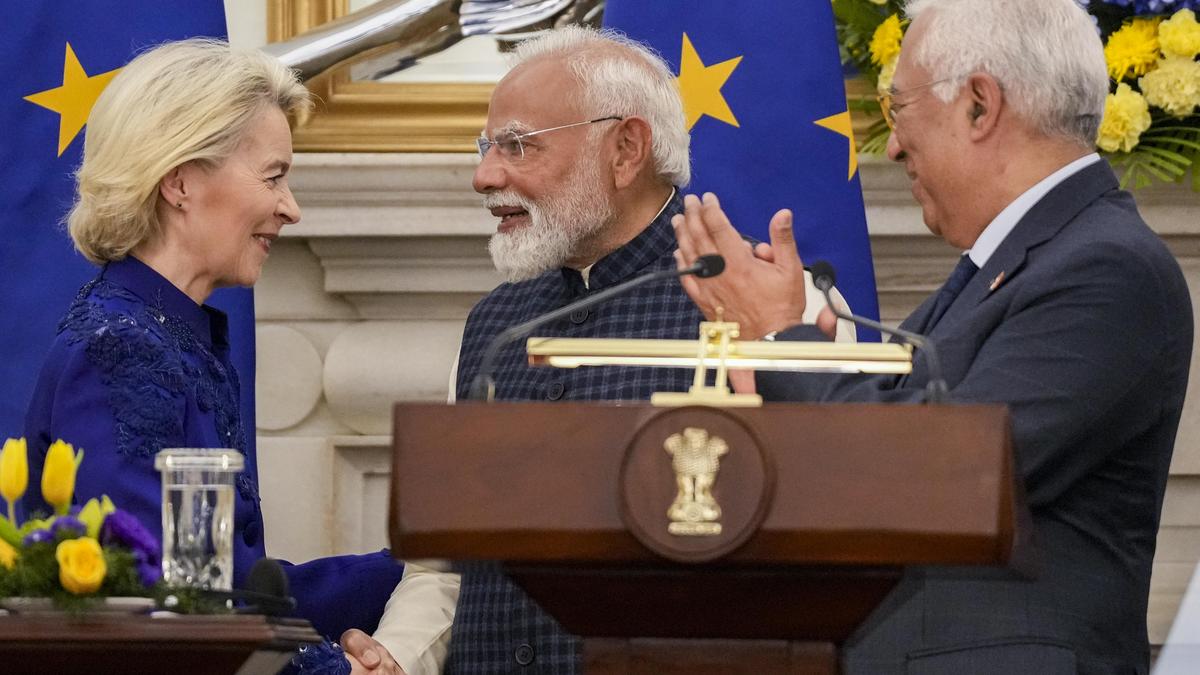
Sun Feb 01 02:47:59 UTC 2026: ### India and EU Seal Landmark Free Trade Agreement After Two Decades of Negotiations
The Story:
After nearly two decades of intermittent talks, India and the European Union officially concluded negotiations on a Free Trade Agreement (FTA) on January 27, 2026. Described as the ‘mother of all deals’ by leaders on both sides, this comprehensive agreement aims to integrate the second- and fourth-largest single customs blocs, creating a combined market estimated at ₹2,091.6 lakh crore (approximately $24 trillion). While the detailed document is not yet public, government releases from both sides highlight significant tariff concessions and expanded market access for a wide range of goods and services.
Key Points:
- Market Size: The FTA brings together the second- and fourth-largest single customs blocs, with a combined market size of approximately $24 trillion.
- EU Tariff Concessions: The EU will eliminate duties on about 70.4% of tariff lines immediately, covering nearly 90.7% of India’s export value.
- Indian Tariff Concessions: India will eliminate duties on about 49.6% of tariff lines immediately, covering 30.6% of trade value.
- Key Sectors Benefiting: Labor-intensive sectors such as textiles, apparel, marine, leather, footwear, chemicals, plastics/rubber, sports goods, toys, and gems and jewellery are expected to benefit significantly, with potential gains of about $35 billion.
- Sensitive Sectors Protected: Both India and the EU have maintained ‘red lines’, excluding sensitive agricultural sectors such as beef, dairy, rice, and wheat.
- Timeline: Commerce Minister Piyush Goyal expresses confidence that the deal will be implemented in calendar year 2026.
Key Takeaways:
- The India-EU FTA represents a major step in strengthening economic ties between the two regions.
- The agreement focuses on maximizing benefits for both sides while carefully avoiding politically sensitive issues.
- Labor-intensive sectors in India are poised to experience substantial growth due to preferential market access in the EU.
- The successful conclusion of negotiations underscores India’s growing economic influence on the global stage.
- Despite the agreement, challenges remain, particularly concerning the EU’s Carbon Border Adjustment Mechanism (CBAM).
Impact Analysis:
- Boost to Indian Exports: The elimination and reduction of tariffs will make Indian products more competitive in the EU market, leading to increased exports and economic growth.
- Attracting Foreign Investment: The FTA is expected to attract increased foreign investment into India, particularly from companies seeking to leverage the tariff-free access to the European market. However, domestic reforms are needed to boost attractiveness to foreign companies.
- Geopolitical Significance: The agreement strengthens the strategic partnership between India and the EU, bolstering their collective influence in global trade and diplomacy.
- Impact on Consumers: Consumers in both India and the EU will benefit from a wider range of goods and services at competitive prices. European wine and automobiles are examples that the article pointed out.
 First Piper