
Sun Feb 01 03:57:20 UTC 2026: ### UGC Equity Guidelines Face Supreme Court Scrutiny Amidst Caste Discrimination Debate
The Story:
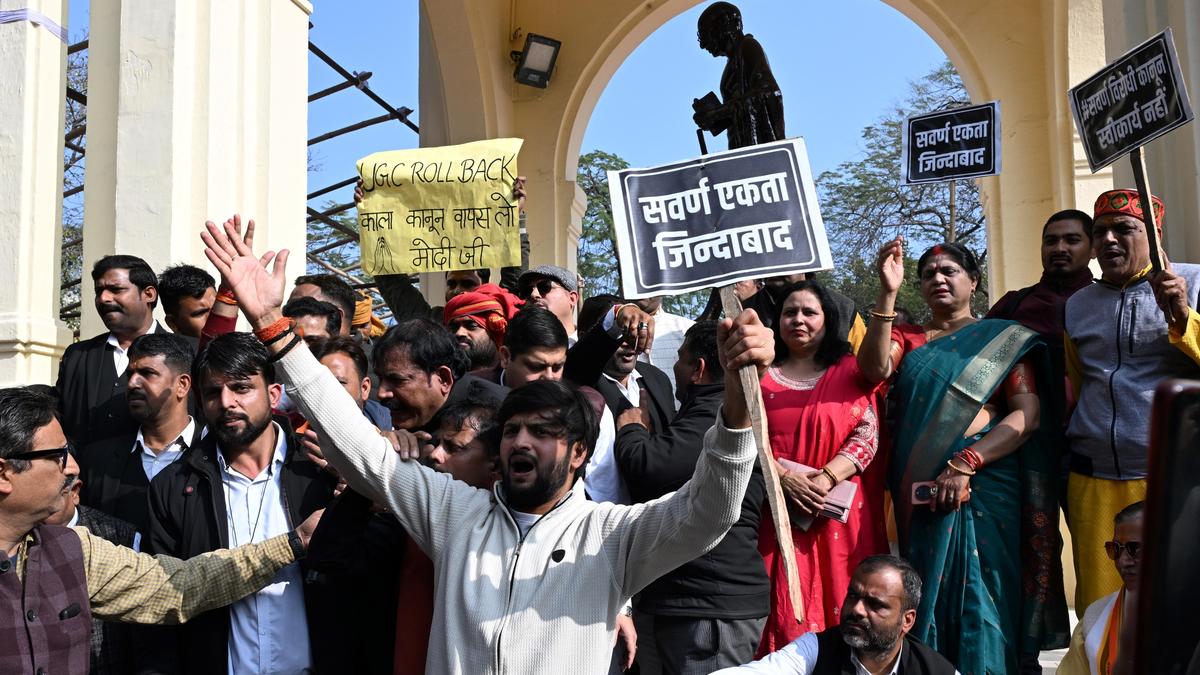
The Supreme Court has stayed the 2026 University Grants Commission (UGC) regulations on promoting equity in higher education institutions, following protests from “general or upper castes.” These regulations, intended to address caste discrimination, were designed to replace the 2012 version after the suicides of Rohith Vemula (2016) and Payal Tadvi (2019), who allegedly faced caste-based discrimination. The court’s decision follows arguments that the new regulations are vague, could be misused, and discriminate against upper-caste students.
The UGC’s regulations aimed to eradicate discrimination based on religion, race, gender, place of birth, caste, or disability, particularly against marginalized groups. The definition of “caste-based discrimination” and the absence of a provision against “false complaints” became major points of contention, with protesters claiming the regulations presumed upper-caste students would be the perpetrators of discrimination and lacked a mechanism to address potential grievances faced by them.
Key Points:
- The Supreme Court stayed the 2026 UGC regulations on equity in higher education on January 29, 2026, due to concerns about vagueness and potential misuse.
- The regulations aimed to address caste discrimination following suicides of Rohith Vemula (2016) and Payal Tadvi (2019).
- Protests against the regulations centered on the definition of “caste-based discrimination,” the lack of provisions against “false complaints,” and ambiguity regarding the function of “Equity Squads”.
- The regulations proposed establishing Equal Opportunity Centres, Equity Committees, and Equity Squads to address discrimination complaints.
- The 2012 regulations, which the 2026 rules were meant to replace, defined “discrimination” broadly but lacked explicit protection for Other Backward Classes (OBCs) and institutional accountability.
Critical Analysis:
The events reveal a deep-seated tension surrounding caste-based discrimination in India’s higher education system. The pushback against the 2026 UGC guidelines highlights a struggle to balance affirmative action for marginalized communities with concerns about potential discrimination against upper-caste individuals. The intensity of the protests and the Supreme Court’s intervention suggest that the implementation of equity policies in India remains a contentious issue, with competing narratives and legal challenges shaping the landscape. The historical context, including the tragic suicides of Rohith Vemula and Payal Tadvi, underscores the urgency to address caste discrimination but also reveals the complex and politically charged nature of the problem.
Key Takeaways:
- Caste discrimination remains a significant issue in Indian higher education, prompting ongoing efforts to implement effective equity regulations.
- Defining “caste-based discrimination” is a central point of contention, with differing perspectives on who is potentially a victim or perpetrator.
- The absence of provisions for addressing “false complaints” raises concerns about potential misuse of anti-discrimination mechanisms.
- Balancing the rights and concerns of different caste groups is a complex challenge for policymakers and the judiciary.
- The Supreme Court’s involvement underscores the legal and constitutional dimensions of caste-based discrimination in education.
Impact Analysis:
The Supreme Court’s stay on the 2026 UGC equity guidelines, pending further hearings, creates uncertainty in the higher education sector. The decision will likely delay the implementation of new measures to address caste discrimination and could perpetuate existing inequalities. The court’s questions and the Union Government’s required affidavit suggest a prolonged legal battle, the outcome of which will significantly impact future policies on equity and inclusion in Indian universities and colleges. The debate surrounding these regulations has the potential to reshape the understanding and implementation of affirmative action policies in India, with far-reaching consequences for marginalized communities and social justice initiatives.
 First Piper