
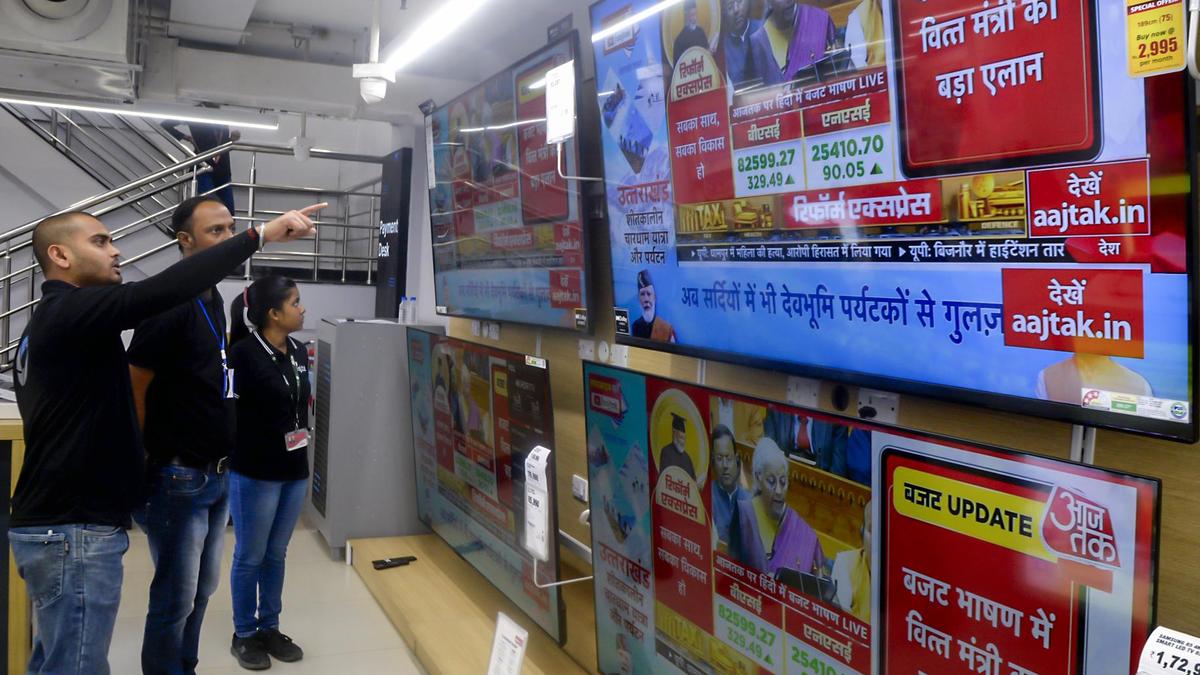
Sun Feb 01 11:30:12 UTC 2026: ### Headline: Union Budget 2026 Sparks Political Firestorm in West Bengal Ahead of Assembly Elections
The Story:
The February 1, 2026 Union Budget, presented by Finance Minister Nirmala Sitharaman, has ignited a political battleground in West Bengal, with the ruling Trinamool Congress (TMC) accusing the BJP-led central government of using the budget as a “political signalling tool” ahead of the upcoming Assembly elections. The budget includes significant infrastructure proposals for West Bengal, such as a dedicated freight corridor linking Dankuni to Surat and an East Coast Industrial Corridor node at Durgapur, which the BJP touts as development-led initiatives. The TMC, however, alleges these are repackaged old promises and that the Centre is withholding funds from existing welfare schemes.
Key Points:
- The 2026 Union Budget includes infrastructure proposals for West Bengal, including the Dankuni-Surat freight corridor and the East Coast Industrial Corridor.
- The TMC dismisses the budget as a politically motivated attempt by the BJP to influence the upcoming Assembly elections.
- The TMC alleges that the central government is withholding funds under schemes like MGNREGA, PM Awas Yojana, and Gramin Sadak Yojana.
- The BJP defends the budget, claiming it will boost West Bengal’s economy and create jobs.
- Union Home Minister Amit Shah accused the TMC government of under-allocating resources to North Bengal before the budget announcement.
- The 2025 Bihar elections saw similar big-ticket announcements in the preceding budgets.
Critical Analysis:
The timing and nature of the Union Budget proposals clearly indicate a strategic move by the BJP to gain political ground in West Bengal before the Assembly elections. The focus on infrastructure development, particularly in regions the BJP considers electorally pivotal, aligns with the party’s broader strategy of portraying the TMC government as ineffective and development-stagnant. The TMC’s sharp response, accusing the Centre of fiscal discrimination and repackaging old policies, reflects the high stakes of the election and the potential impact of the budget on voter sentiment. The allocation of funds for the Law Ministry’s e-Courts project and Defence Budget pegged at ₹7.85 lakh crore, with a 15% increase over the current fiscal, highlights other essential allocations the Union government felt required to be addressed. In stark contrast, Tamil Nadu’s concerns were ignored in the Budget which led to live political reactions from leaders like M.K. Stalin
Key Takeaways:
- Union Budgets are often used as political tools, particularly in the lead-up to state elections.
- Centre-State relations are strained, with accusations of fiscal discrimination and political maneuvering.
- Infrastructure development is a key campaign theme, with both parties vying for credit and accusing each other of shortcomings.
- Voters will assess the credibility of the promises in the budget before casting their votes.
- The 2026 West Bengal Assembly election is shaping up to be a closely contested battle.
Impact Analysis:
The budget’s impact extends beyond immediate electoral considerations. If the BJP manages to implement the proposed infrastructure projects, it could have long-term economic benefits for West Bengal. Conversely, the ongoing political dispute and accusations of fiscal discrimination could further strain Centre-State relations, potentially hindering development efforts. The election outcome will determine whether the budget promises are fulfilled and the overall direction of West Bengal’s economic and political landscape. The budget’s focus on tourism, infrastructure, and industrial development across “Purvodaya” States implies that the Union Government is doubling down on developing the East, something that will be closely watched to assess the veracity and impact of the Union Budget.
 First Piper