
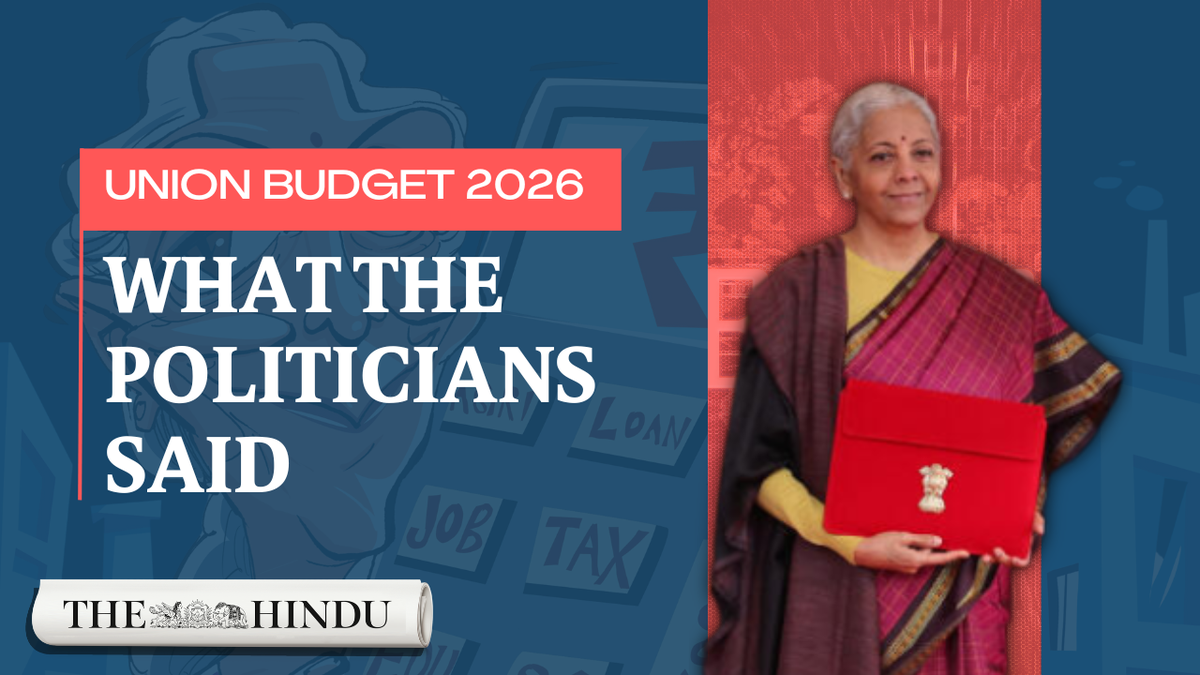
Sun Feb 01 11:45:28 UTC 2026: ### Union Budget 2026 Triggers Political Storm: Accusations of Neglect and Partisanship Emerge
The Story:
The Union Budget 2026-27, presented by Finance Minister Nirmala Sitharaman on February 1, 2026, has ignited a firestorm of political reactions across India. While Prime Minister Narendra Modi and BJP leaders lauded the budget as “historic” and a roadmap for “Viksit Bharat”, opposition parties, particularly those in Tamil Nadu, Kerala, and Maharashtra, have vehemently criticized it for neglecting their states’ interests and lacking substance for the common person. Regional parties have also weighed in, with some praising specific initiatives, while others accuse the budget of being partisan and favouring BJP-led states.
The budget’s reception highlights deep-seated regional disparities and political fault lines, particularly in the lead-up to upcoming state elections. The contrasting narratives underscore the complex challenges of balancing national development goals with the specific needs and aspirations of individual states and diverse populations.
Key Points:
- Tamil Nadu Chief Minister M.K. Stalin (DMK) labelled the budget a “huge disappointment,” alleging that Tamil Nadu’s interests were ignored and the share of devolution for states was insufficient.
- Kerala Chief Minister Pinarayi Vijayan criticized the budget for its “continued discrimination and neglect” towards Kerala, citing unmet demands for key infrastructure projects.
- Maharashtra Congress leader Vijay Wadettiwar claimed Maharashtra was “left empty-handed,” despite being a major contributor to the national exchequer.
- Prime Minister Narendra Modi hailed the budget as “historic” and a roadmap for “Viksit Bharat,” emphasizing its focus on empowering women, farmers, and youth.
- BJP leaders like Mukhtar Abbas Naqvi and Nitin Nabin praised the budget’s “confidence and continuity” and its commitment to inclusive growth.
- Andhra Pradesh Chief Minister N. Chandrababu Naidu described the budget as “well-balanced and forward-looking,” reflecting India’s self-reliance.
- Bihar Chief Minister Nitish Kumar viewed the budget as “progressive and forward-looking,” particularly welcoming the Varanasi-Siliguri high-speed rail corridor.
- The Defence Budget received a significant boost, pegged at ₹7.85 lakh crore, marking a 15% increase over the current fiscal year.
- The Law Ministry’s e-Courts project received ₹1,200 crore in funding.
- The Union Budget is turning the election spotlight on West Bengal with freight corridors and an industry push.
Critical Analysis:
The political reactions to the Union Budget 2026-27 reveal a recurring pattern of center-state tensions in India. Opposition-ruled states, particularly those with upcoming elections, are quick to accuse the central government of bias and neglect. This is further fueled by the BJP framing the budget as a roadmap to “Viksit Bharat by 2047”, implying a specific vision of development that not everyone shares. The increased defence budget is also worth nothing due to rising tensions in the Indo-Pacific and border conflicts.
Key Takeaways:
- The Union Budget remains a highly politicized event, with regional parties often viewing it through the lens of state interests and upcoming elections.
- The budget highlights the ongoing challenges of balancing national development priorities with regional demands and aspirations.
- Disparities in regional development continue to be a source of contention, with opposition-ruled states expressing concerns about being overlooked.
- The Union Budget is perceived as a reflection of the ruling party’s vision for India, leading to contrasting interpretations and criticisms.
- Defense spending remains a key priority, reflecting India’s strategic concerns and commitment to national security.
Impact Analysis:
The political fallout from the Union Budget 2026-27 could have significant implications for upcoming state elections, particularly in Tamil Nadu and West Bengal. The accusations of neglect and partisanship may galvanize opposition parties and influence voter sentiment. This event series underlines the complexities of India’s federal structure and the need for inclusive and equitable development policies to address regional disparities and foster national unity. Long-term impacts can also include shifts in political alliances, increased pressure on the central government to address state-specific needs, and potentially, a re-evaluation of the budget allocation process to ensure greater transparency and fairness.
 First Piper