
Sun Feb 01 12:44:21 UTC 2026: # Tamil Nadu CM Stalin Slams Union Budget 2026 as “Disappointing” and “Step-Motherly”
The Story:
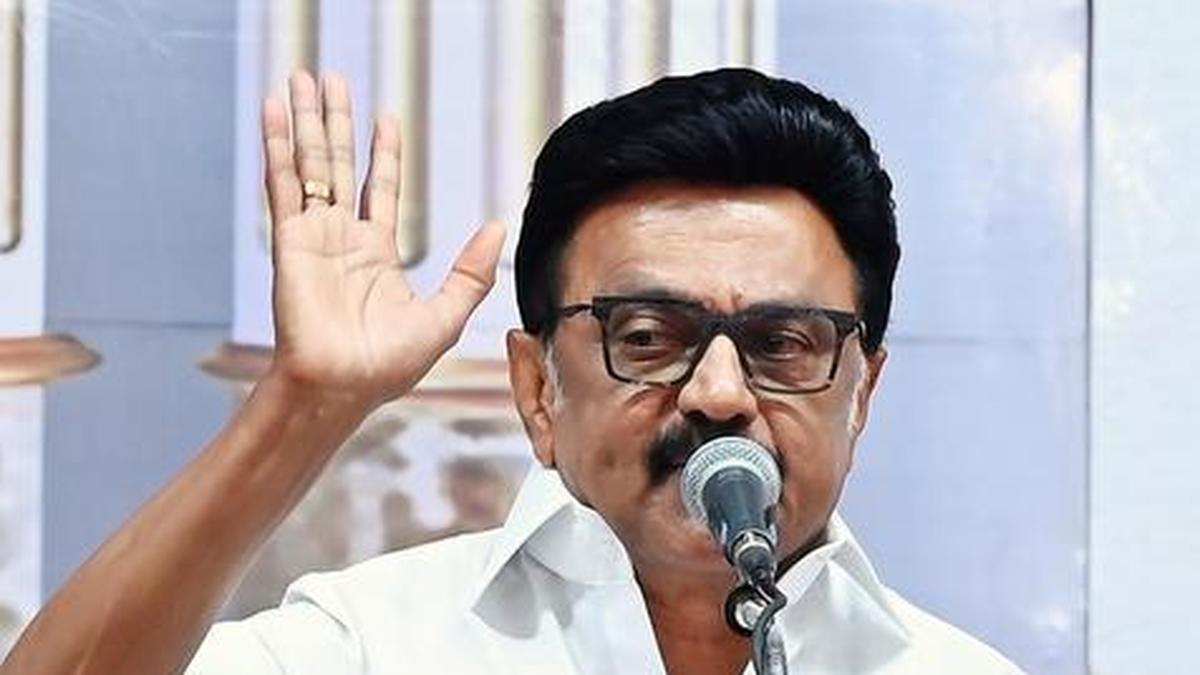
Tamil Nadu Chief Minister M.K. Stalin has strongly criticized the Union Budget 2026, calling it a disappointment that fails to address the state’s needs, especially in an election year. In a statement released on February 1, 2026, Stalin expressed concerns over the lack of welfare schemes for the poor, women, farmers, and marginalized communities, as well as the continued perceived inequity in tax revenue distribution between the Union government and the states. He also highlighted the drastic reduction in allocation for the Prime Minister’s Internship Scheme as evidence of its failure.
Key Points:
- Chief Minister M.K. Stalin criticizes the Union Budget 2026 for ignoring Tamil Nadu’s needs.
- The state’s demand to increase the states’ share of tax revenue from 41% to 50% was not met.
- Allocation for the Prime Minister’s Internship Scheme was reduced from ₹10,831 crore in the previous budget to just ₹526 crore in revised estimates for 2025-26.
- Tamil Nadu’s share of tax revenue is likely to remain at 4.097% despite its significant contribution to the Indian economy.
- The state’s share of tax revenue has been reduced by ₹1,200 crore.
- No funds allocated for education because Tamil Nadu refused to implement the three-language formula (₹3,548 crore needed).
- No announcement regarding the allocation of ₹3,112 crore for the Jal Jeevan Mission (JJM).
- Finance Minister Thangam Thennarasu echoed the Chief Minister’s sentiments, highlighting the lack of funds for development schemes, employment generation, education, health, and industrial investment.
Critical Analysis:
The related historical context shows contrasting reactions to the Union Budget 2026. While some perceive it as “well-balanced” and focused on global headwinds, Chief Ministers of poll-bound states like Tamil Nadu, Kerala, and Bengal express disappointment. This polarization suggests a potential strategic move by the central government to prioritize specific economic goals over immediate electoral gains in certain regions.
Key Takeaways:
- The Union Budget 2026 has ignited a political dispute between the Union government and the Tamil Nadu state government.
- Fiscal federalism and the equitable distribution of tax revenue remain contentious issues.
- Differing perspectives on the budget highlight the complex interplay between national economic policy and regional interests, especially in the context of impending elections.
- The reduction in funds for the Prime Minister’s Internship Scheme is raising questions about the scheme’s effectiveness.
- The opposition from the Tamil Nadu government to the three-language formula continues to impact funding allocations.
Impact Analysis:
The criticism of the Union Budget 2026 by the Tamil Nadu government could have several significant long-term impacts:
- Strained Center-State Relations: The strong condemnation from the Tamil Nadu government could further strain relations between the state and the Union government, potentially impacting future collaborations on developmental projects and policy implementations.
- Electoral Ramifications: With elections on the horizon, this issue could become a major talking point, influencing voter sentiment and potentially impacting electoral outcomes in Tamil Nadu. The state government is highly likely to leverage this perceived injustice to mobilize public support.
- Policy Debates: The debate over tax revenue distribution and funding for state-specific projects is likely to intensify, leading to further discussions and potential reforms in fiscal federalism.
- Development Delays: The lack of allocated funds for crucial schemes like education and the Jal Jeevan Mission could hinder Tamil Nadu’s development progress in these sectors, potentially widening the gap between the state’s aspirations and its achievements.
- National Unity Concerns: Discontent over financial allocations risks exacerbating regional sentiments and potentially undermining national unity if not addressed with fairness and transparency.
 First Piper