
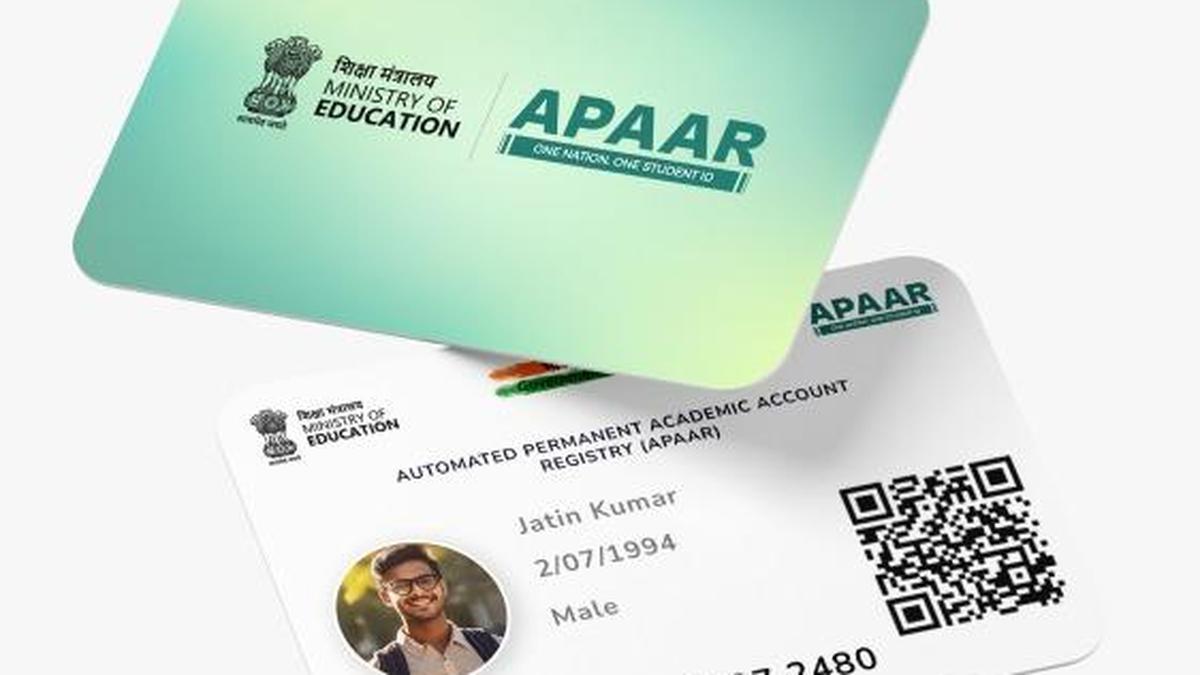
Sat Jan 31 19:05:16 UTC 2026: # Andhra Pradesh Promotes Unified Digital Identity for Students
The Story
On January 31, 2026, the Andhra Pradesh State Council of Higher Education (APSCHE) urged institutions to implement unified digital identity systems, highlighting the academic and administrative benefits. The call to action came during a workshop in Vijayawada focused on ‘APAAR–Credit Seeding,’ jointly organized by APSCHE, Dr. NTR University of Health Sciences (Dr. NTRUHS), and the National Academic Depository (NAD) under the University Grants Commission (UGC). Officials emphasized the crucial role of APAAR (Automated Permanent Academic Account Registry) and SAMARTH (Smart Automated Management of Academic Resources for Transforming Higher Education) in bolstering transparency, portability, and efficiency in higher education.
The workshop featured a demonstration of a digital convocation application, illustrating the complete process from digital degree issuance to secure verification and real-time access to academic credentials. Participants, including faculty members and technical staff from various colleges, engaged in discussions about implementation strategies and addressing operational challenges related to the “One Nation One ID” initiative.
Key Points
- APSCHE Vice-Chairperson K. Ratna Shiela Mani advocated for the adoption of unified digital identity systems.
- The workshop centered on APAAR and SAMARTH initiatives.
- Sourabh Gour, Health and Family Welfare Secretary, emphasized coordinated efforts for digital transformation.
- P. Anil Kumar, APSCHE State Nodal Officer, highlighted the importance of the ‘One Nation One ID’ initiative.
- A digital convocation application was demonstrated.
- Ravi Pandey from Digital India Corporation addressed implementation challenges.
Critical Analysis
The push for unified digital identity systems in higher education, as exemplified by the ‘One Nation One ID’ initiative, aligns with the broader trend of technological advancement and digital infrastructure development in India. This is supported by the concurrent news regarding tech giants seeking a massive AI and digital infrastructure push in the Budget 2026. The emphasis on transparency, portability, and efficiency through systems like APAAR and SAMARTH indicates a strategic effort to modernize the education sector, streamline academic processes, and improve student mobility across the country. Furthermore, the emphasis on secure verification and real-time access to academic credentials appears to be a direct response to the increasing cases of digital fraud.
Key Takeaways
- India is actively pursuing digital transformation in its higher education sector.
- The ‘One Nation One ID’ initiative aims to streamline academic record management and enhance student mobility.
- APAAR and SAMARTH are key components of this digital transformation strategy.
- The initiative addresses the need for transparency, security, and efficient access to academic credentials.
- Collaboration between universities, government departments, and autonomous colleges is critical for the successful implementation of these digital reforms.
Impact Analysis
The widespread adoption of unified digital identity systems in higher education has the potential to significantly impact the Indian education landscape. By creating a centralized and easily accessible database of academic records, the initiative could reduce instances of fraud, simplify the verification process for employers and higher education institutions, and empower students with greater control over their academic credentials. Long-term, this could lead to a more efficient and equitable education system, fostering greater mobility and opportunities for students across the country. The emphasis on digital convocation applications and secure verification mechanisms indicates a proactive approach to adapting to the digital age and ensuring the integrity of academic qualifications.
 First Piper