
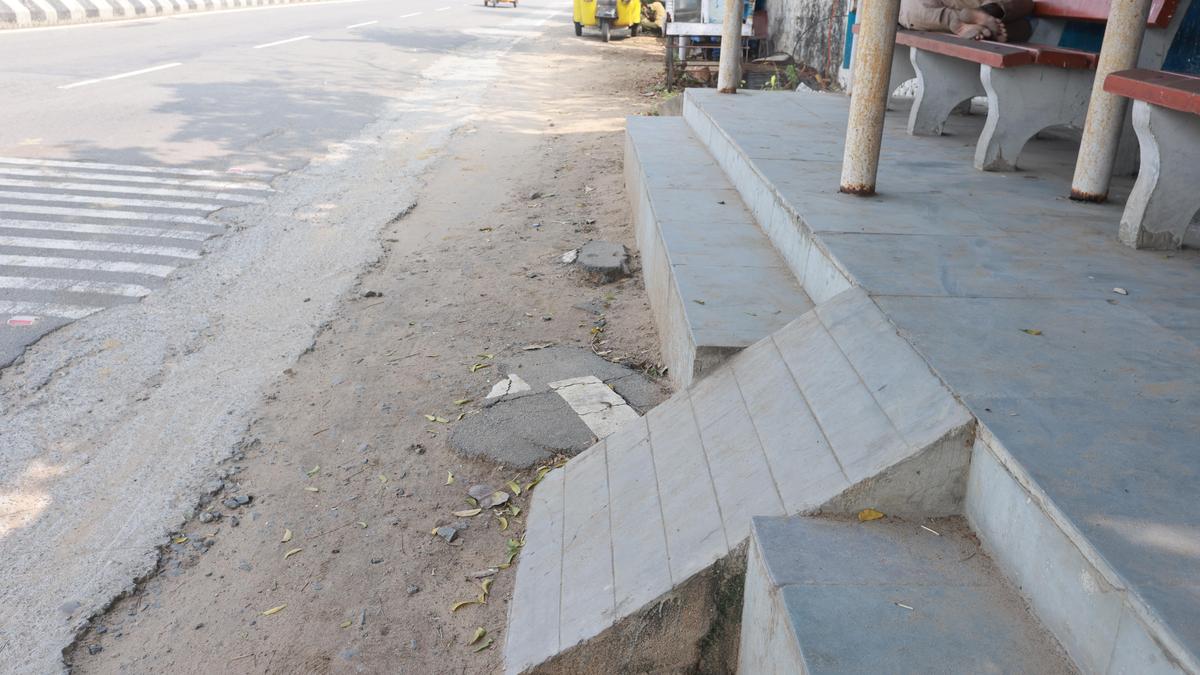
Sun Feb 01 03:00:45 UTC 2026: # Flawed Bus Shelters on East Coast Road Highlight Accessibility Issues in Chennai
The Story:
A February 1, 2026, article in The Hindu exposes significant design flaws in bus shelters along Chennai’s East Coast Road (ECR), managed by the Tamil Nadu Road Development Company (TNRDC). The article focuses on the lack of accessibility for wheelchair users, particularly concerning the steepness and impracticality of the ramps. The author contrasts these problematic shelters with better-designed inclusive bus stops in other parts of Chennai, raising questions about the Greater Chennai Corporation’s (GCC) role in ensuring accessibility standards are met across the city.
Key Points:
- The article focuses on bus shelters between Panaiyur and Uthandi on ECR.
- TNRDC is responsible for the design and maintenance of the bus shelters on this stretch of ECR.
- The ramps at the bus shelters are often too steep for wheelchair users to navigate safely.
- Some ramps are damaged or incomplete, rendering them unusable.
- The overall design of the shelters lacks sufficient space for wheelchair maneuverability.
- The author criticizes the designs as “tokenism,” where inclusivity is superficially addressed but not genuinely implemented.
- The GCC, which governs up to Uthandi on ECR, is questioned for not intervening to improve accessibility within its jurisdiction.
- The article contrasts the flawed ECR shelters with better-designed inclusive bus shelters in other parts of Chennai.
Key Takeaways:
- Accessibility standards are not consistently implemented across Chennai’s public infrastructure.
- There is a lack of coordination and oversight between different government agencies (TNRDC and GCC) regarding accessibility.
- The design of public spaces needs to prioritize the needs of people with disabilities beyond superficial gestures.
- Public awareness and advocacy are crucial to holding responsible agencies accountable for inclusive design.
- The article highlights the need for stricter enforcement of accessibility guidelines and greater collaboration between stakeholders to ensure equitable access to public transportation for all citizens.
 First Piper