
Thu Jan 29 02:11:42 UTC 2026: ### Doomsday Clock Remains Dangerously Close to Midnight, Highlighting Global Inertia
The Story:
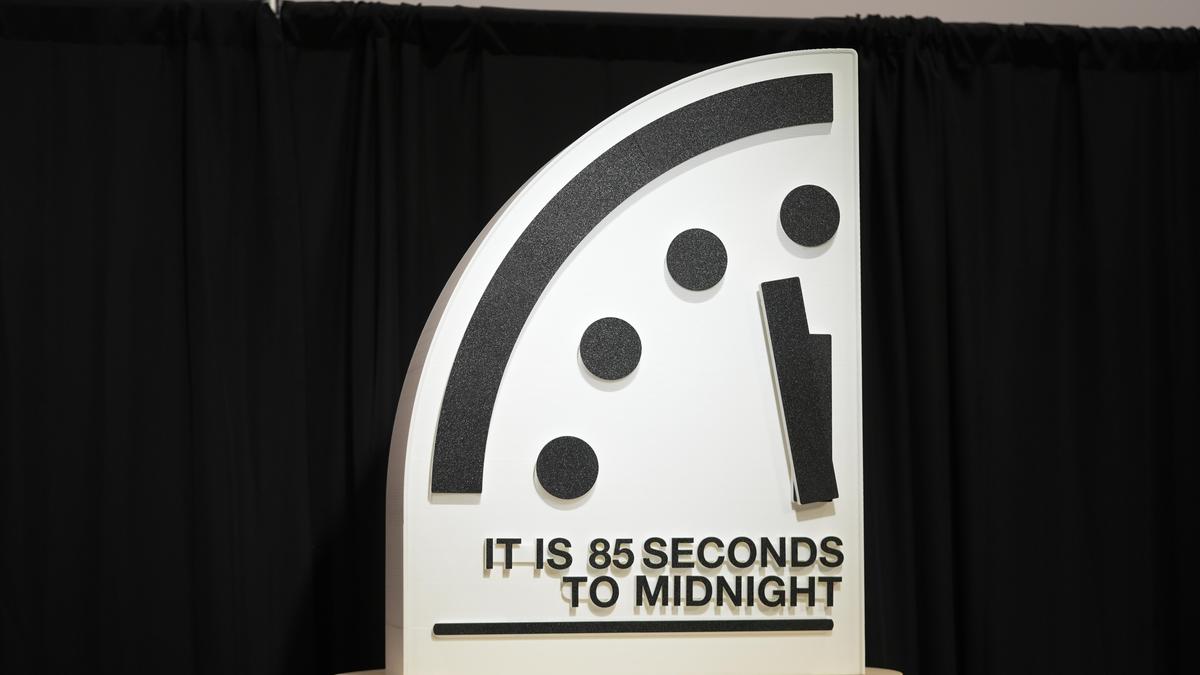
On January 27, 2026, the Bulletin of the Atomic Scientists announced that the Doomsday Clock remains set at 85 seconds to midnight, the closest it has ever been to signifying global catastrophe. The article discusses the history and significance of the Doomsday Clock as a tool for communicating existential threats, primarily nuclear war and climate change, to the public. It highlights the clock’s success in raising awareness but critiques its failure to instigate effective political action to mitigate these threats. The article argues that constant fear leads to public paralysis and that national interests often supersede global safety concerns.
Key Points:
- The Doomsday Clock remains at 85 seconds to midnight as of January 27, 2026.
- The Doomsday Clock was created in 1947 by scientists involved in the Manhattan Project.
- The clock effectively communicates abstract threats of nuclear war and climate change to the public.
- The clock has failed to translate awareness into concrete political action.
- Constant fear induced by the clock can lead to psychic numbing and public inaction.
- National interests often override global safety concerns, hindering progress.
- The inclusion of climate change and disruptive technologies has diluted the clock’s original nuclear focus.
Key Takeaways:
- The Doomsday Clock, while a powerful symbol of impending global catastrophe, has proven ineffective in compelling governments to prioritize global safety over national interests.
- Overexposure to existential threats can lead to public apathy and inaction, diminishing the clock’s intended impact.
- The inclusion of multiple threats beyond nuclear war may dilute the message and make it harder for the public to understand what actions to demand from their leaders.
- The article suggests that the clock’s continued proximity to midnight demonstrates the failure of existing strategies to address global existential risks.
 First Piper