
Sat Jan 31 19:33:34 UTC 2026: Headline: Students and Professors Protest Supreme Court Stay on UGC Equity Rules
The Story:
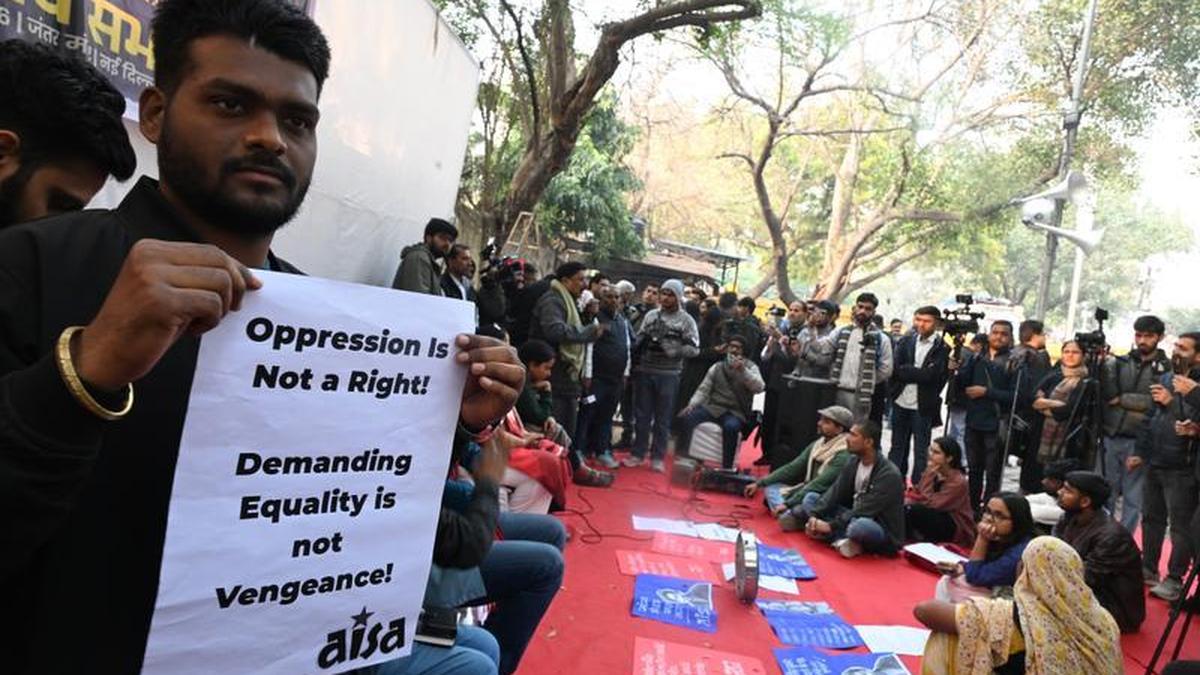
On Saturday, January 31, 2026, professors and students gathered at Jantar Mantar in New Delhi to protest the Supreme Court’s decision to stay the University Grants Commission’s (UGC) Promotion of Equity in Higher Education Institutions rules. The rules, notified in January 2026, aimed to address various forms of discrimination, particularly caste-based, on college campuses, following years of activism and tragic student suicides like those of Rohith Vemula and Payal Tadvi.
The protesters, organized by the Left-backed All India Students’ Association, voiced their support for the UGC rules, highlighting instances of caste discrimination in higher education. They also criticized counter-protests by some general category students who felt excluded and opposed a planned Bharat Bandh. Dalit activist and lawyer Rajendra Pal Gautam questioned whether upper-caste individuals had ever faced similar discrimination. Speakers emphasized the historical underrepresentation of reserved categories in faculty positions and connected this lack of representation to student distress and suicides.
Key Points:
- Professors and students protested the Supreme Court’s stay on the UGC’s equity rules at Jantar Mantar on January 31, 2026.
- The UGC rules, notified in January 2026, aimed to address all forms of discrimination, particularly caste-based, in higher education.
- The protest was organized by the All India Students’ Association.
- Protesters cited instances of caste discrimination and the lack of representation in faculty positions as major issues.
- Speakers referenced the suicides of Rohith Vemula and Payal Tadvi as examples of the consequences of discrimination.
- Counter-protests by general category students and a planned Bharat Bandh were criticized.
Critical Analysis:
The historical context provided doesn’t reveal a direct connection to the UGC protest. The other news items are about teacher’s pay, school fees, moral education, anti-fascism protests in Italy, and political remarks. Therefore, a direct analysis of WHY the UGC protest is happening within a broader context is not strongly supported by the information provided.
Key Takeaways:
- The issue of caste discrimination in higher education remains a contentious and active area of social and legal debate in India.
- The Supreme Court’s intervention in the UGC’s equity rules has triggered significant public response and mobilization.
- Student activism continues to play a crucial role in advocating for social justice and equity on college campuses.
- The protest highlights the persistent challenges in achieving equitable representation and addressing historical injustices in the Indian education system.
- The news shows the issue of caste based reservation and discrimination is still a problem in India.
Impact Analysis:
The Supreme Court’s stay and the subsequent protests could have significant long-term implications for the implementation of affirmative action policies in higher education. This could lead to:
* Protracted legal battles over the interpretation and application of equity rules.
* Continued social and political mobilization around the issue of caste discrimination.
* Increased pressure on educational institutions to address historical inequities.
* Potential for further student unrest if concerns about discrimination are not adequately addressed.
* Alteration of dynamics of higher education in India by influencing admission and recruitment.
 First Piper