
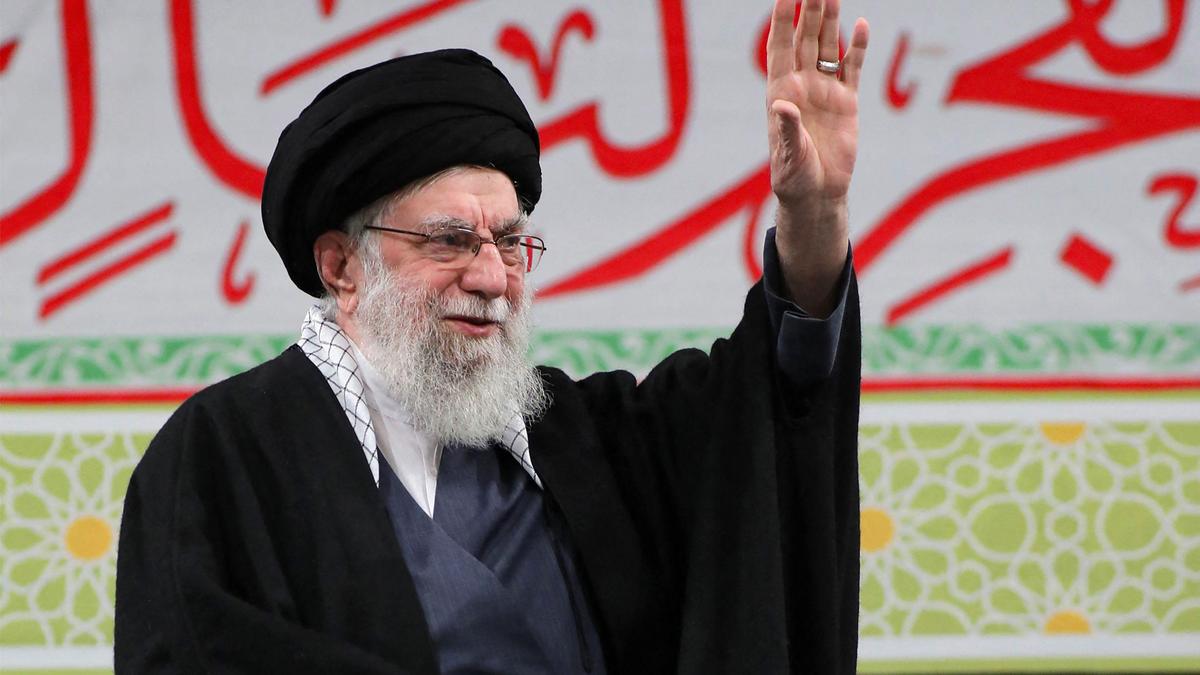
Sun Feb 01 12:59:04 UTC 2026: ### Headline: Khamenei Warns of Regional War as US and Iran Engage in Tense Talks
The Story
On February 1, 2026, Iranian Supreme Leader Ayatollah Ali Khamenei issued a stark warning to the United States, stating that any attack on Iran would ignite a regional war. This statement came amid heightened tensions, with the U.S. deploying warships and fighter jets to West Asia. Despite the aggressive rhetoric, both Tehran and Washington confirmed that talks were progressing, facilitated by regional powers seeking to de-escalate the situation. The article highlights the delicate balance between threats and diplomatic efforts, underscoring the volatile state of U.S.-Iran relations.
Key Points
- February 1, 2026: Ayatollah Ali Khamenei warns the U.S. that a strike on Iran would trigger a regional war.
- The U.S., under President Donald Trump, has deployed military assets to West Asia.
- President Trump stated “time was running out for Iran” to agree to a nuclear deal and that the U.S. was “ready to use violence” if necessary.
- Ali Larijani, Secretary of the Supreme National Security Council of Iran, confirms that talks between Iran and the U.S. are progressing.
- Regional countries including Oman, Qatar, Turkey, and Saudi Arabia are actively involved in diplomatic efforts to de-escalate tensions.
Critical Analysis
The events unfolding on February 1, 2026, demonstrate a complex interplay of military posturing and diplomatic engagement. Khamenei’s warning, coupled with Trump’s aggressive stance, reflects a pattern of brinkmanship that has characterized U.S.-Iran relations. The simultaneous confirmation of ongoing talks, mediated by regional actors, suggests a calculated effort to de-escalate behind the scenes, potentially driven by mutual fears of a broader conflict. Khamenei also made references to recent anti-government protests in Iran, comparing it to a ‘coup’. The timing suggests a potential effort to rally domestic support against perceived external threats and internal dissent.
Key Takeaways
- The risk of military conflict between the U.S. and Iran remains high, as indicated by Khamenei’s explicit warning.
- Despite the aggressive rhetoric, both sides are engaged in talks, suggesting a preference for a diplomatic resolution, albeit under pressure.
- Regional powers play a crucial role in mediating the crisis and preventing further escalation.
- Iran seeks guarantees that no Nuclear Weapons are being made and for the lifting of sanctions.
- The ongoing tensions highlight the need for a comprehensive and sustainable agreement that addresses both nuclear concerns and regional security issues.
Impact Analysis
The events of February 1, 2026, have potentially far-reaching implications for regional stability and global security. A U.S.-Iran conflict could destabilize the entire Middle East, disrupting oil supplies and potentially drawing in other major powers. Successful de-escalation, on the other hand, could pave the way for a more stable and cooperative regional order. The success of these talks will likely define the trajectory of U.S.-Iran relations for the foreseeable future and impact the broader geopolitical landscape.
 First Piper