
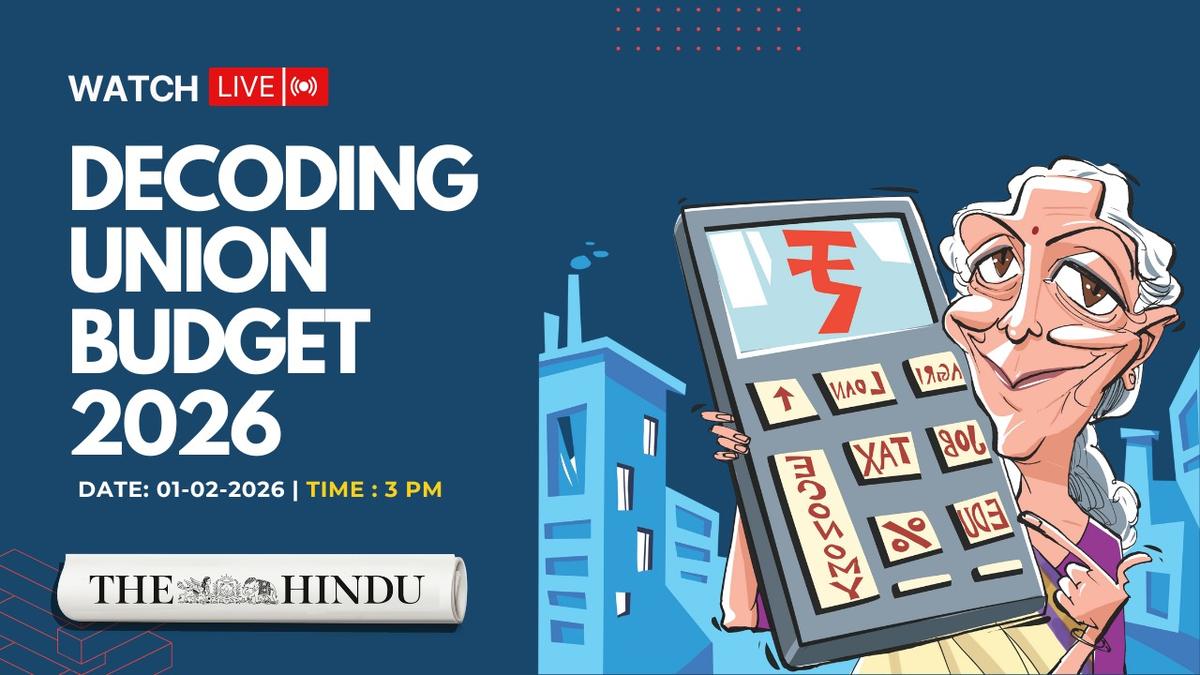
Sun Feb 01 10:51:59 UTC 2026: # Union Budget 2026: A Nation Divided?
The Story
On February 1, 2026, India’s media landscape buzzed with reactions to the Union Budget 2026. News reports indicate a mixed bag of outcomes. While the Finance Minister highlighted successes in curbing inflation, and Prime Minister Modi lauded the budget as a roadmap for “Viksit Bharat” (Developed India), reactions from individual states painted a different picture. West Bengal stands to benefit from freight corridors and industry initiatives, but Kerala expresses disappointment, although receiving an increased tax share from the 16th Finance Commission. Furthermore, the Information and Broadcasting Ministry received a substantial allocation of ₹4,551 crore, earmarking funds for Prasar Bharati and supporting the radio movement.
Key Points
- Finance Minister cites success in curbing inflation.
- Prime Minister Modi hails the budget as a roadmap for “Viksit Bharat.”
- West Bengal expected to benefit from freight corridors and industry initiatives.
- Kerala expresses disappointment, despite increased tax share from the 16th Finance Commission.
- ₹4,551 crore allocated to the I-B Ministry.
Critical Analysis
The divergent reactions to the Union Budget, particularly between the central government’s optimistic assessment and Kerala’s disappointment, highlight the complexities of balancing national goals with regional needs. The allocation to the I-B Ministry and Prasar Bharati also raises questions about the government’s focus on media and its potential influence, especially given the upcoming elections. The emphasis on freight corridors and industry in West Bengal suggests a targeted approach with possible political motivations, considering West Bengal’s strategic importance and past election outcomes.
Key Takeaways
- The Union Budget 2026 elicits mixed reactions, revealing potential disparities between national-level goals and state-level needs.
- Targeted allocations to states like West Bengal may reflect strategic political considerations.
- Significant funding for the I-B Ministry warrants scrutiny regarding media independence and government influence.
- Inflation control remains a central talking point, but its actual impact is perceived differently across states.
- The 16th Finance Commission plays a key role in shaping resource distribution and mitigating regional disparities.
Impact Analysis
The long-term impact of the Union Budget 2026 will be determined by how effectively its provisions are implemented and how fairly its benefits are distributed across different regions. Kerala’s disappointment, despite the increased tax share, raises concerns about the effectiveness of the 16th Finance Commission in fully addressing regional disparities. The success of projects in West Bengal will be closely watched, and could influence political dynamics in the state. The significant allocation to the I-B Ministry has the potential to shape public discourse in the lead-up to future elections, depending on how the funds are utilized by Prasar Bharati and other media outlets. The narrative of “Viksit Bharat” will require sustained progress across all states to gain widespread acceptance and avoid further fueling regional discontent. The perceived success (or failure) in controlling inflation will also significantly impact public sentiment.
 First Piper