
Thu Jan 29 04:51:11 UTC 2026: ### Lunar Innovation Faces Legal Vacuum: Ownership of Space-Based Patents in Question
The Story:
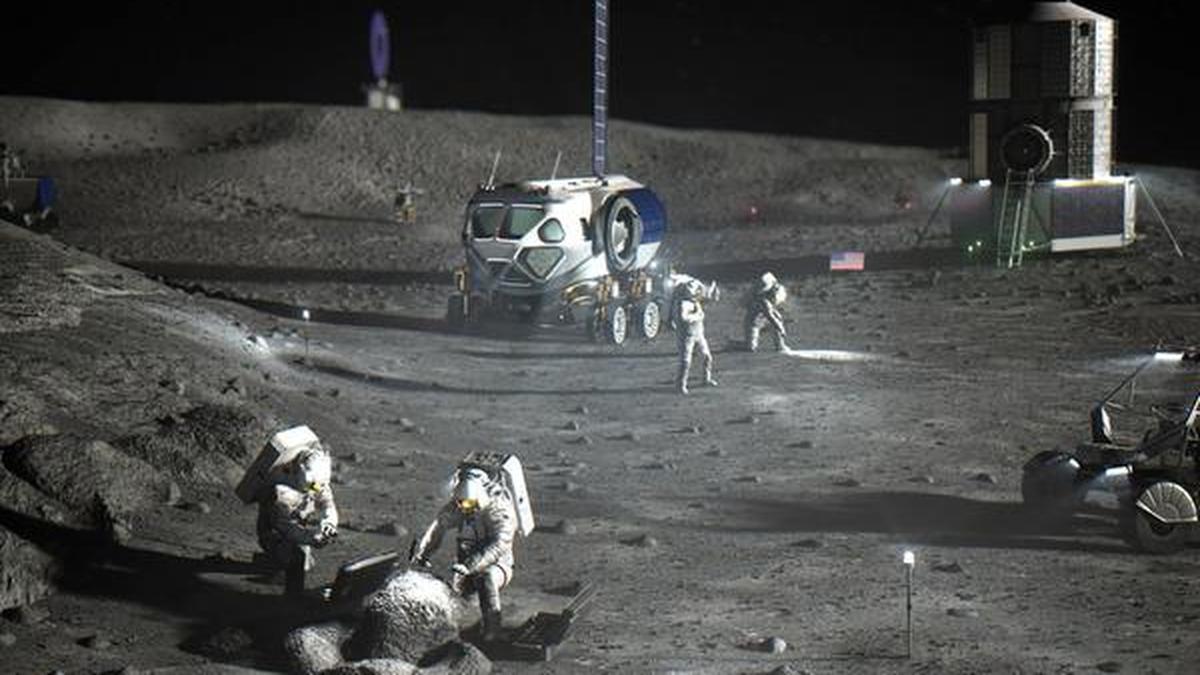
As humanity pushes towards sustained habitation on the Moon and Mars, a critical legal challenge emerges: the ownership of intellectual property developed in extraterrestrial environments. A recent article in The Hindu examines the growing disconnect between existing international space law, built upon territorial principles, and the realities of collaborative, multinational innovation in space. The article highlights the complexities of applying terrestrial patent law to activities on celestial bodies, where no single nation can claim sovereignty, raising questions about who owns the innovations crucial for survival and exploration.
Key Points:
- Innovation in space, focusing on resource extraction, energy generation, and waste recycling, is essential for long-term human presence on the Moon and Mars.
- Current patent law operates on the principle of territoriality, granting exclusive rights within specific jurisdictions.
- The Outer Space Treaty prohibits national appropriation of celestial bodies but allows states to retain jurisdiction over objects registered under their authority.
- The International Space Station (ISS) model, allocating jurisdiction module by module, may not be suitable for permanently inhabited lunar or planetary bases with shared infrastructure.
- Registration-based jurisdiction may incentivize strategic behavior, such as deploying technologies in jurisdictions with weaker patent enforcement.
- The question arises of whether patent-based exclusivity could hinder access to essential technologies in space, potentially violating the principle of space exploration for the benefit of all humankind.
Key Takeaways:
- Existing international space law needs revision to address the ownership and enforcement of patents in extraterrestrial environments.
- The current jurisdiction-by-registration approach may not accurately reflect how innovation occurs in collaborative, multinational space projects.
- Strategic behavior driven by regulatory arbitrage could undermine the effectiveness of patent protection in space.
- The application of the “temporary presence” doctrine to space objects remains unclear, potentially impacting the freedom to operate in space.
- A lack of clear international standards on space-based IP could stifle innovation by creating legal uncertainty.
 First Piper