
Sun Feb 01 06:21:05 UTC 2026: # Union Budget 2026 Approved and Presented Amidst Global Economic Uncertainty
The Story
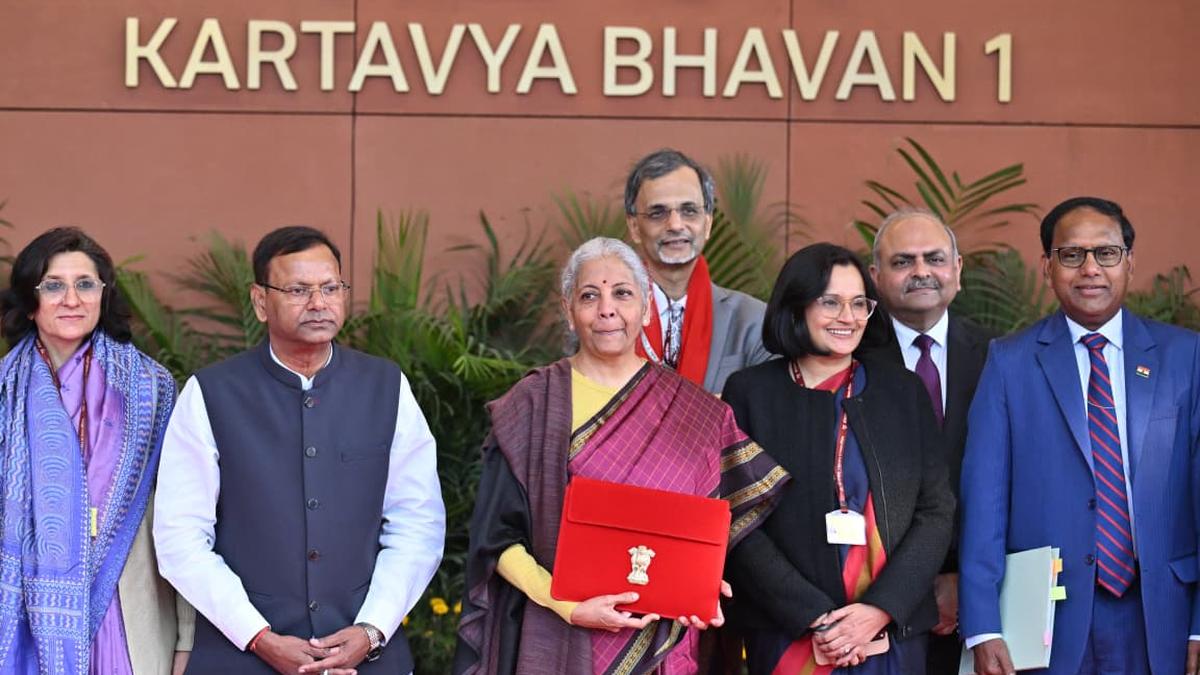
On February 1, 2026, the Union Cabinet, led by Prime Minister Narendra Modi, approved the Union Budget 2026-27. Following this approval, Finance Minister Nirmala Sitharaman presented her ninth budget to the Lok Sabha. The budget presentation takes place amidst a backdrop of global uncertainties and a slowdown in exports. This marks the third budget of the BJP-led NDA government in its third term. Like the previous year, the budget was presented in paperless form, continuing the trend initiated in 2019 when Sitharaman replaced the traditional leather briefcase with a ‘bahi-khata’.
Key Points
- The Union Budget 2026-27 was approved by the Union Cabinet on February 1, 2026.
- Finance Minister Nirmala Sitharaman presented her ninth budget.
- The budget is presented against a backdrop of global uncertainties and a slowdown in exports.
- This is the third budget of the BJP-led NDA government’s third term.
- The budget presentation was paperless.
- Stock markets gained momentum ahead of the presentation.
- Gold and silver futures plummeted 9% to hit lower circuit levels.
Critical Analysis
The presentation of the Union Budget during a period of global economic instability suggests a strategic effort to stabilize the Indian economy through targeted fiscal measures. The specific details of these measures, as indicated by the related historical context (tax holidays, simplified tax regimes, mental health initiatives, and educational infrastructure investment), signal a multi-pronged approach focusing on both economic growth and social welfare.
Key Takeaways
- The government is prioritizing economic stability in the face of global challenges.
- The budget likely includes measures to stimulate domestic investment and growth, such as tax incentives for data centers.
- There’s a focus on social welfare and development through investments in mental health and education.
- The continuation of the paperless budget format indicates a commitment to digitization and efficiency.
Impact Analysis
The Union Budget 2026’s emphasis on tax rationalization, infrastructure development, and social welfare programs is likely to have a significant long-term impact on the Indian economy and society. Specifically:
- Economic Growth: Tax holidays for data centers and a simplified tax regime for corporations could attract investment and stimulate growth in key sectors.
- Social Development: The establishment of national-level mental health institutes and investment in university townships and girls’ hostels will contribute to improved social well-being and educational opportunities.
- Financial Markets: The initial volatility in gold and silver markets suggests potential short-term impacts on investment patterns, requiring careful monitoring and policy adjustments. These events suggest the potential for market corrections and highlight the need for investors to remain vigilant.
 First Piper