
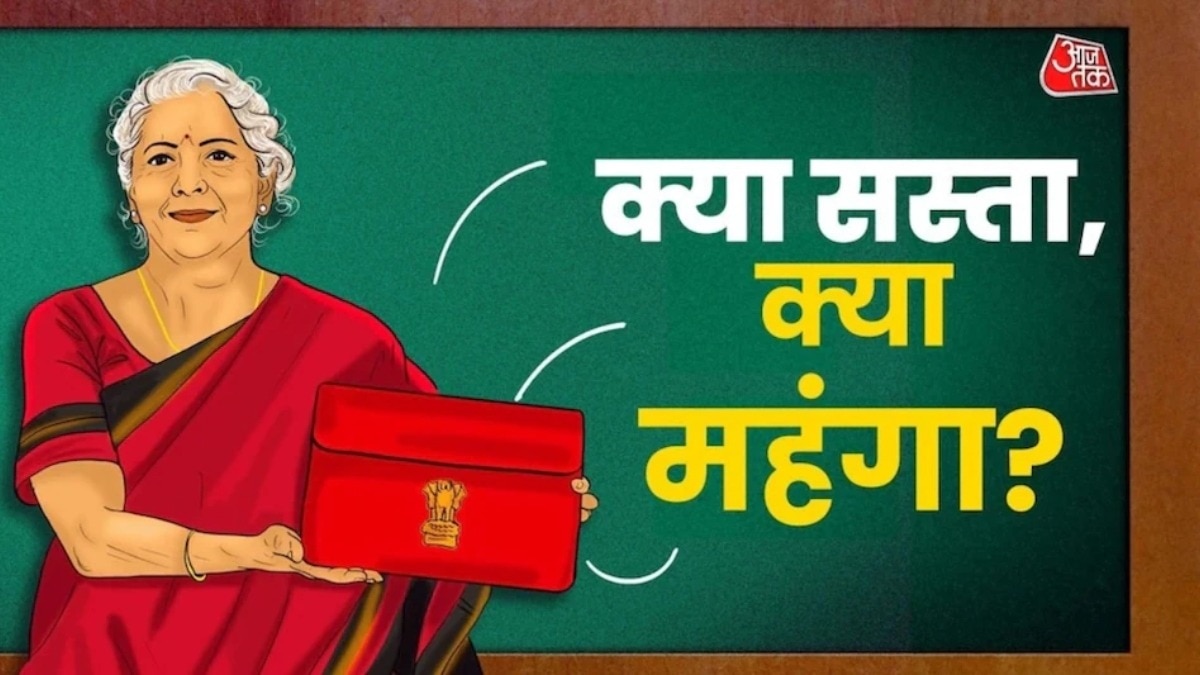
Sun Feb 01 05:30:00 UTC 2026: ### Union Budget 2026: Tax Cuts Aimed at Boosting Domestic Manufacturing and Export
The Story:
Finance Minister Nirmala Sitharaman presented the Union Budget 2026 in the Lok Sabha on Sunday, marking her ninth consecutive budget as Finance Minister under the Modi government. The budget focuses on reducing customs duties on goods manufactured in India, specifically targeting sectors like leather, textiles, and defense. These cuts are intended to boost domestic production and exports. Conversely, customs duties have been increased on items like alcohol, scrap metal, and minerals, signaling a potential rise in their prices.
Key Points:
- Customs duties reduced on raw leather and related goods, expected to lower the prices of shoes and bags.
- Mobile phone components, including batteries, will become cheaper due to duty cuts, potentially leading to lower mobile phone prices.
- Tax Collected at Source (TCS) interest rate for overseas education reduced from 5% to 2%, making foreign education more affordable.
- Customs duties reduced on sports-related items.
- Customs duties increased on alcohol, scrap metal, and minerals, likely increasing their prices.
Critical Analysis:
The historical context highlights the government’s ongoing efforts to manage the fiscal deficit, promote domestic manufacturing through tax exemptions (lithium-ion cells, capital goods for battery storage), and facilitate sales from Special Economic Zones (SEZs) to the domestic market. The infrastructure focus, with high-speed rail corridors connecting Hyderabad, indicates a broader push for economic development and connectivity. The political reactions, characterized as “lackluster,” suggest a degree of dissatisfaction or unmet expectations.
Key Takeaways:
- The budget prioritizes incentivizing domestic manufacturing by reducing import duties on raw materials and components.
- The reduction in TCS for overseas education suggests a focus on human capital development.
- Increased duties on alcohol, scrap metal, and minerals may aim to increase revenue or protect domestic industries.
- The budget reflects a broader strategy of fiscal consolidation, infrastructure development, and promotion of domestic industries, as evidenced by related news.
- Political reception of the budget appears mixed.
Impact Analysis:
The Union Budget 2026’s initiatives could have several long-term implications:
* Boost to Domestic Manufacturing: Lowering import duties on components may encourage local manufacturing, reducing reliance on imports.
* Increased Exports: Duty-free exports in leather and textile sectors could enhance India’s competitiveness in the global market.
* Affordable Education: Reduced TCS for overseas education may lead to more students pursuing education abroad.
* Infrastructure Growth: High-speed rail corridors, as mentioned in related news, have the potential to transform transportation and regional development.
* Potential Inflation: Increased duties on certain goods may lead to price hikes, affecting consumers.
 First Piper