
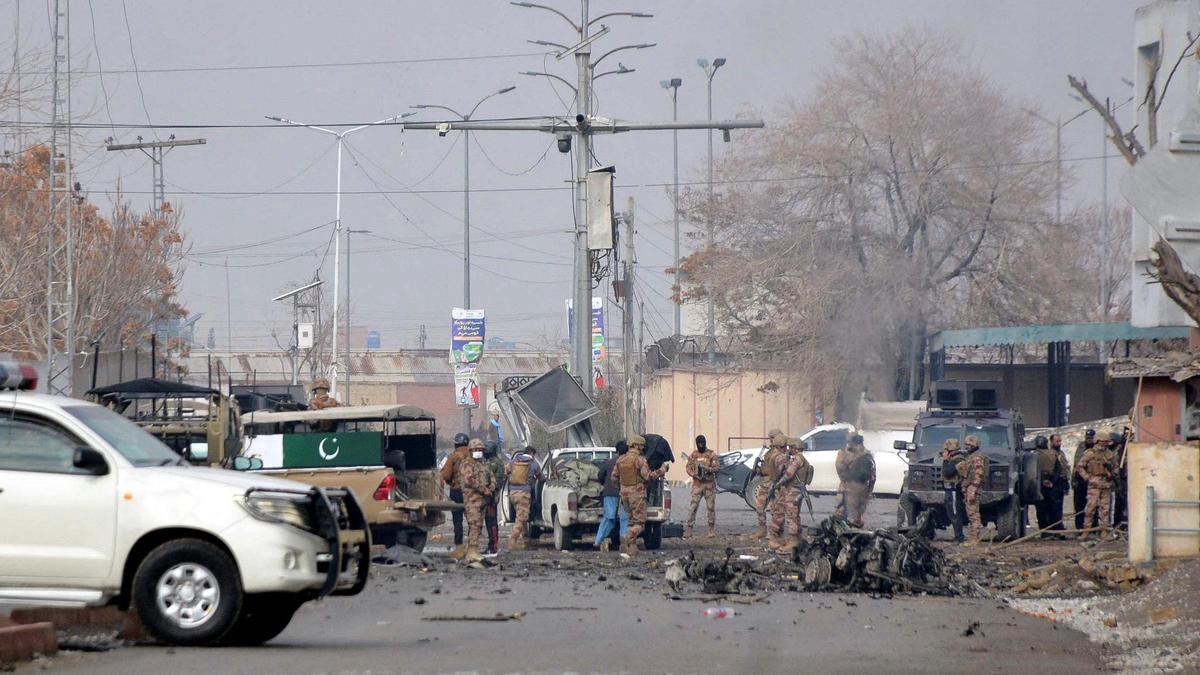
Sun Feb 01 05:24:40 UTC 2026: ### Headline: Pakistan’s Balochistan Province Gripped by Intense Counter-Terrorism Operations Following Militant Attacks
The Story:
On February 1, 2026, the Pakistani Army announced that at least 15 soldiers and 92 militants were killed in counter-terrorism operations across Balochistan province. These operations were launched in response to multiple attacks on January 31, 2026, by ethnic Baloch groups targeting several locations including Quetta, Mastung, and Gwadar. The Army stated that the militants aimed to disrupt peace and targeted both security forces and civilians, resulting in the deaths of 18 civilians including women and children. The operations are ongoing to sanitize affected areas and bring those responsible to justice.
Key Points:
- February 1, 2026: Pakistani Army reports 15 soldiers and 92 militants killed in Balochistan counter-terrorism operations.
- Attacks were launched by ethnic Baloch groups on January 31, 2026, targeting multiple locations.
- 18 civilians, including women and children, were killed in the attacks.
- The Tehreek-e-Taliban Pakistan (TTP) was also targeted, with 41 militants killed in separate operations on January 31, 2026.
- Violence in Balochistan has surged, with fatalities increasing by nearly 22% last year.
- Terror attacks and violence across Pakistan rose by 34% in 2025.
Critical Analysis:
The historical context reveals a pattern of escalating violence and unrest in Balochistan and Pakistan as a whole. The recent attacks by Baloch separatists, coupled with TTP activity, demonstrate a multi-faceted threat to Pakistani security. The mention of increased violence in Balochistan and across Pakistan in 2025 paints a picture of a deteriorating security environment leading up to this event. The government’s “National Action Plan” seems inadequate, as terrorist acts are up 34% from the previous year.
Key Takeaways:
- Balochistan remains a highly volatile region with persistent militant activity.
- Pakistan faces a complex security challenge involving both ethnic separatists and the TTP.
- The rise in violence suggests a failure of existing counter-terrorism strategies.
- The targeting of civilians exacerbates the instability and fuels further unrest.
- The Pakistani Army’s response indicates a commitment to combating militancy, but the effectiveness remains uncertain.
Impact Analysis:
The ongoing violence in Balochistan has significant long-term implications for Pakistan’s stability and regional security. The continuous attacks can further destabilize the region, potentially leading to a broader insurgency. This could strain Pakistan’s resources and divert attention from other pressing issues such as economic development and social welfare. Moreover, the Balochistan conflict has ethnic and political dimensions that can exacerbate existing tensions within the country and potentially affect relations with neighboring countries if the violence spills over. The increased frequency of terrorist incidents across Pakistan also threatens to undermine investor confidence and hinder economic growth.
 First Piper