
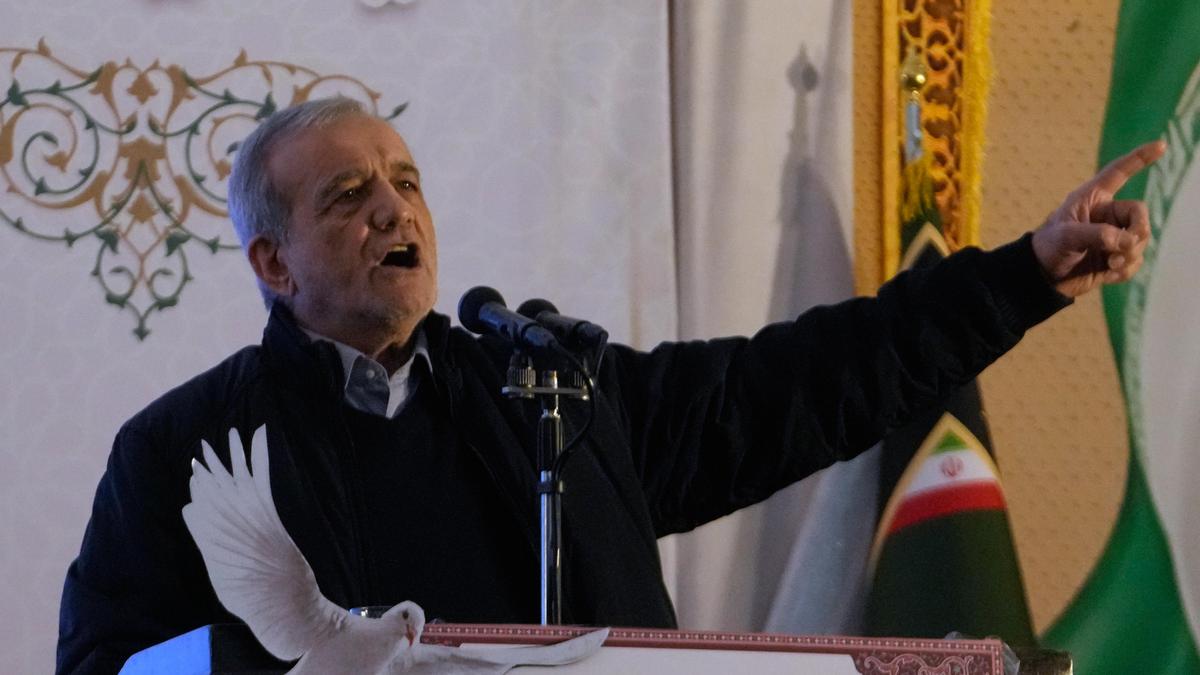
Sat Jan 31 09:15:41 UTC 2026: ### Iranian President Accuses U.S., Israel, and Europe of Fueling Protests
The Story:
Iranian President Masoud Pezeshkian accused the U.S., Israel, and Europe of instigating recent protests in Iran, which began in late December due to economic hardship. The protests, marked by soaring inflation and rising living costs, were suppressed by Iranian authorities in a crackdown resulting in significant casualties. While differing casualty figures were reported by Iranian and U.S.-based sources, the protests have largely abated. The U.S. has expressed support for the demonstrators, and President Donald Trump is considering potential actions.
Key Points:
- President Pezeshkian blames the U.S., Israeli Prime Minister Benjamin Netanyahu, and Europe for provoking unrest in Iran.
- The protests started in late December 2025 due to an economic crisis.
- HRANA, a U.S.-based rights group, reports at least 6,563 deaths, including 6,170 protesters and 214 security forces.
- Iranian Foreign Minister Abbas Araqchi claims 3,100 deaths, including 2,000 security forces.
- The U.S. is considering options, including potential military action, in response to Iran’s handling of the protests.
- A U.S. Navy destroyer docked at the Israeli port of Eilat.
- Iran rejects U.S. demands to curb its missile program as a condition for resuming talks.
- Foreign Minister Araqchi asserts that Iran is prepared for either negotiations or warfare.
Critical Analysis:
The timing of the Iranian military drill in the Strait of Hormuz, as referenced in the related historical context, suggests a show of force and a readiness to defend against potential external threats, especially considering the presence of a U.S. Navy destroyer in Eilat and the ongoing tensions with the U.S.
Key Takeaways:
- The Iranian government views the recent protests as externally influenced and fueled by its adversaries.
- The human cost of the protests is significant, regardless of which casualty figures are accurate.
- The U.S. and Iran remain at odds, with the potential for escalation depending on President Trump’s decisions.
- Regional actors like Turkey, the UAE, and Saudi Arabia are attempting to mediate and prevent a military confrontation.
- Iran remains defiant and unwilling to negotiate on its missile program.
Impact Analysis:
The situation in Iran carries significant long-term implications:
- Regional Instability: Any military action by the U.S. could trigger a wider conflict in the Middle East, impacting global energy markets and security.
- Nuclear Program: Heightened tensions could push Iran to accelerate its nuclear program, further destabilizing the region.
- Domestic Repression: The crackdown on protests could lead to increased internal dissent and further human rights violations.
- International Relations: The crisis strains relations between the U.S. and its European allies, particularly if they disagree on how to handle Iran.
- Economic Impact: Continued sanctions and potential military action could further cripple the Iranian economy, exacerbating the conditions that led to the protests in the first place.
 First Piper