
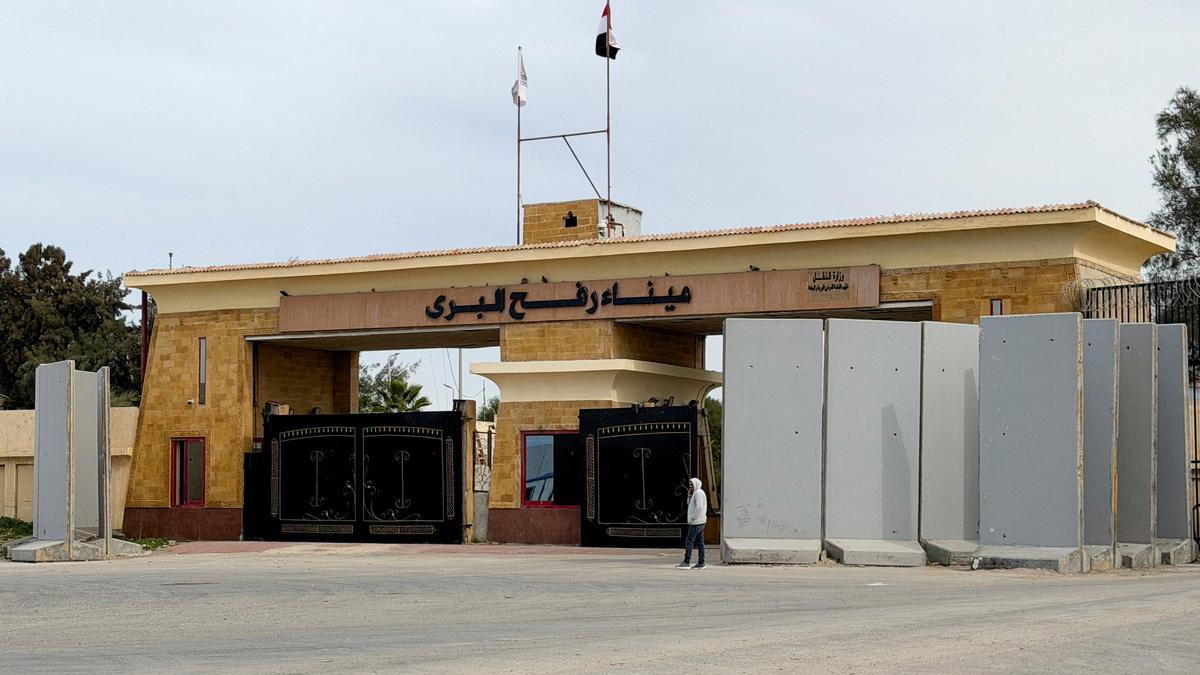
Fri Jan 30 12:31:35 UTC 2026: # Rafah Border Crossing to Reopen After Hostage Recovery
The Story:
The Rafah border crossing between Egypt and the Gaza Strip is set to reopen on February 1, 2026, according to the Coordinator of Government Activities in the Territories (COGAT), the Israeli government agency responsible for coordinating civilian policy in Gaza. This reopening follows Israel’s recovery of the remains of the last remaining hostage held in Gaza. The crossing, a vital lifeline for the over 2 million residents of Gaza, had been seized by Israel in May 2024, nine months into the Gaza war.
COGAT stated that only residents who left Gaza during the war will be permitted to return from Egypt, and only after receiving prior security clearance from Israel, in coordination with Egypt. The reopening is a component of U.S. President Donald Trump’s plan to halt fighting between Israel and Hamas, which was initiated after a ceasefire agreement in October.
Key Points:
- The Rafah border crossing will reopen on February 1, 2026.
- The reopening is conditional on Israeli security clearance and coordination with Egypt.
- Only Gazan residents who left during the war will be allowed to return.
- The crossing was seized by Israel in May 2024.
- The reopening is part of a broader U.S.-brokered plan following an October ceasefire.
Critical Analysis:
The reopening of the Rafah crossing, though a positive step, is heavily controlled by Israel. The conditions placed on the return of Gazan residents raise questions about the long-term viability of life in Gaza and the extent to which Israel intends to maintain control over the movement of people in and out of the territory. The mention of U.S. President Trump’s plan suggests a continuation of previous diplomatic efforts, but with perhaps limited success given the ongoing tensions. The related historical context shows a trend of violence even amidst efforts to reopen the border, underscoring the fragility of the situation.
Key Takeaways:
- The Rafah border reopening is a controlled measure by Israel, not a full restoration of free movement for Gazan residents.
- The event highlights the ongoing reliance on international (U.S.) mediation to address the conflict.
- The fragility of the ceasefire is evident, as the provided historical context suggests continued violence.
- The recovery of the hostage’s remains appears to be the primary catalyst for this specific action.
Impact Analysis:
The reopening of the Rafah crossing is a critical development, but its limited scope raises serious concerns. While it allows for the return of some displaced Gazans, the tight restrictions on movement suggest that a long-term solution for the humanitarian crisis in Gaza remains elusive. The persistent violence, as highlighted in the provided news snippets (“Israel kills 12 Palestinians in Gaza…”) suggests that the fragile peace agreement is unlikely to hold. The long-term impact will depend on whether this reopening is followed by more substantial measures to ease the blockade and address the underlying causes of the conflict. The constant breaches of the ceasefire does not bode well for long term stability.
 First Piper