
Thu Jan 29 18:45:13 UTC 2026: # Tamil Nadu Bolsters Textile Industry Amidst US Tariffs
The Story
The Tamil Nadu government, led by Chief Minister M.K. Stalin, is actively supporting its textile industry through strategic initiatives and financial allocations. Addressing the International Textile Summit 360 in Coimbatore via video conference on Thursday, January 29, 2026, Stalin announced an annual allocation of ₹30 crore to extend a 20% capital subsidy for modernizing weaving and knitwear units. This move comes as the state faces challenges due to the 50% U.S. tariffs on India’s textile and garment exports. The government is collaborating with the central government to explore new markets, facilitate buyer-seller meets, and advocate for the removal of the 11% import duty on cotton.
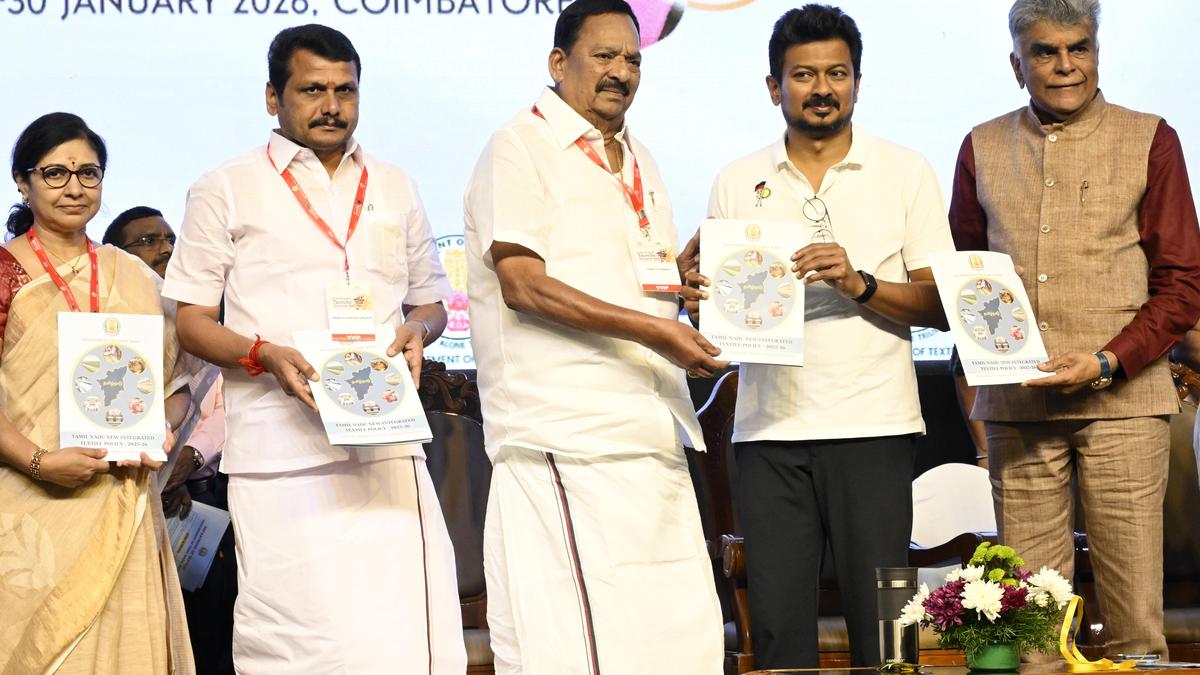
Deputy Chief Minister Udhayanidhi Stalin inaugurated the summit, emphasizing the government’s commitment to supporting the textile sector and ensuring a 6% interest subvention scheme for spinning mills. The Tamil Nadu New Integrated Textile Policy 2025-2026 focuses on modernizing the entire textile value chain. Minister for Handlooms and Textiles R. Gandhi highlighted the removal of the 1% cess on cotton and the modifications made to the Mini Textile Park Scheme, leading to increased interest and investment in the sector.
Key Points
- ₹30 crore allocated annually for a 20% capital subsidy to modernize weaving and knitwear units.
- Tamil Nadu holds a 33% share of India’s textile business, employing 3.1 million people, with 60.12% being women.
- The state is facing challenges due to 50% U.S. tariffs on Indian textile and garment exports.
- MoUs worth ₹9,764 crore were signed at recent investment conclaves in Coimbatore, Madurai, and Thoothukudi, with additional agreements worth ₹915 crore signed on Thursday.
- The Tamil Nadu New Integrated Textile Policy 2025-2026 focuses on modernizing the entire textile value chain.
- Removal of 1% cess on cotton and modifications to the Mini Textile Park Scheme.
Critical Analysis
The Tamil Nadu government’s proactive approach is a direct response to external pressures, primarily the 50% U.S. tariffs. Recognizing the significant contribution of the textile industry to the state’s economy and employment, the government is strategically investing in modernization, infrastructure, and market diversification. This indicates a calculated effort to mitigate the impact of protectionist trade policies and to strengthen the sector’s competitiveness on a global scale. The timing of the policy announcement and investment commitments alongside the International Textile Summit further demonstrates a concerted effort to boost investor confidence and attract new business opportunities.
Key Takeaways
- The Tamil Nadu government is prioritizing the textile industry as a key economic driver.
- External trade pressures, particularly U.S. tariffs, are significantly influencing state-level economic policy.
- The focus on modernization and value chain integration is crucial for long-term sustainability and competitiveness.
- Public-private partnerships, as evidenced by the CII collaboration, are integral to the government’s strategy.
- Investment in women’s employment in the textile sector is highlighted and further supported by the government’s policy.
Impact Analysis
The Tamil Nadu government’s integrated approach towards the textile industry is likely to have significant long-term implications. By investing in modernization and diversification, the state aims to enhance its competitiveness and resilience in the face of global trade challenges. The policy is likely to attract further investment, create employment opportunities, and contribute to the state’s goal of achieving a $1 trillion economy. The focus on modernizing the textile value chain, combined with the support measures like interest subventions and capital subsidies, will likely result in a more efficient and sustainable industry in the long run.
 First Piper