
Tue Jan 27 17:34:32 UTC 2026: # Doomsday Clock Set to Record Proximity to Midnight Amid Global Instability
The Story:
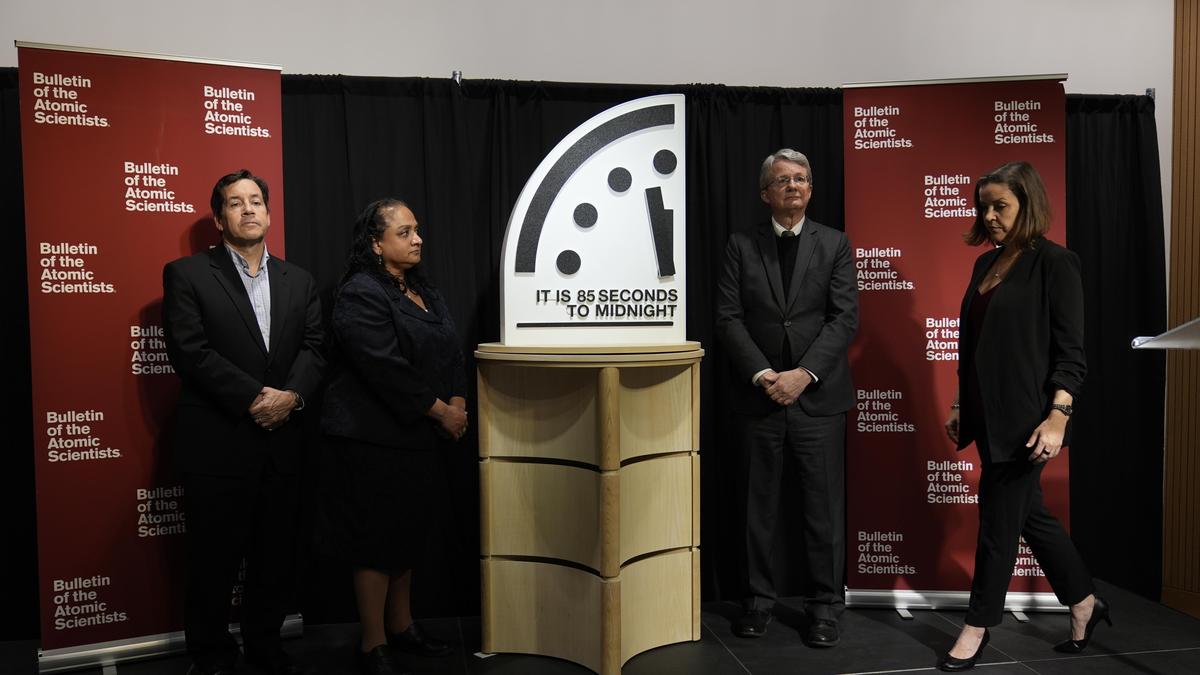
The Bulletin of the Atomic Scientists has moved the Doomsday Clock to 85 seconds to midnight, the closest it has ever been, citing a confluence of escalating global threats. This announcement, made on January 27, 2026, in Washington D.C., underscores a worsening security landscape characterized by eroding nuclear norms, intensifying conflicts in Europe and Asia, climate and biological risks, and a weakening international order. The move reflects deep concerns about the potential for human-made global catastrophe.
Key Points:
- The Doomsday Clock now stands at 85 seconds to midnight, a shift from 89 seconds a year prior.
- The Bulletin cites increased aggression, adversarial relationships, and nationalism among major countries as primary drivers.
- Concerns include the potential resumption of nuclear testing by the Trump administration and the expiration of the last treaty governing nuclear weapon stockpiles between the U.S. and Russia.
- Worsening climate change consequences, the impact of AI on misinformation, the rise of nationalistic autocracies (referencing events in Minnesota), and potential risks from synthetic mirror life are also cited as contributing factors.
- The Clock was farthest from midnight in 1991 at 17 minutes, following the end of the Cold War.
Key Takeaways:
- The world faces a multi-faceted crisis, encompassing nuclear proliferation, climate change, political instability, and emerging technological threats.
- International cooperation is failing to address these existential risks, leading to increased global insecurity.
- The erosion of nuclear arms control treaties and the potential for a new arms race are particularly alarming.
- Domestic political events, such as those referenced in Minnesota, are now perceived as contributing to global instability, suggesting a blurring of lines between internal and international security.
- The Doomsday Clock serves as a stark warning of the urgent need for global action to mitigate these threats.
 First Piper