
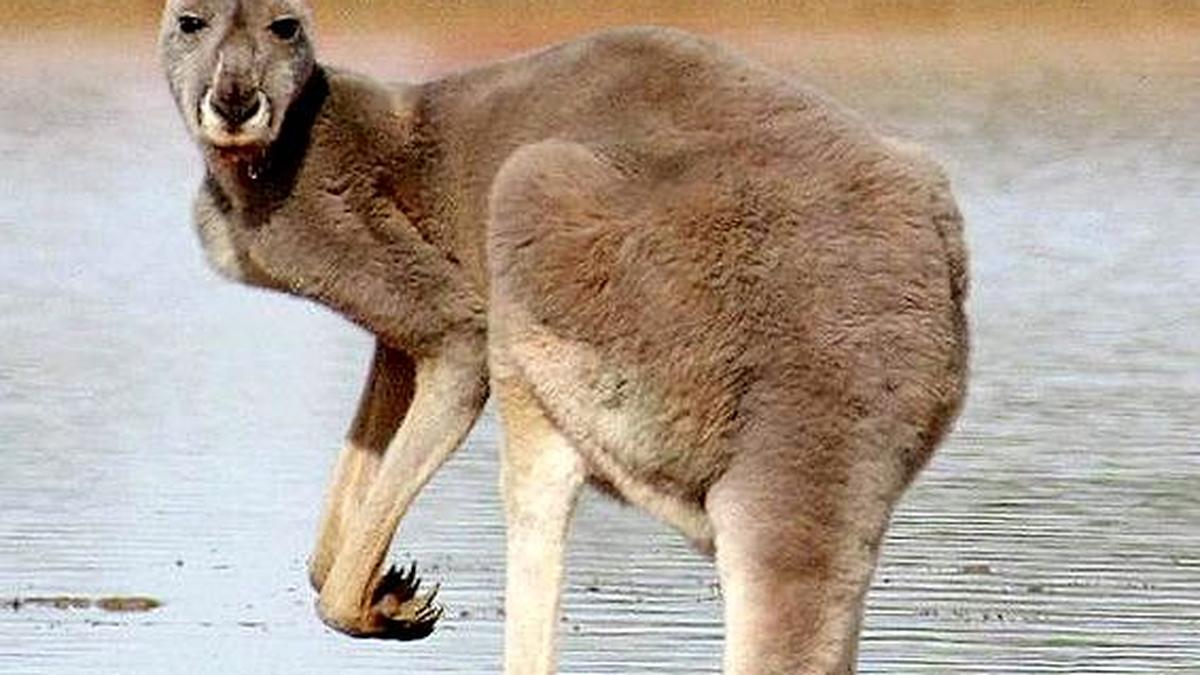
Tue Jan 27 05:18:28 UTC 2026: ### Giant Kangaroos Hopped After All: New Study Challenges Biomechanics Assumptions
The Story:
A new study published on January 22, 2026, has overturned long-held beliefs about the biomechanics of extinct giant kangaroos. Researchers have discovered that these massive marsupials, some weighing over 250 kg, were indeed capable of hopping, contrary to previous assumptions that their size would have made it impossible due to bone fractures. The study, focusing on fossil analysis rather than extrapolations from modern kangaroo anatomy, identified key skeletal adaptations that allowed them to withstand the immense forces generated by hopping.
The research highlights that these ancient kangaroos evolved shorter, thicker foot bones (fourth metatarsals) to resist bending forces, and wider heel bones (calcanea) to support larger gastrocnemius tendons. However, these adaptations likely came at the cost of speed and energy efficiency, suggesting that these giant kangaroos used hopping for short bursts, perhaps for escaping predators, rather than long-distance travel.
Key Points:
- Giant, extinct kangaroos weighed over 250 kg, significantly more than modern kangaroos (90 kg).
- A January 22, 2026, study challenges the previous belief that giant kangaroos were too heavy to hop.
- Fossil analysis revealed shorter, thicker foot bones and wider heel bones in giant kangaroos.
- These adaptations allowed them to hop without injury but likely reduced speed and energy efficiency.
- The giant kangaroos likely used hopping for short, high-power bursts, potentially for escaping predators.
Key Takeaways:
- Scientific assumptions should continually be re-evaluated in light of new evidence, particularly fossil evidence that directly challenges extrapolated models.
- Evolution often involves trade-offs, where adaptations for one function may come at the expense of others. In this case, strength outweighed efficiency.
- The study underscores the diversity and adaptability of kangaroos throughout history, providing new insights into their evolutionary trajectory.
 First Piper