
Thu Jan 29 09:35:11 UTC 2026: ### India’s Space Program Faces Budgetary Pressures Amidst Growth Aspirations
The Story:
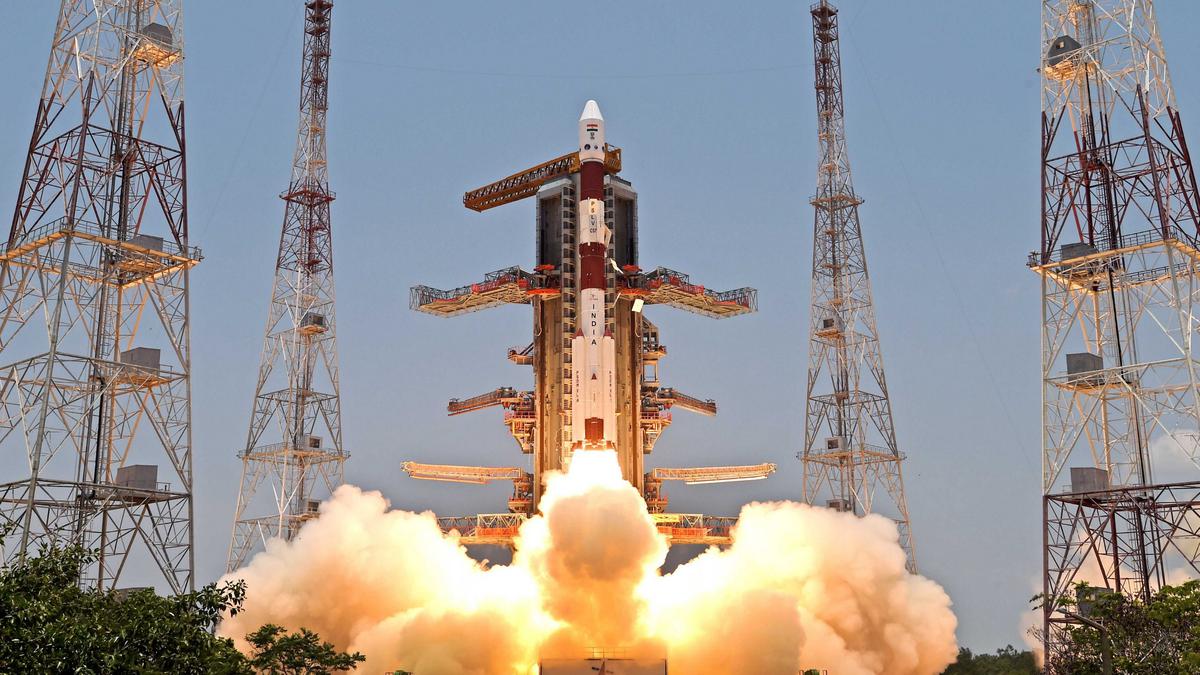
India’s space program, while lauded for its historical achievements like lunar landings and increased foreign satellite launches, faces growing pains and budgetary constraints that threaten its future ambitions. According to an article published in January 29, 2026, despite the government’s efforts to “unlock” the space sector since 2020 with reforms and private sector entry, the Department of Space (DoS) is struggling to balance its ambitious goals, such as human spaceflight and a space station, with the pressing need to address manufacturing issues impacting its primary launch capabilities. The Economic Survey 2025-26 highlights a substantial revenue stream from foreign satellite launches between 2015 and 2024, but this may be masking deeper structural fragilities within the Department.
Key Points:
- India launched 393 foreign satellites for 34 countries between 2015 and 2024, earning over $143 million and €272 million.
- The space industry is seeking a significant budget increase to fund a projected $44 billion space economy over the next decade.
- Budget allocations for the Department of Space have seen minimal growth between FY22 and FY26, effectively shrinking when adjusted for inflation.
- Capital expenses decreased from ₹8,228 crore in FY22 to ₹6,103 crore in FY26, while revenue expenditure increased from ₹5,720 crore to ₹7,311 crore.
- NewSpace India, Ltd. (NSIL)’s revenue surged from ₹322 crore in FY20 to ₹2,940 crore in FY23, with the government aiming for it to bridge the capital gap.
- SIA-India requests an ₹18,000 crore allocation for FY27, significantly more than the total private capital raised by the ‘NewSpace’ ecosystem in FY23 (just over ₹1,000 crore).
- ISpA is lobbying for the space sector to be classified as “critical infrastructure” and for a policy mandating the government to procure 50% of space-based services and hardware from the domestic private sector.
Critical Analysis:
The historical context provided from January 29, 2026 highlights the government’s focus on various sectors, from pharmaceuticals to rural economies and digital inclusivity through AI. The Economic Survey, while optimistic about the space sector, is simultaneously advocating for other significant economic shifts, like scrapping MGNREGS, suggesting a broader prioritization and resource allocation strategy at play. This could explain the Department of Space’s struggle to secure a significantly larger budget. It suggests that while the government acknowledges the potential of the space economy, it is balancing it against other competing priorities and exploring alternative funding models, like relying on NSIL’s commercial success.
Key Takeaways:
- India’s space program is facing a critical juncture, balancing ambitious growth targets with budgetary constraints.
- The reliance on NSIL’s commercial revenue to supplement government funding poses a risk if NSIL’s growth stagnates.
- The divergence between industry demands for funding and the Department of Space’s absorptive capacity could lead to inefficiencies.
- The government’s strategy of promoting private sector involvement hinges on creating a reliable market through procurement policies and service contracts.
- Operational consolidation, focused on quality assurance and supply chain improvements, is crucial for restoring confidence in ISRO’s launch capabilities.
Impact Analysis:
The budgetary pressures on the Department of Space, coupled with the push for private sector involvement, could have several long-term implications:
- Delayed Missions: Without adequate funding, critical missions, including human spaceflight and the development of a space station, may face delays or be scaled down.
- Reduced Competitiveness: Stagnant R&D investment could erode India’s competitive edge in the global space market.
- Private Sector Dependence: Over-reliance on the private sector without a robust regulatory framework and government support could lead to market instability.
- Strategic Vulnerabilities: Inadequate investment in critical infrastructure, such as the second spaceport, could limit launch capacity and strategic capabilities.
- Innovation Stifling: A lack of funding for long-term pilot programs and mission-linked procurements could discourage innovation and investment in space startups.
 First Piper