
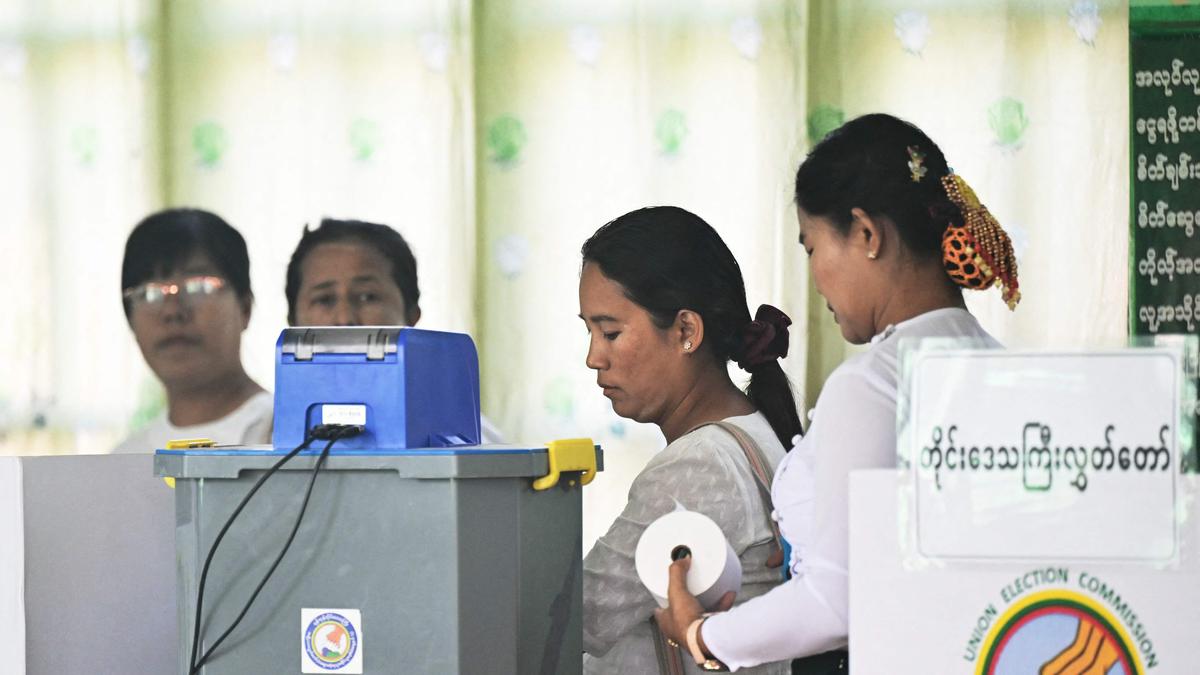
Mon Jan 26 05:15:00 UTC 2026: # Myanmar’s Military-Backed Party Claims Victory in Junta-Run Elections
The Story
Myanmar’s Union Solidarity and Development Party (USDP), widely seen as a proxy for the ruling military junta, has declared victory in the recent elections, according to a source speaking to AFP on Monday, January 26, 2026. The month-long election, which concluded on Sunday, January 25, 2026, has been heavily criticized by democracy watchdogs as a mere rebranding of army rule. The USDP official, who wished to remain anonymous, stated that the party has secured a majority and is poised to form a new government. This development follows the 2021 coup that ousted the democratically elected government of Aung San Suu Kyi, who remains detained, while her party has been dissolved.
Key Points
- The pro-military USDP claims victory in the January 2026 elections in Myanmar.
- A senior USDP official stated the party has won a majority and will form a new government.
- The elections have been condemned by democracy watchdogs as a continuation of military rule.
- Aung San Suu Kyi remains detained, and her party has been dissolved.
- The military seized power in a 2021 coup.
Critical Analysis
The provided context does not directly reveal significant patterns or strategic depth connected to the Myanmar election results. The US news items of January 26th are unrelated. Therefore, a critical analysis section is not applicable.
Key Takeaways
- The Myanmar election outcome solidifies the military’s continued control over the country.
- International concerns over the legitimacy and fairness of the election are likely to escalate.
- The future of democracy in Myanmar remains uncertain.
- The Association of Southeast Asian Nations (ASEAN) and other international bodies face increasing pressure to address the situation in Myanmar.
- The USDP’s claim will face scrutiny and likely resistance from pro-democracy elements within Myanmar.
Impact Analysis
The consolidation of power by the military junta and its proxy party has significant long-term implications:
- Human Rights: A continued erosion of human rights and civil liberties is anticipated, with potential for increased persecution of opposition groups and ethnic minorities.
- International Relations: Myanmar’s international isolation is likely to deepen, potentially leading to further sanctions and diplomatic pressure from Western nations. However, reliance on countries like China and Russia could grow.
- Regional Stability: The situation could destabilize the region, potentially leading to refugee flows and cross-border conflicts. ASEAN’s credibility in addressing regional security issues will be severely tested.
- Economic Development: Foreign investment is likely to decline, hindering economic development and further impoverishing the population. The economy will likely become increasingly reliant on illicit activities.
- Internal Conflict: The lack of a legitimate political process may fuel armed resistance and internal conflict, creating a cycle of violence and instability.
 First Piper