
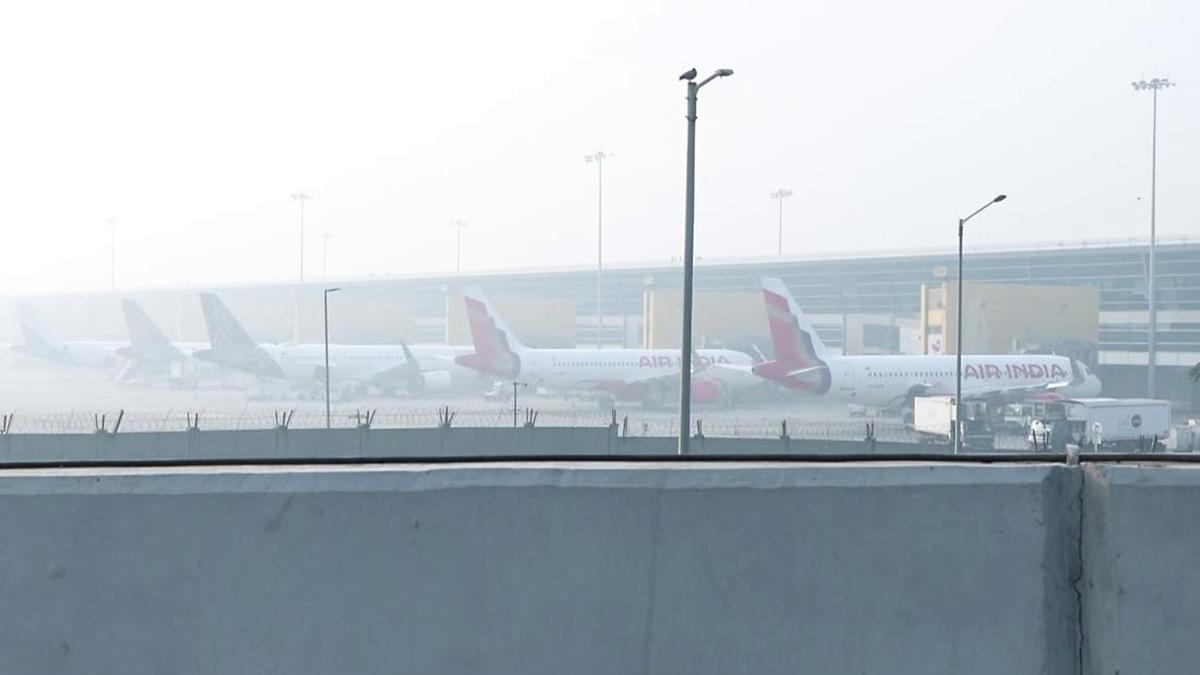
Sun Jan 18 05:23:25 UTC 2026: # Delhi Chokes Under “Poor” Visibility as Dense Fog Grips the City
The Story:
On January 18, 2026, Delhi experienced severely reduced visibility due to dense fog, categorized as “poor” by the India Meteorological Department (IMD). Visibility dropped to between 50-200 meters, significantly impacting transportation and daily life. The article explains the scientific measurements used to determine visibility, both traditional and modern, and the IMD’s classification system based on smog intensity.
Key Points:
- The article discusses “visibility” as a meteorological term referring to the meteorological optical range.
- Visibility is defined as the distance a beam of light can travel through the atmosphere before its intensity drops to 5% of its original value.
- Traditional visibility measurement involved human observers using landmark objects at known distances.
- Modern weather stations use sensors to measure visibility, utilizing direct and indirect methods involving laser beams and light scattering.
- The India Meteorological Department (IMD) classifies visibility based on smog intensity, ranging from 500-1,000 m for ‘shallow fog’ to less than 50 m for ‘very dense fog’.
- On January 18, 2026, visibility in Delhi dropped to ‘poor’, between 50-200 m.
Key Takeaways:
- Delhi’s air quality continues to be a significant concern, with fog exacerbating visibility issues.
- The article highlights the scientific methods used to measure and classify visibility, emphasizing the importance of accurate monitoring.
- The reduced visibility poses potential risks to transportation, particularly air travel, as indicated by the parked planes at Indira Gandhi International Airport.
 First Piper