
Sat Jan 24 10:50:42 UTC 2026: # U.S. Signals Potential Tariff Relief for India Amid Reduced Russian Oil Imports
The Story
U.S. Treasury Secretary Scott Bessent indicated on Friday, January 23, 2026, that the United States might remove the additional 25% tariffs on Indian goods following a notable decrease in India’s imports of Russian oil. This development comes after trade tensions escalated in August 2025, when then U.S. President Donald Trump doubled tariffs on Indian goods to 50%, including the mentioned 25% levy, in response to India’s continued purchases of Russian crude oil.
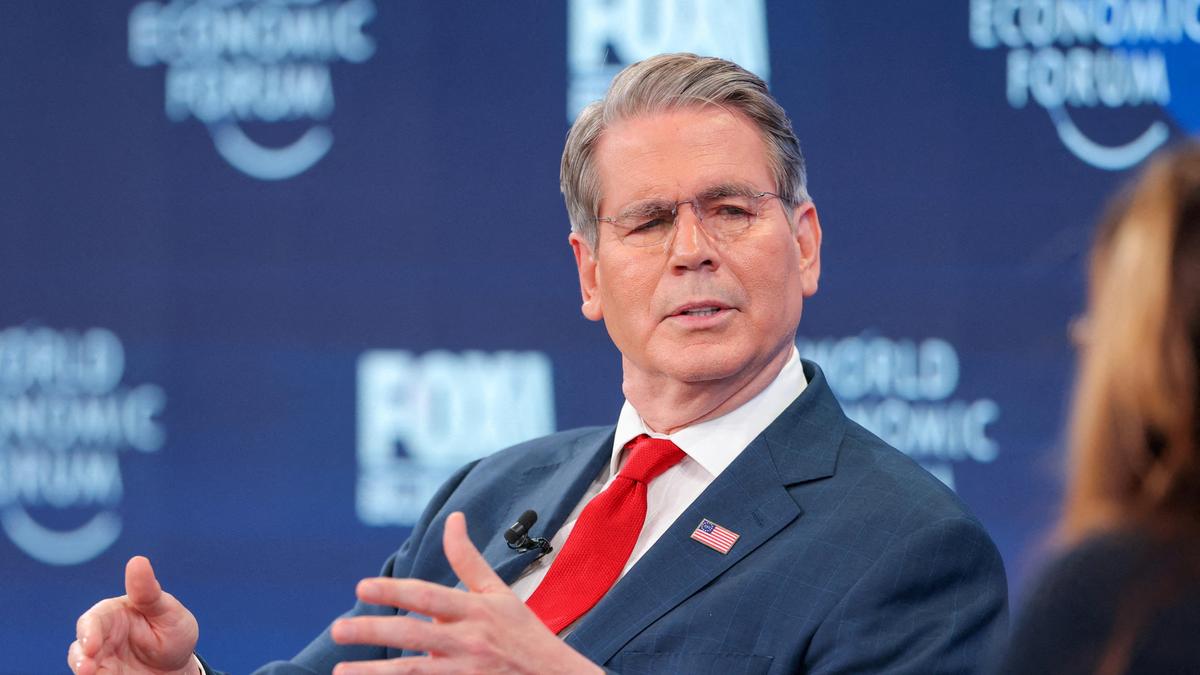
Secretary Bessent made these remarks during an interview at the World Economic Forum in Davos, Switzerland. He highlighted the success of the tariffs in curbing India’s reliance on Russian oil, noting that Indian refineries have significantly reduced their purchases. Data suggests that India’s Russian oil imports in December 2025 dropped to their lowest level in two years, subsequently increasing OPEC’s share of Indian oil imports to an 11-month high.
Key Points
- U.S. Treasury Secretary Scott Bessent hinted at the potential removal of 25% tariffs on Indian goods.
- The hint is predicated on India’s reduced imports of Russian oil.
- Tariffs were initially imposed in August 2025 by then U.S. President Donald Trump as a response to India’s Russian oil imports.
- India’s Russian oil imports in December 2025 reached a two-year low.
- The announcement was made during the World Economic Forum in Davos.
Critical Analysis
The timeline suggests a clear cause-and-effect relationship dictated by U.S. policy. The initial tariff imposition was a direct response to India’s continued purchase of Russian oil, likely influenced by geopolitical concerns and efforts to isolate Russia economically. The current potential removal of tariffs, signaled by Secretary Bessent, directly correlates with India’s reduction in Russian oil imports. This pattern indicates a deliberate U.S. strategy of using economic leverage to influence India’s energy policy and reduce its dependence on Russian resources. The timing, at the World Economic Forum, also suggests an attempt to publicly demonstrate the effectiveness of U.S. policy and encourage other nations to follow suit.
Key Takeaways
- U.S. trade policy is being used as a tool to influence the energy policies of other nations, specifically India.
- India’s reduction in Russian oil imports is a key factor driving the potential removal of tariffs.
- The announcement highlights the complex interplay between economic policy, geopolitical strategy, and energy security.
- The situation underscores the pressure India faces to balance its energy needs with international relations.
Impact Analysis
The potential removal of tariffs carries significant implications for both the U.S. and India. For India, it could ease trade tensions and improve economic relations, potentially boosting its export sector. For the U.S., it reinforces its position as a key influencer in global energy markets and demonstrates the effectiveness of its strategies in reshaping international behavior. However, this situation might also encourage other nations to leverage similar tactics in the future, potentially leading to increased trade volatility. The long-term impact hinges on whether India continues to diversify its energy sources and reduce its reliance on Russia.
 First Piper